↑Click above to view Austrian cities Uncle Jack visited in 2024.↑
Copyright @ 2025 JACK L. Winegar All Rights Reserved.
Travel the World with Jack
↑Click above to view Austrian cities Uncle Jack visited in 2024.↑
Copyright @ 2025 JACK L. Winegar All Rights Reserved.
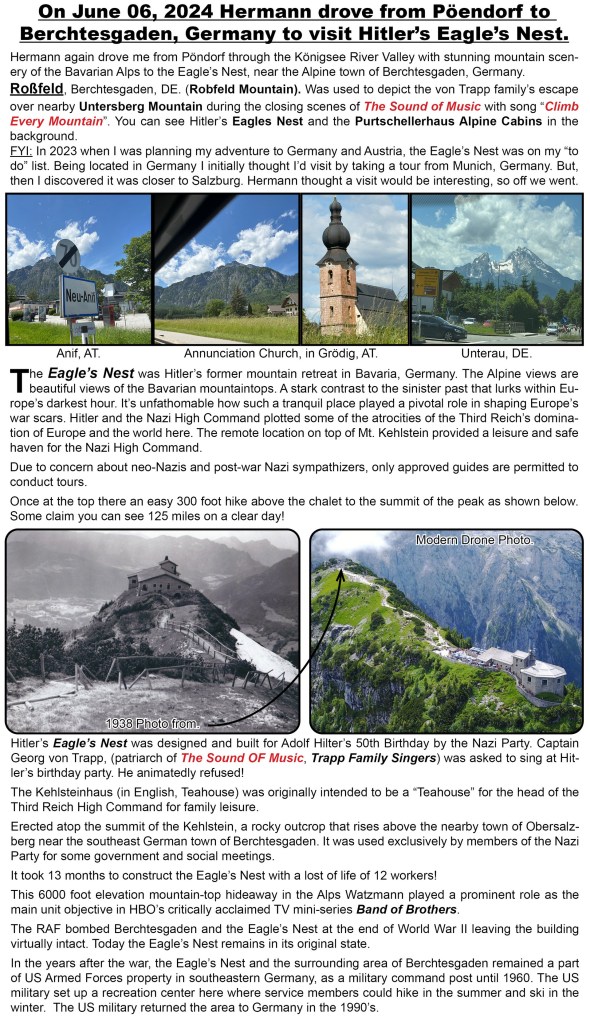
Copyright @ 2025 JACK L. Winegar All Rights Reserved.
↑Click above to view Austrian cities Uncle Jack visited in 2024.↑
Copyright @ 2025 JACK L. Winegar All Rights Reserved.
Yes, Uncle Jack made a snowball on June 04, 2024 and tossed it to Hermann.
Click beow to view this 21 second video. Note; Hermann stopped filming as the snowball was heading towards him!
↑Click above to view Austrian cities Uncle Jack visited in 2024.↑
Copyright @ 2025 JACK L. Winegar All Rights Reserved.
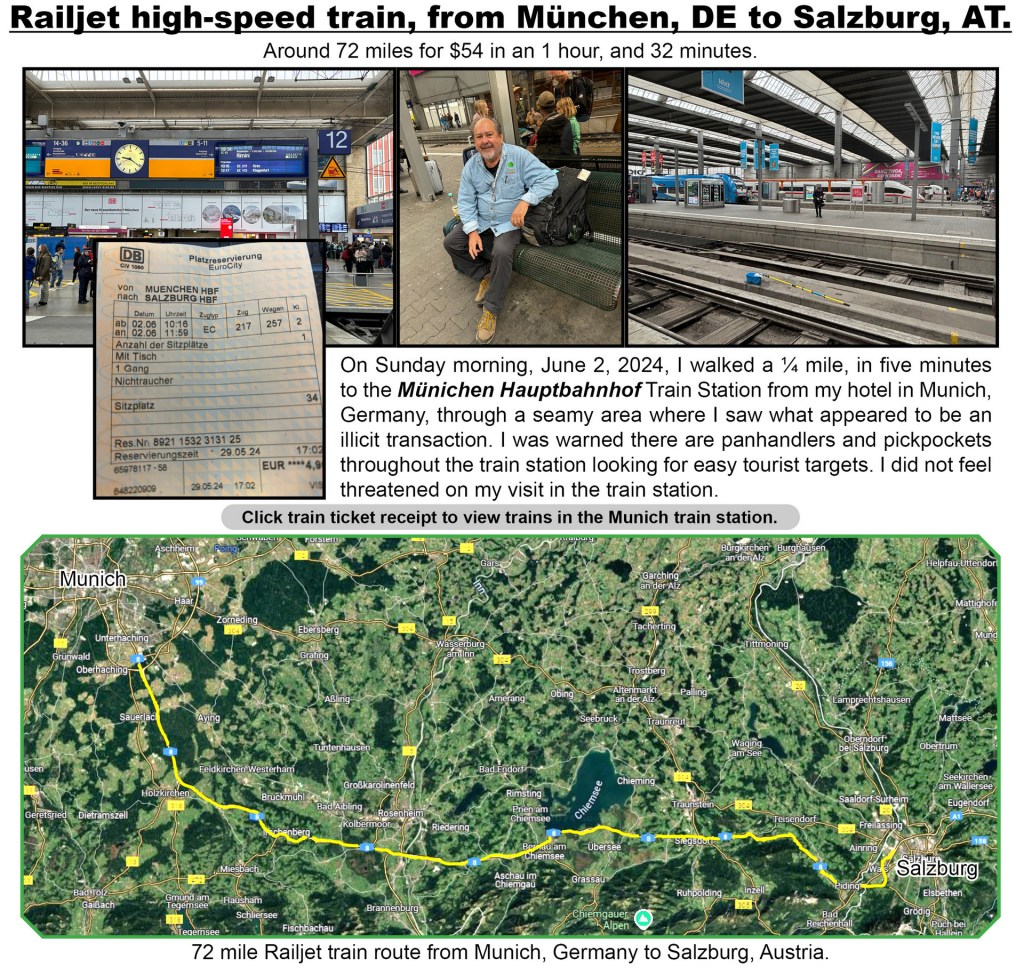
When planning my adventure from Germany into Austria, in 2024, I decided to have it centered around Sunday, June 2.
I chose Sunday because I read many businesses in Germany and Austria are closed on Sunday. And, the busy Tourist season starts in the middle of June and weather is usually nice from the middle of May into June.
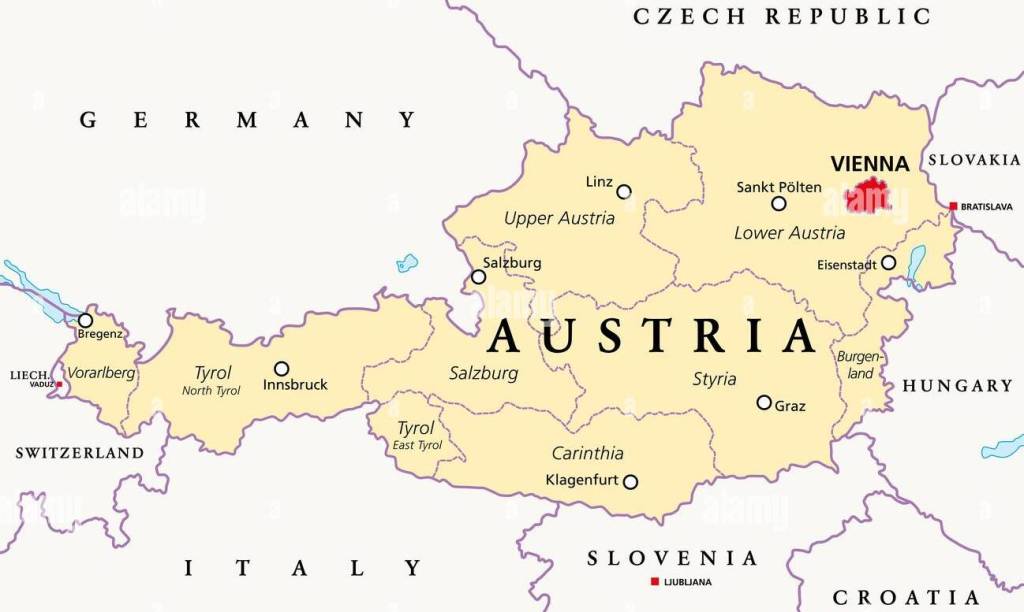
So: June 2, 2024 the adventure continued into Austria.
Salzburg, Austria: Population 156,872. This city (4th-largest city in Austria.) is the musical mecca for fans of Mozart and The Sound Of Music. Language; Austrian German is widely written and differs from Germany’s standard variation only in some vocabulary and a few grammar points. More and more school children are speaking standard German, which is considered do to media consumption
It’s been over 50 years since the The Sound Of Music movie was made in Salzburg, however everything is the same. The following video shows many scenes, then, 1964 and in 2014! https://youtu.be/VNutlOE0yhQ
Many say; “Salzburg is the most beautiful city in Europe!” Salzburg is surrounded by hills laced with the sound of music and trails, topped by a sky-high fortress and five mountains! In English; Salt Castle translates to Salzburg. Salzburg is a very picturesque town with several winding lanes.

Salzburgs long history can be traced back to the Stone Age. The cultural heritage of this Baroque city has its origins in the lively exchanges with neighboring countries to the south, and in particular, Italy. Only Rome was bigger with more religious buildings of great Baroque beauty.
The town is on the site of the Roman settlement of Iuvavum. Salzburg was founded as an “episcopal see” in 696. Its main sources of income was salt extraction, trade and gold-mining. The fortress of Hohensalzburg, is one of the largest medieval fortresses in Europe, which dates from the 11th century. In the 17th century, Salzburg became a center of the Counter-Reformation, with monasteries and numerous Baroque churches being built.
Salzburg had very little damage from the 15 WWII air strikes, with it’s many historic buildings having been restored several times over the centuries.
The city briefly appears on the map when Indiana Jones travels through the city in the 1989 film Indiana Jones and the Last Crusade.
In the 2010 film Knight & Day, starring Tom Cruise and Cameron Diaz, Salzburg serves as the backdrop for a large portion of the film.
Salzburg is divided by the river Salzach (Along the riverside, there are grand gardens and beer gardens.) into two basic areas:
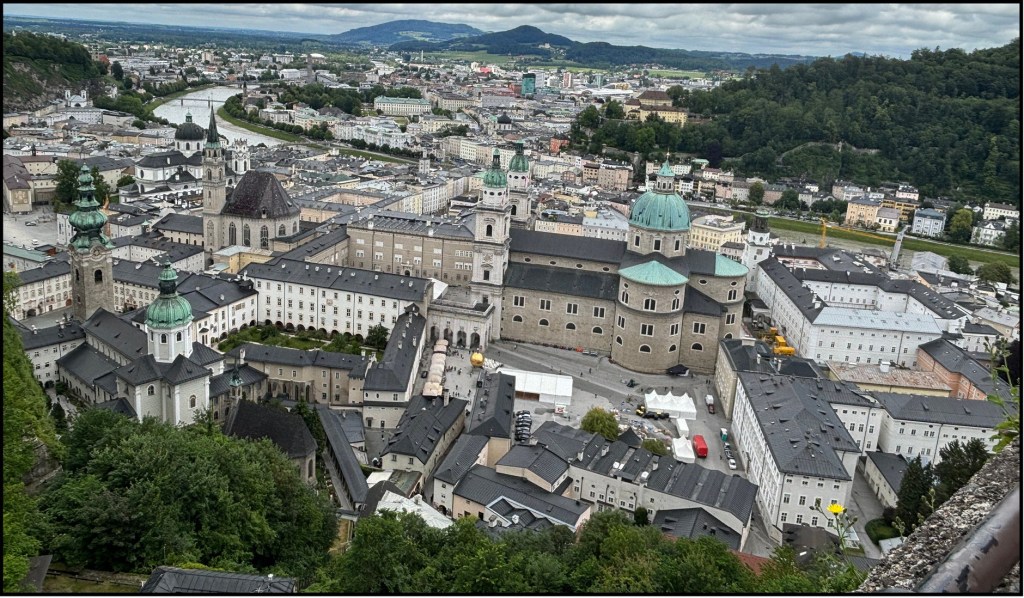
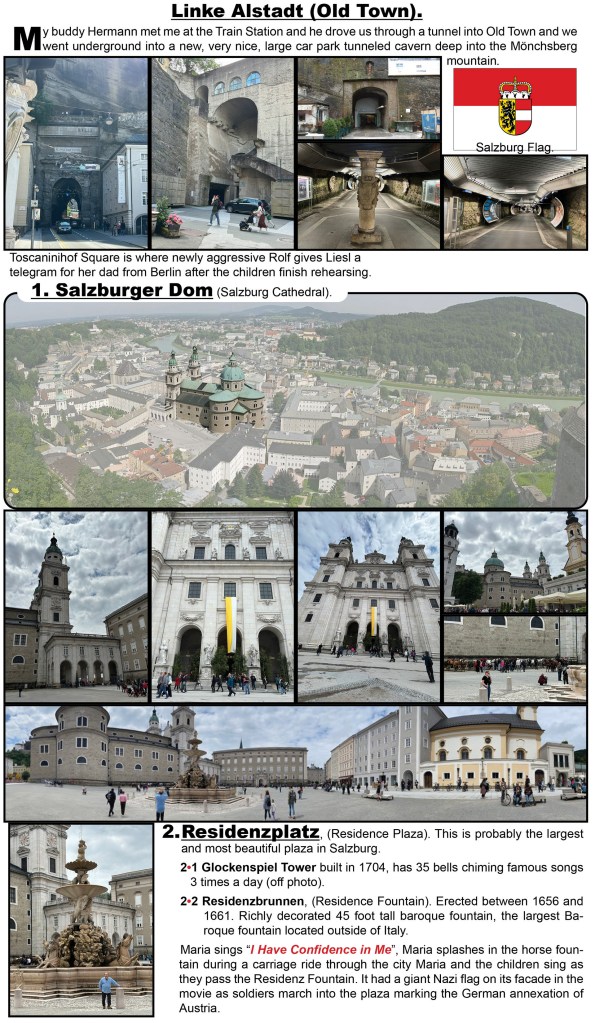
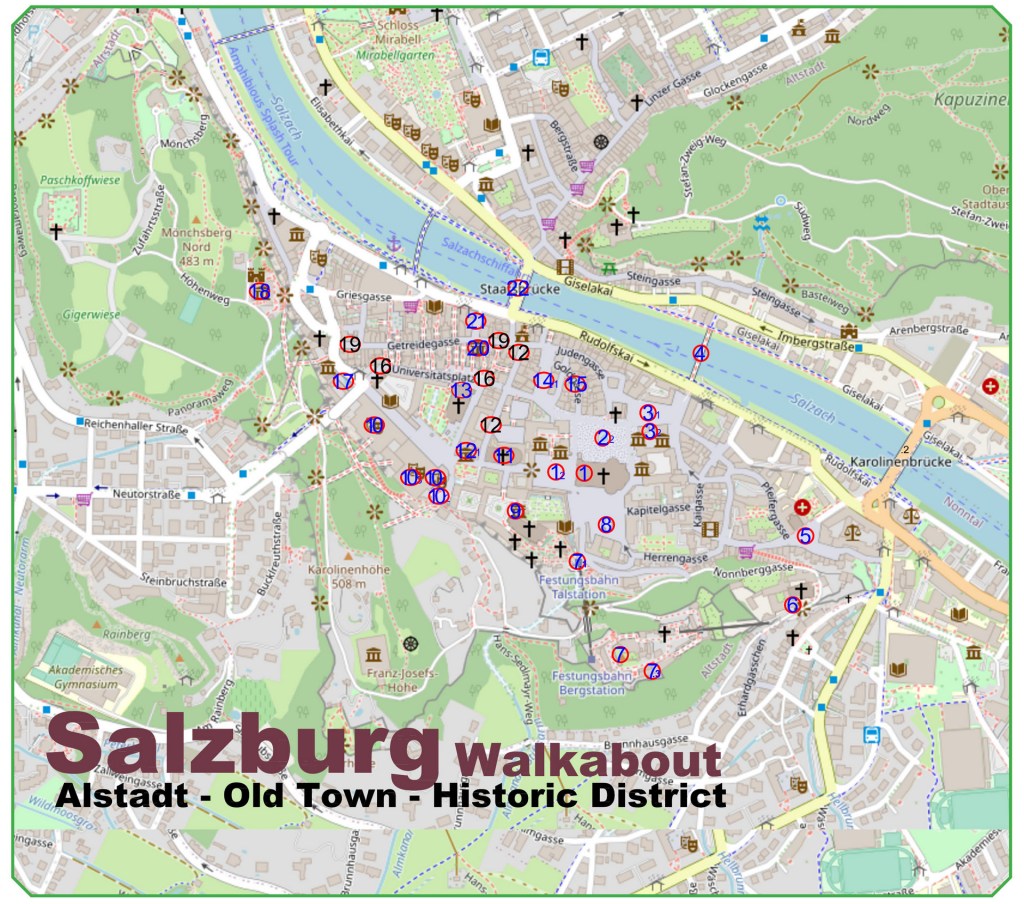
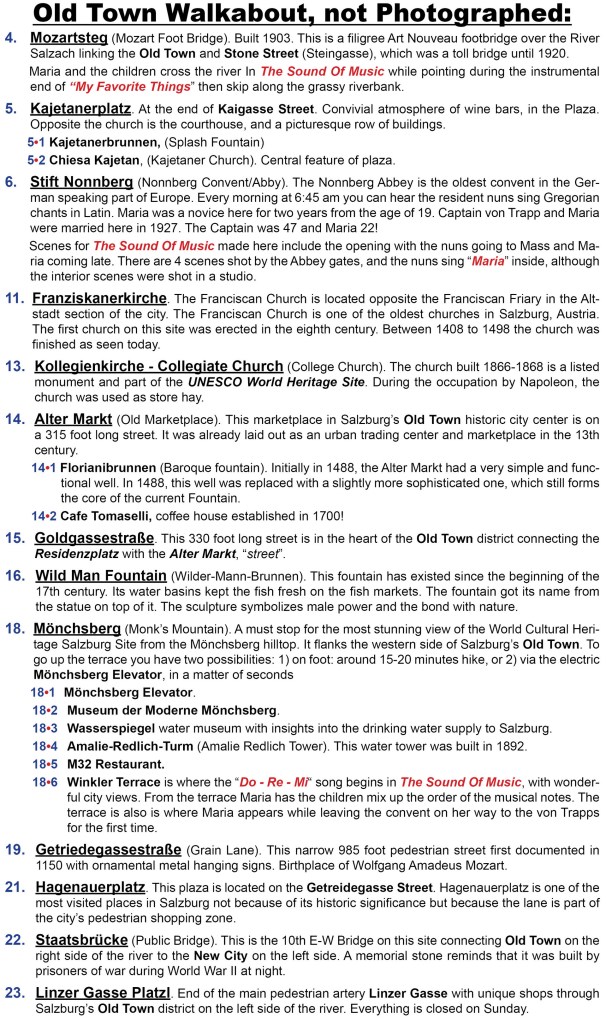
1. Altstadt (English: Old Town) is located West of river Salzach under the Fortress Hohensalzburg between the Mönchsberg Mountain and river Salzach. Better known as the Historic District. It is renowned for its Baroque architecture and is one of the best-preserved city-centers north of the Alps. The historic center was enlisted as a UNESCO World Heritage Site in 1996.
2. Neustadt (English: New City) is located between Kapuzinerberg Mountain and the Salzburg Hauptbahnhof Train Station. Lively Neustadt is known for the ornate 17th-century Mirabell Palace, with its lavish Marble Hall, a venue for chamber music performances, and formal baroque gardens featuring elaborate fountains. Long-standing beer gardens serving classic Austrian dishes.
Following the above walkabouts of the Salzburg historic areas, my buddy Hermann brought me to many scenic Alpine Mountain surroundings.
Salzburg Mountains. (First five are the main mountains around Salzburg.)
1. Fiststungsberg, 1,778 feet high above the Linke Altstadt, Old Town District.
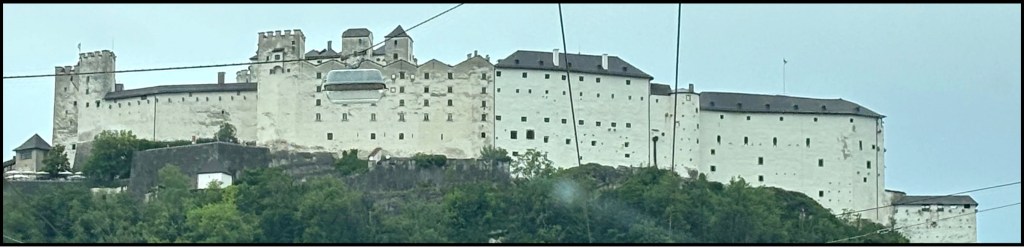
● Festung Hohensalzburg (Fortress Hohensalzburg) Means High Salzburg Fortress, not a castle. Built in 1077, sitting on top of the Fiststungsberg mountain. The fortress can take hours to explore.
● Panorama Restaurant, where Hermann and I had a beer.
● Funicular Cable Car (FestungsBahn) since 1892.
2. Kapuzinerberg, (Kapuzinerberg Mountain). The highest of the Salzburg Mountains at 2090 feet. 690 feet above the city. Franziskischloessl. Restaurant on top of mountain. Amazing views of Salzburg. Stations of the Cross walkway.
3. Mönchsberg, (Monk’s Mountain). Elevator to top of M32 Restaurant. Richterhöhe Lookout, is a hidden gem in Salzburg named after surveyor Eduard Richter. This spot offers stunning views of the Alps and a grassy plain without the usual tourist crowds. It is 1,667 feet above sea level.
4. Rainberg, it is a nature reserve and access is prohibited since 1955. It is surrounded by late 19th century villas, which were developed after 1880 in Historicist style.
5. Hellbrunner Berg, is located in the south of the Altstadt (Old Town) and close to the Schloss Hellbrunn, and the stone theater.
6. Untersbergbahn GmbH, (Dr. Ödlweg 2). Cable Car with breathtaking views of the surrounding mountains await you at the 5,825 feet mountain station.
7. Roßfeld, (Robfeld Mountain), (Berchtesgaden, DE) with great views of Germany and Austria.
8. Geisberg, this mountain is located just a few kilometers from Old Town at a height at 5800 feet. Hermann has done some Hang-gliding off this mountain.
9. Hoher Göll (8275 feet) Lies on the border between Germany and Austria.
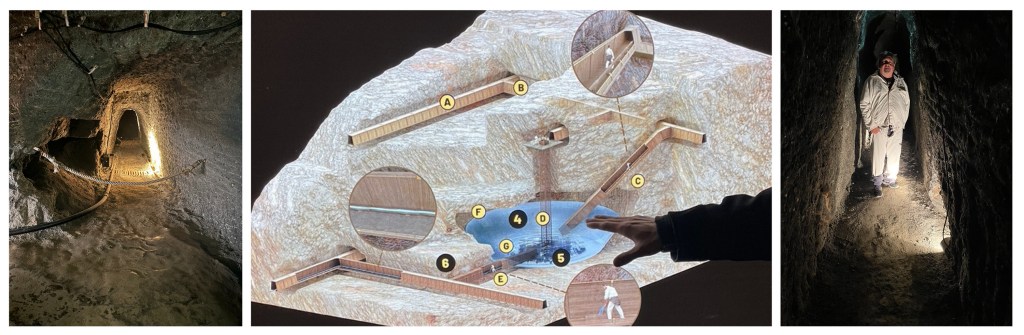
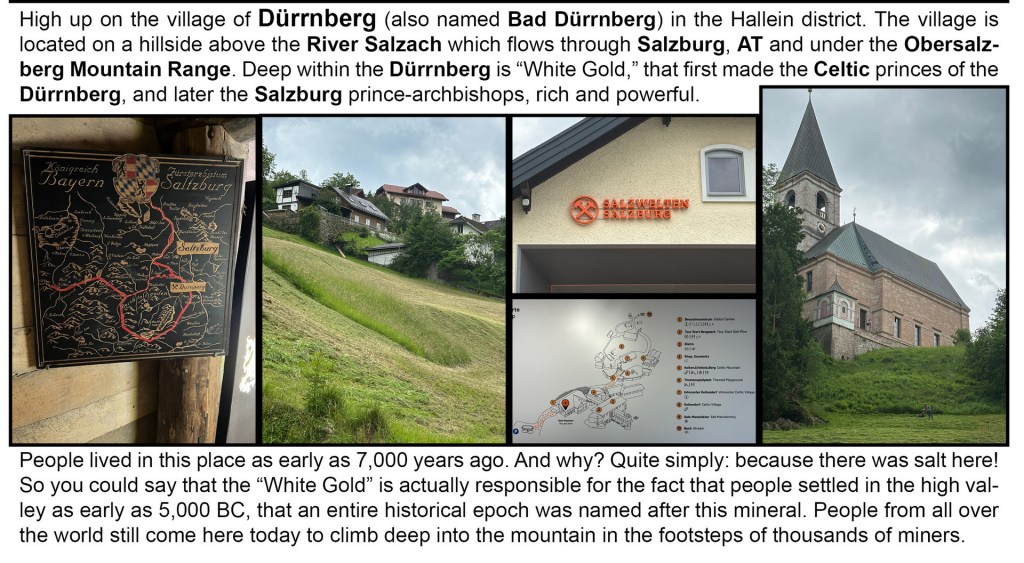
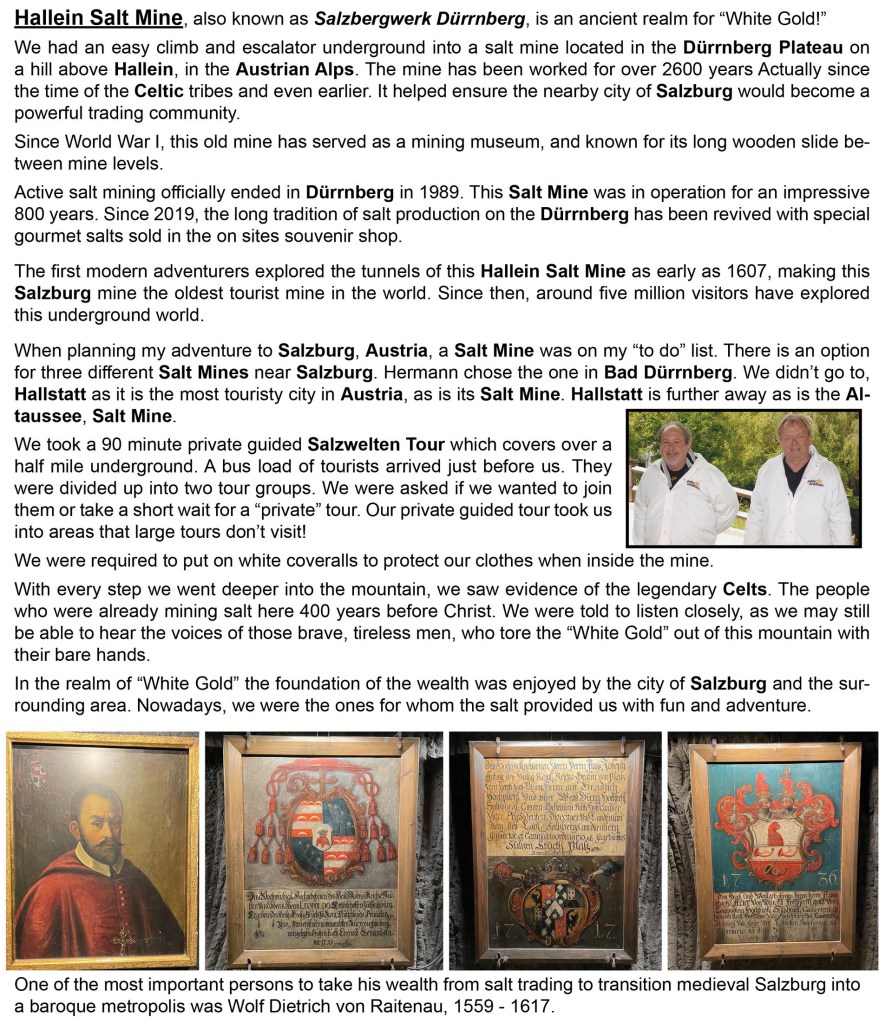
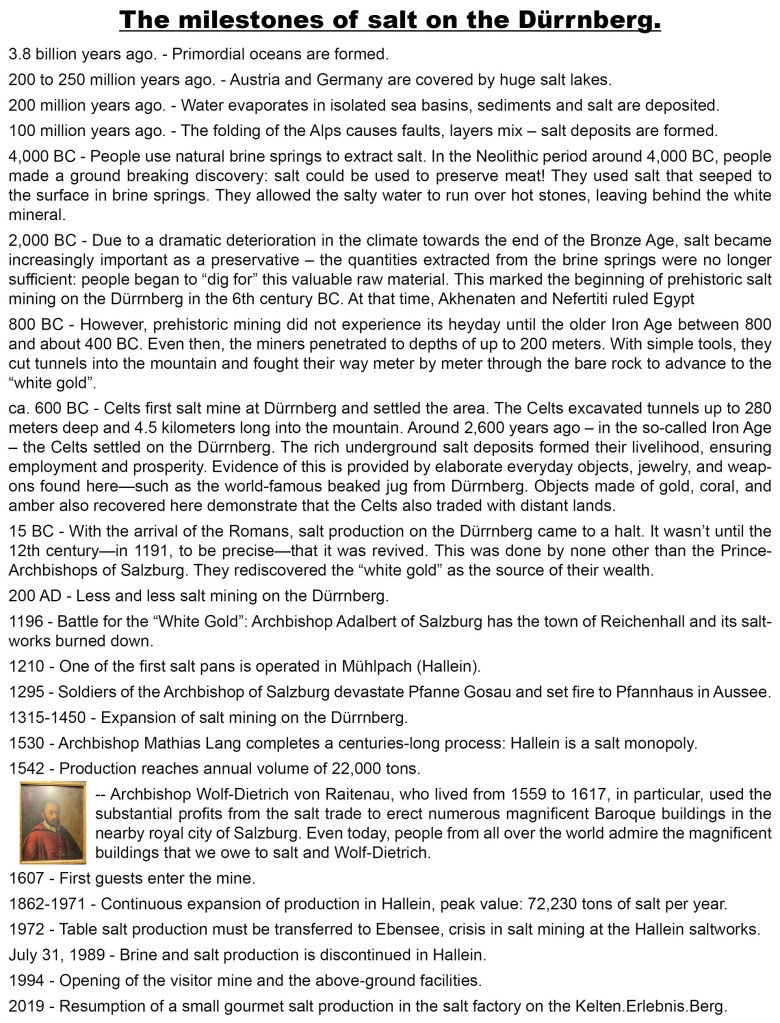
10. Duürrnberg (3727 feet) The Celts were among the first to mine salt in this mountain. This created the basis for wealth of Salzburg with the profitable salt mining.
11. Hochstaufen (5800 feet) Lead and zinc were mined for this mountain to make brass.
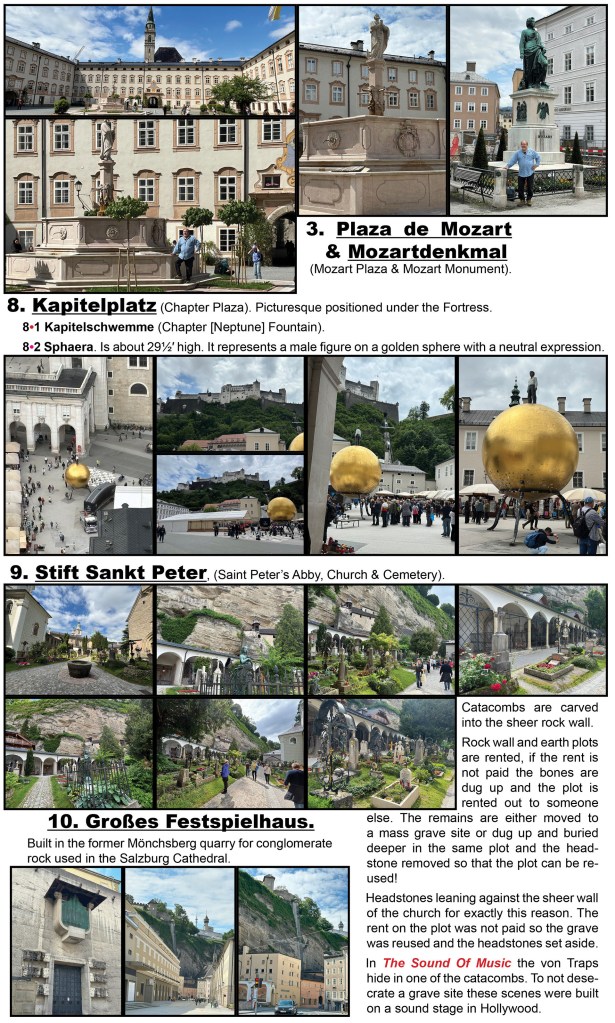
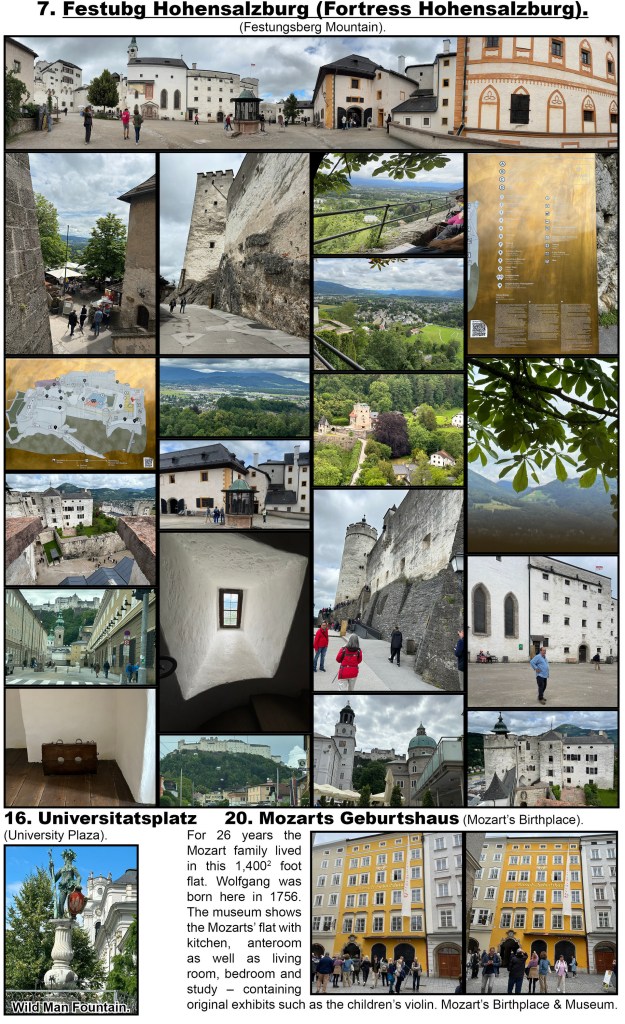
A few notable Salzburg people.
● Johann Michael Haydn (1737 – 1806), composer and younger brother of the composer Joseph Haydn.
● Maria Anna (Nannerl) Mozart (1751 – 1829) She was considered a child piianist prodlgy, like her famoust Wolfgang. She accompanied him on tours through Europe until 1768.
● Wolfgang Amadeus Mozart (1756 – 1791) Birthplace of the 18th-century composer, who is considered one of the greatest composers of all time.
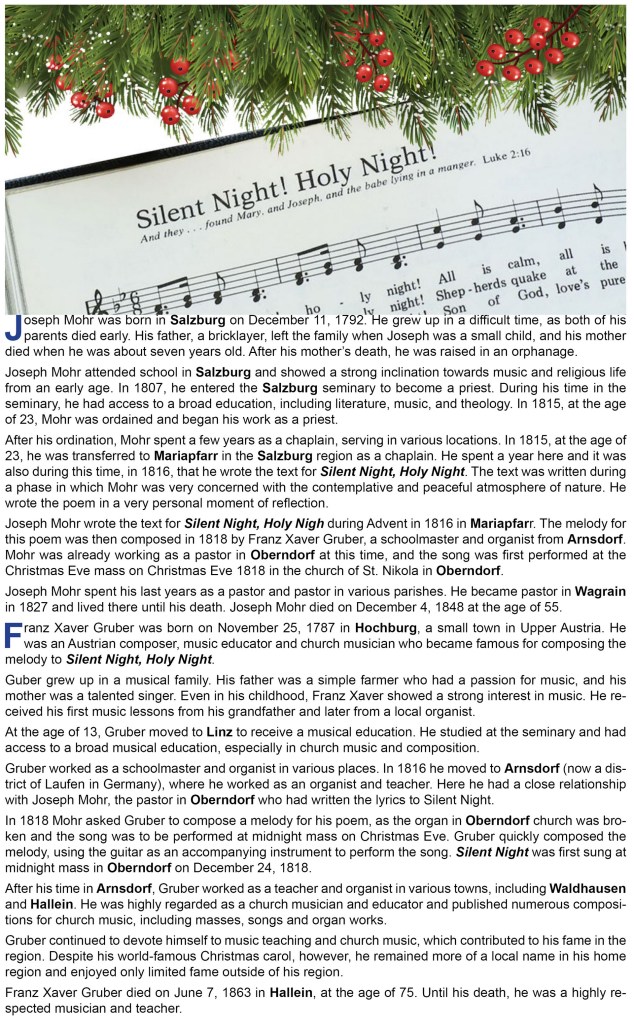
● Joseph Mohr (1792 – 1848) An Austrian who became a priest in 1815 and he wrote the lyrics to “Silent Night” in 1816 while living in Salzburg.
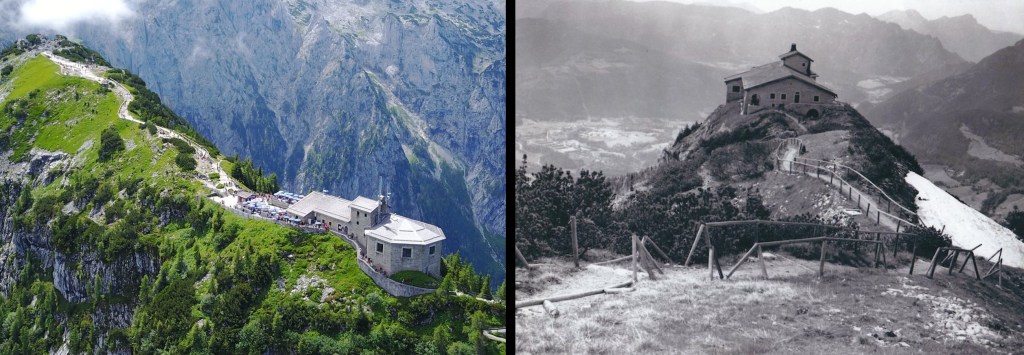
● Georg von Trapp (1880 – 1947), Maria von Trapp (1905 – 1987), and their children made up the Trapp Family and lived in Salzburg until they fled to the United States following the Nazi takeover. Georg was the most successful Austro-Hungarian submarine commander of WW I. He was offered a commission in the German Navy. But, Georg decided to decline the offer out of the hostility to Nazi ideology. He also politely declined a request for the family choir to perform at a Hitler birthday concert at the Eagles Nest.
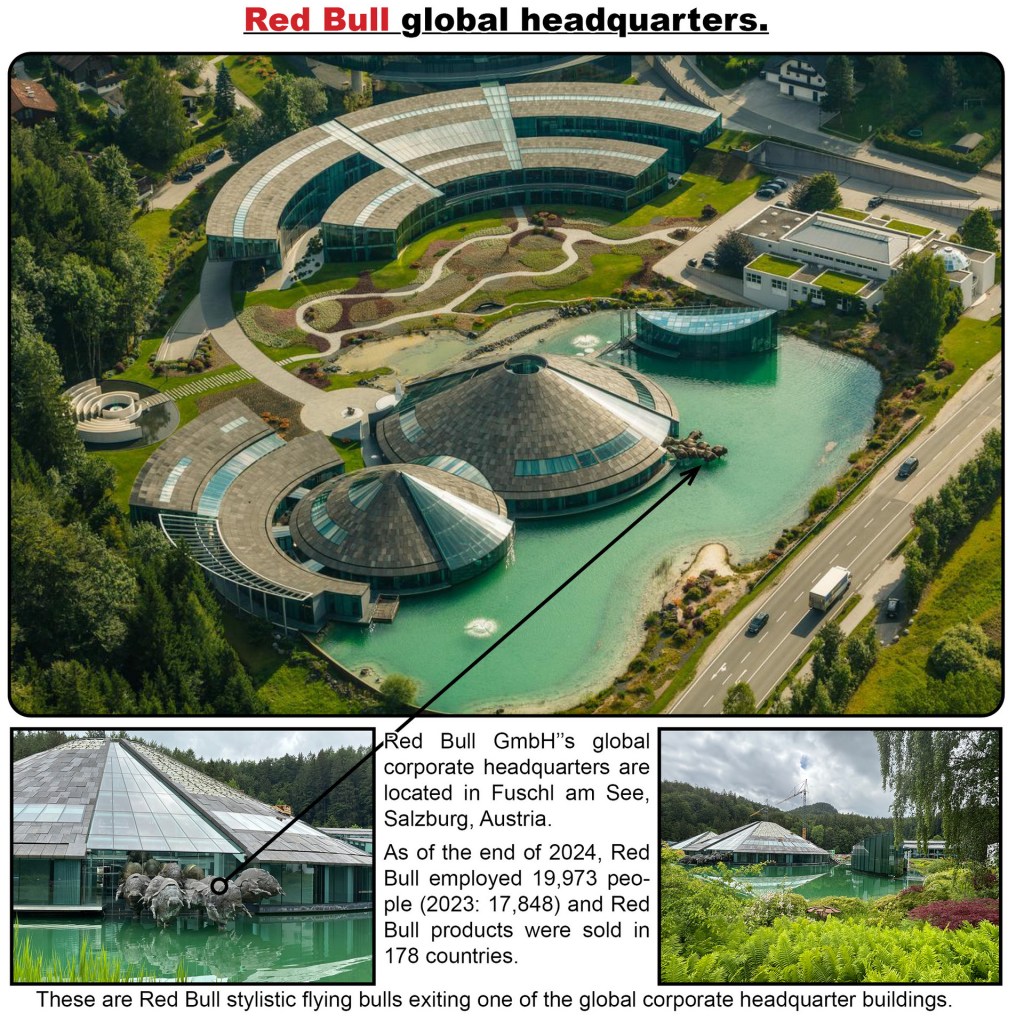
● Dietrich Mateschitz (1944 – 2022) is a Salzburg residence who founded Red Bull in 1984 and launched it as an energy drink in 1987, with a great Red Bull (Hanger-7) Museum in Salzburg since 2003.
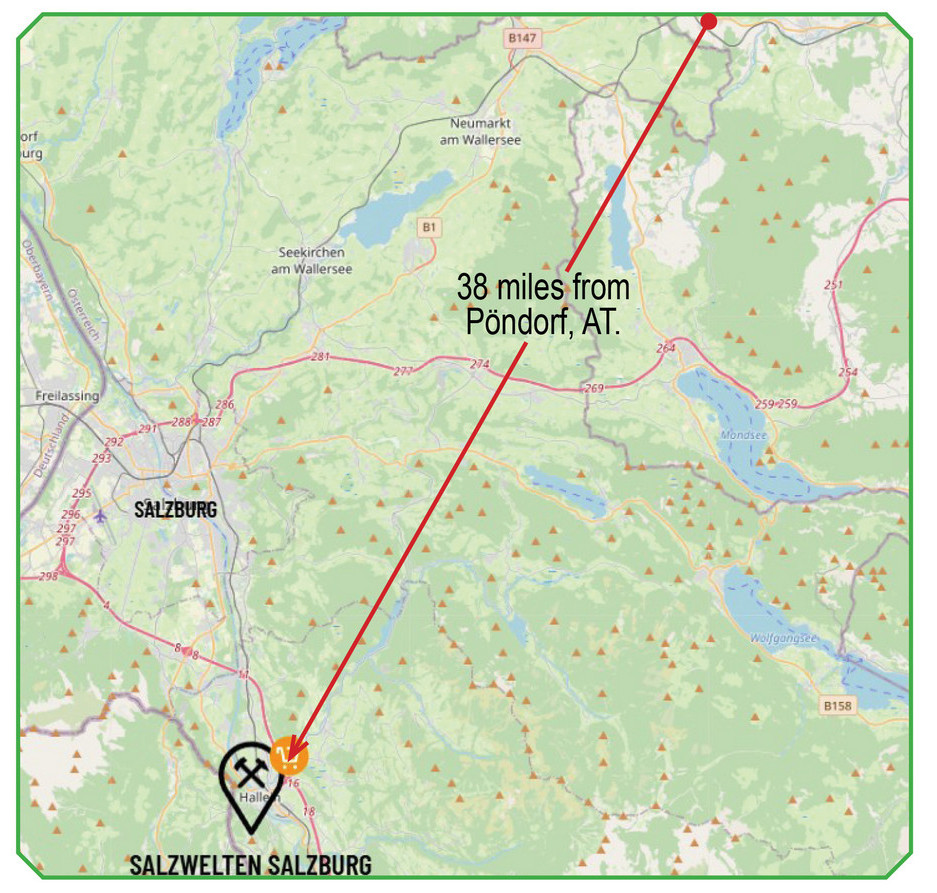
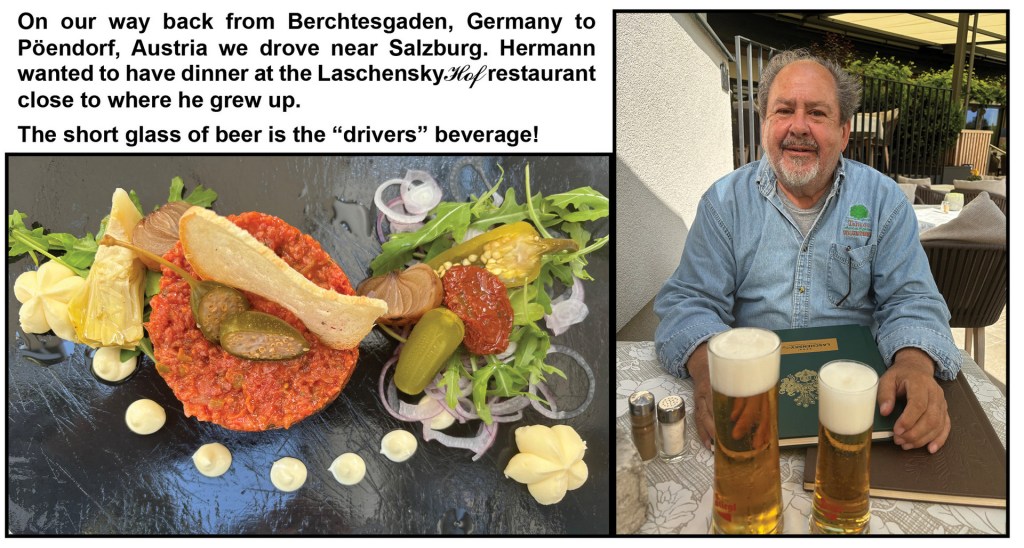
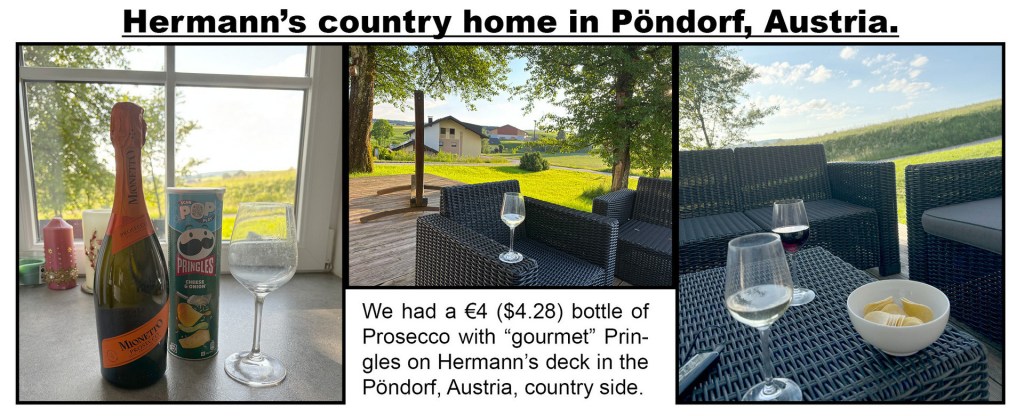
● Hermann is a resident of Pöndorf, (Central Bavarian: Pädoaf) is a municipality in the district of Vöcklabruck in the Austrian state of Upper Austria with a population of 2,339. It is about 25 miles from Salzburg. Hermann is a good friend I’ve known since the 1990’s when he was the Chief Engineer and Safety Manager of the Wrigley Factory in Salzburg. By the way, Hermann’s daughter Safia and son Sebastian were born in this village of Oberndorf, Austria where for the first time Silent Night was heard with music in 1818.
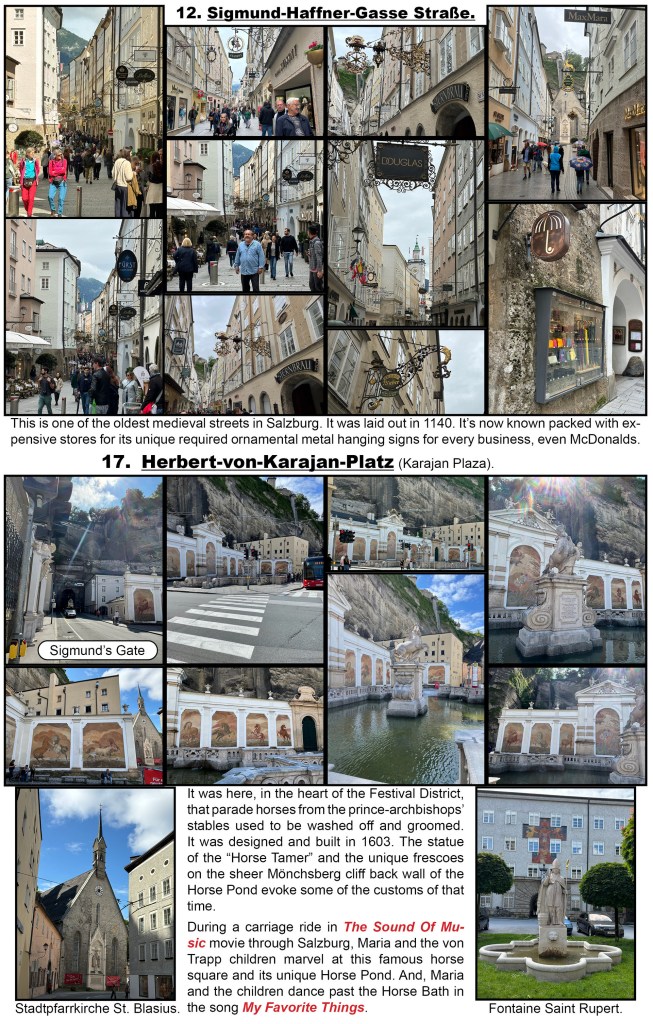
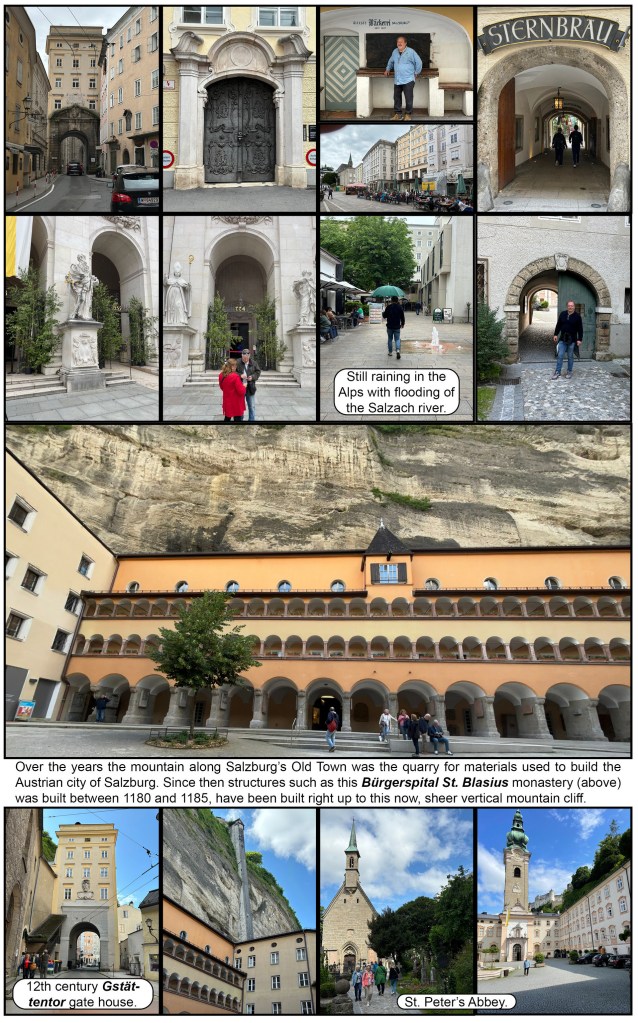
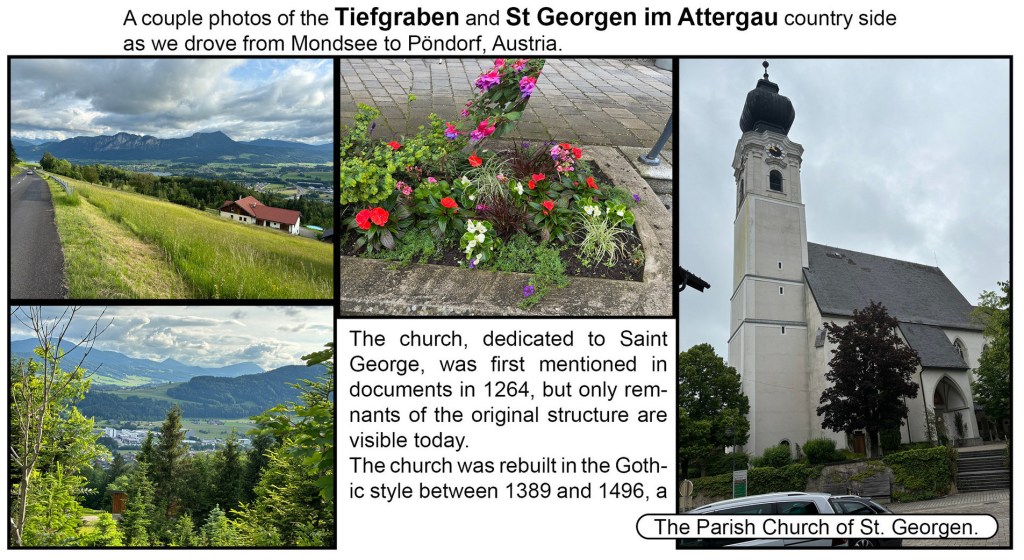
Day two in and around Salzburg.
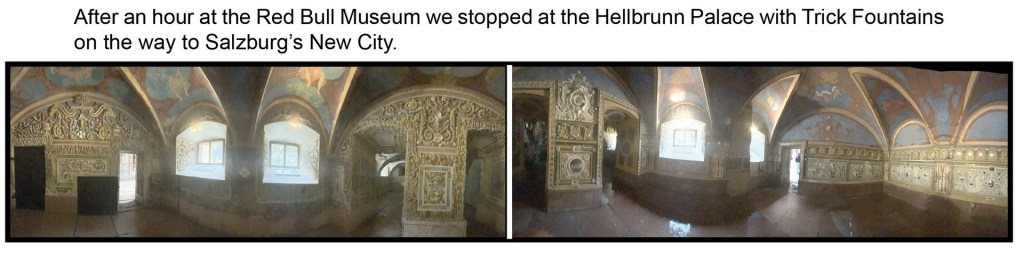
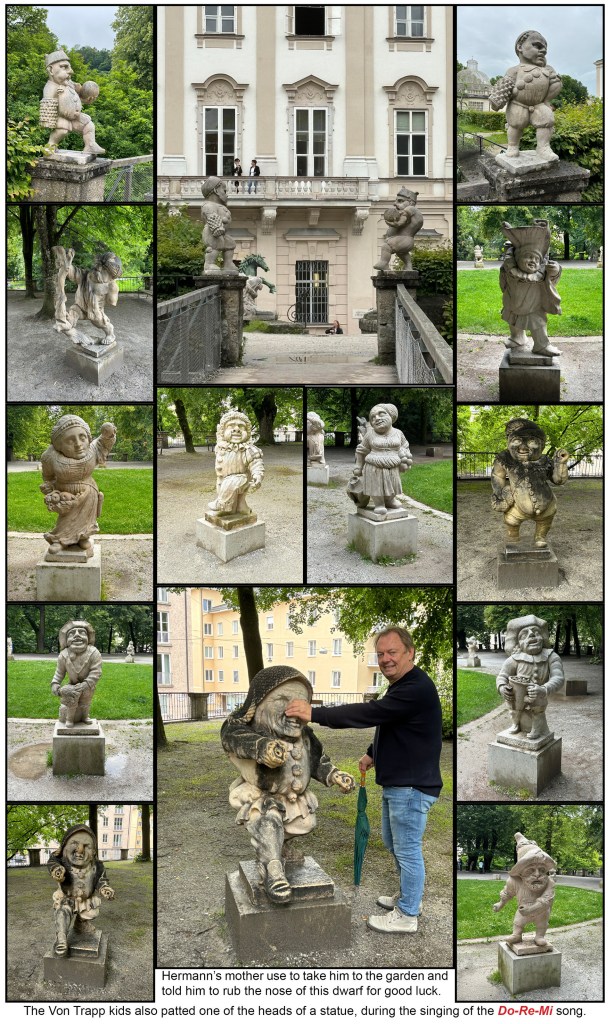
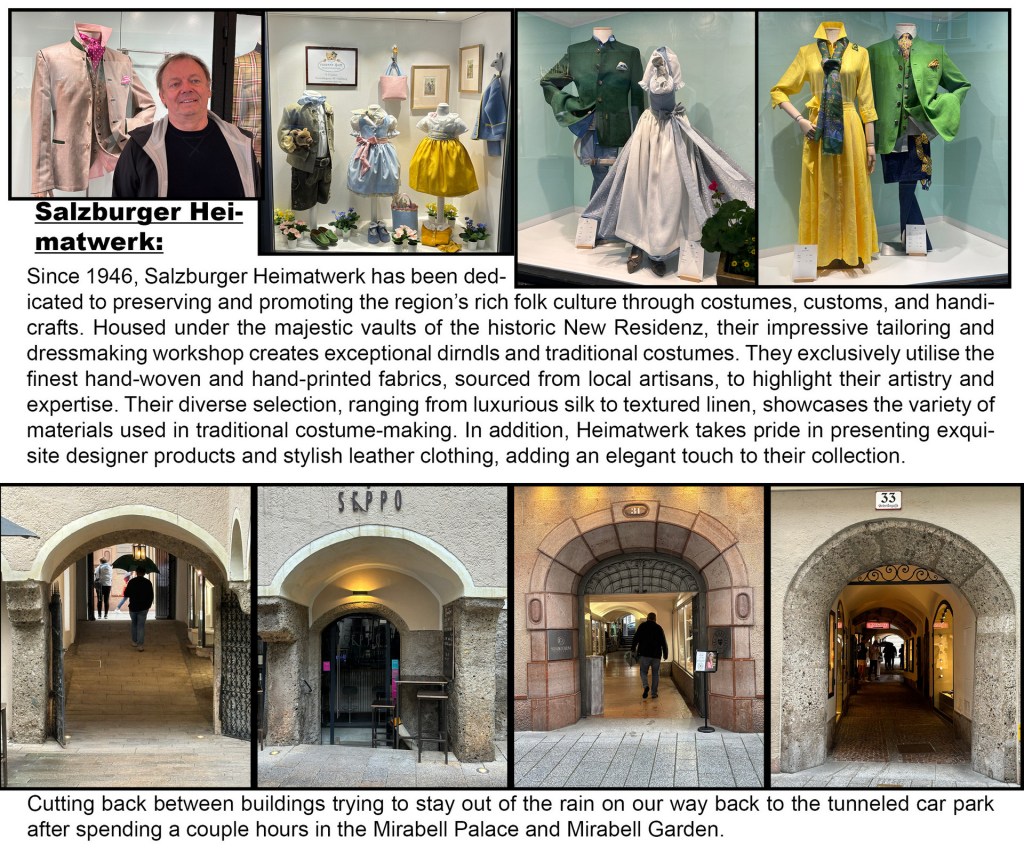
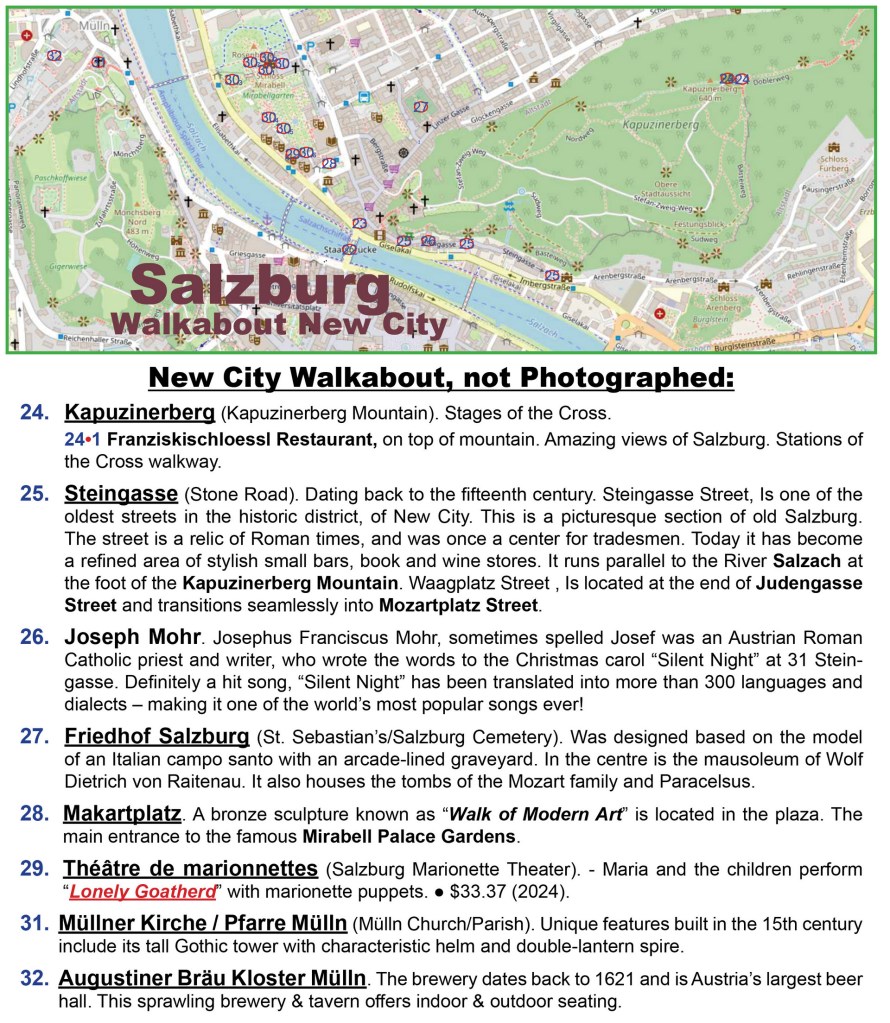
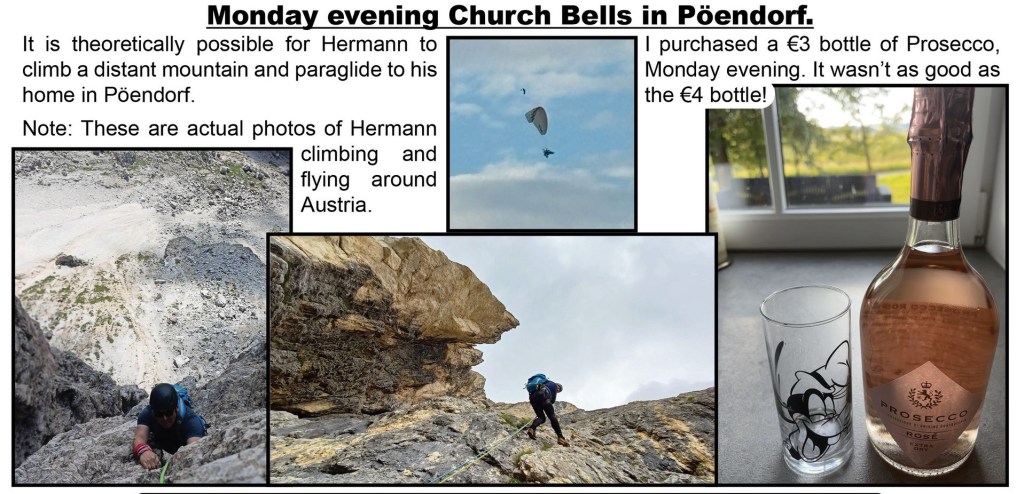
Uncle Jack’s, Salzburg, Austria. Appendix:
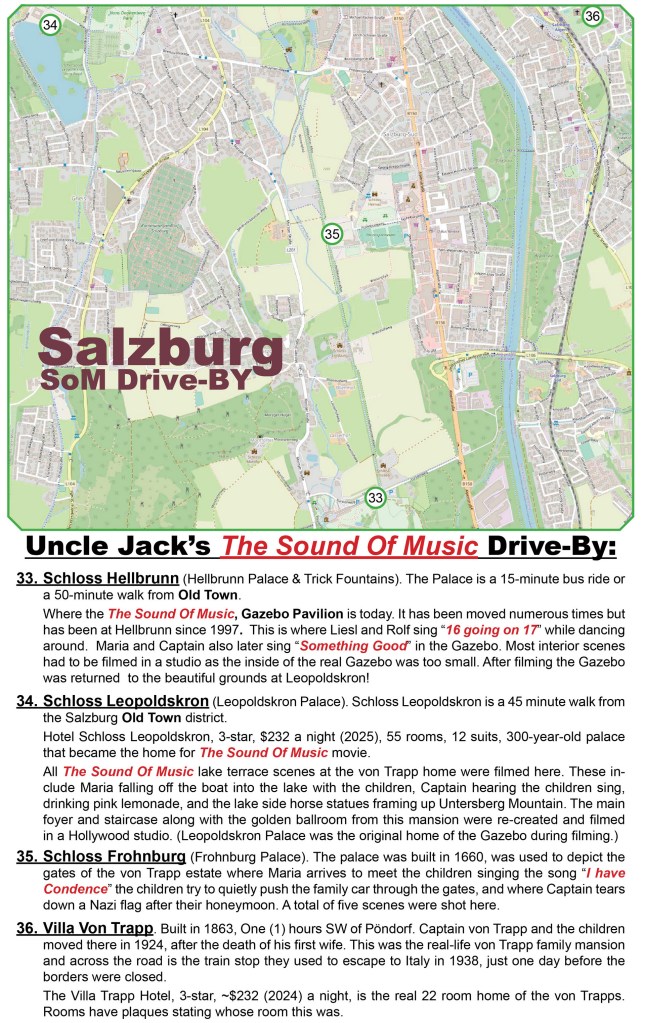
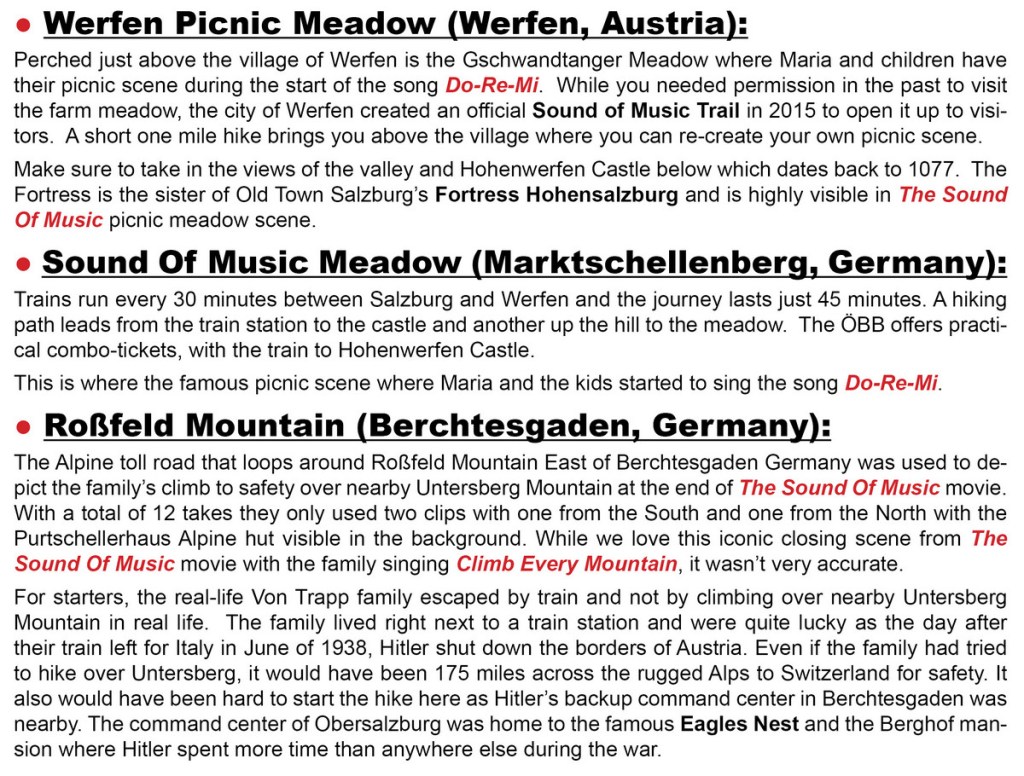
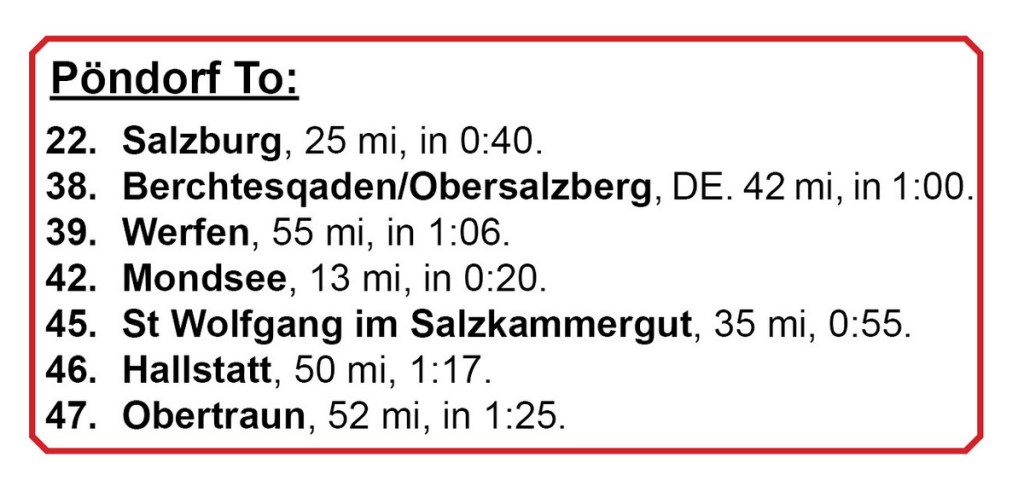
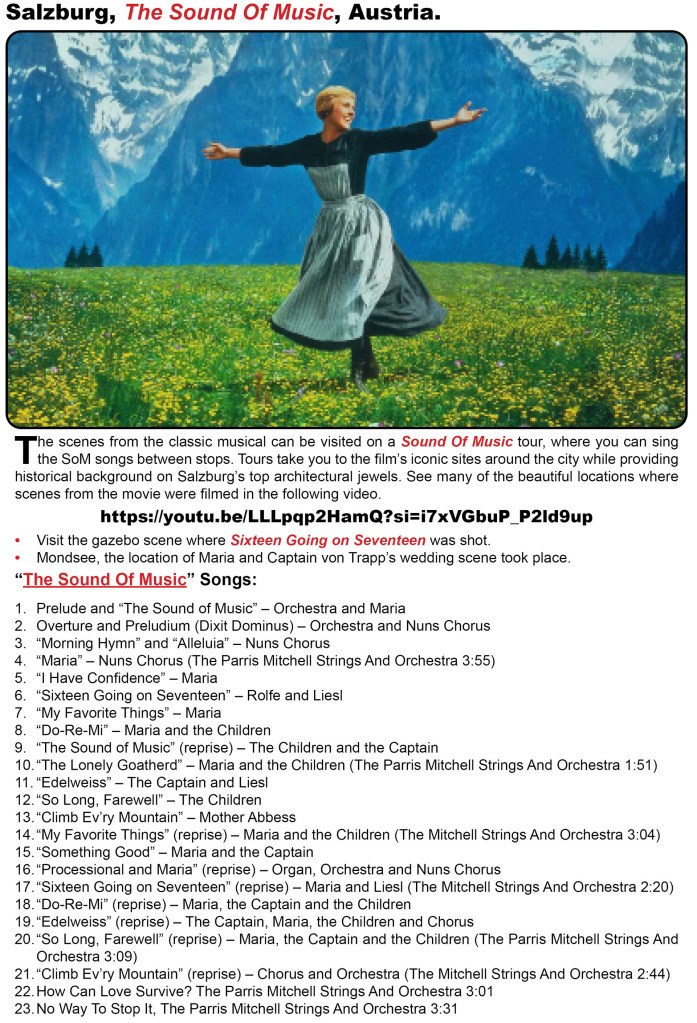
The above is a 36:18 video depicting many places at which The Sound Of Music was filmed. Marktschellenberg, Schloss Frohnburg, Schloss Leopoldskron, Nonnberg, Mirabellgarten, Schloss Hellbrunn, Petersfriedhof, Felsenreitschule…, Werfen, Mondsee, Schafberg and Rossfeld. Then; 1964 and in 2014.
This video is a must if you are a fan of The Sound Of Music visiting Salzburg.
↑Click above to view Austrian cities Uncle Jack visited in 2024.↑
Copyright @ 2025 JACK L. WINEGAR All Rights Reserve.

“I was not expecting the unexpected!”
↑Click above to view Austrian cities Uncle Jack visited in 2024.↑
Copyright @ 2025 JACK L. WINEGAR All Rights Reserve.
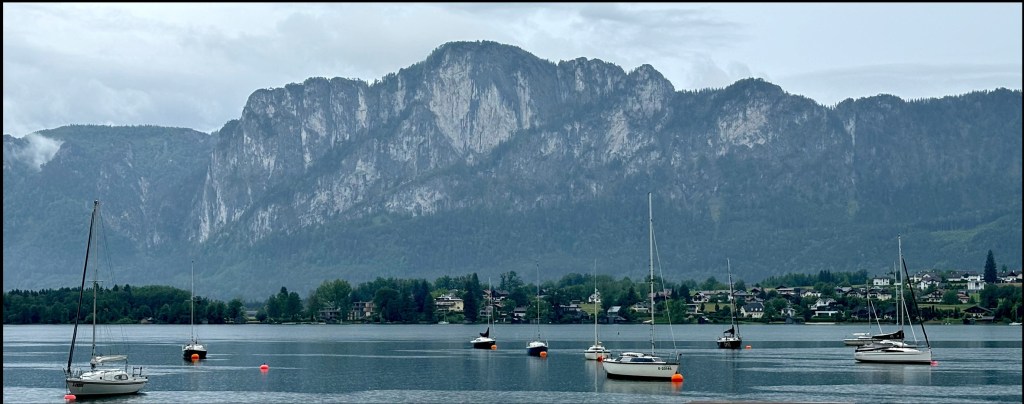
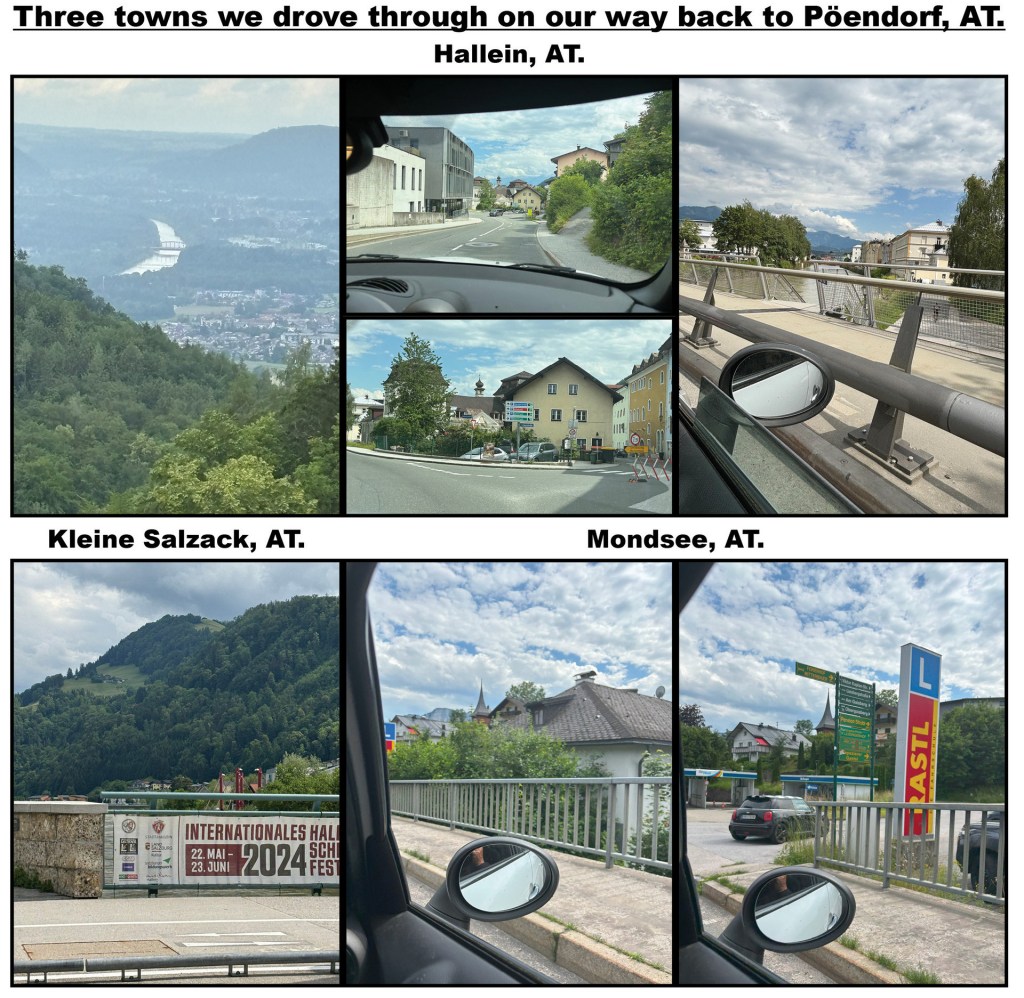
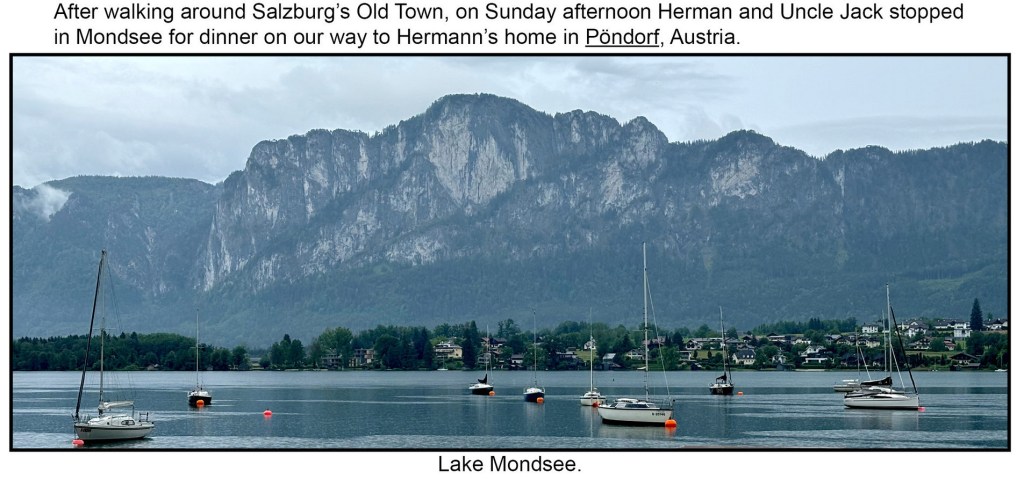
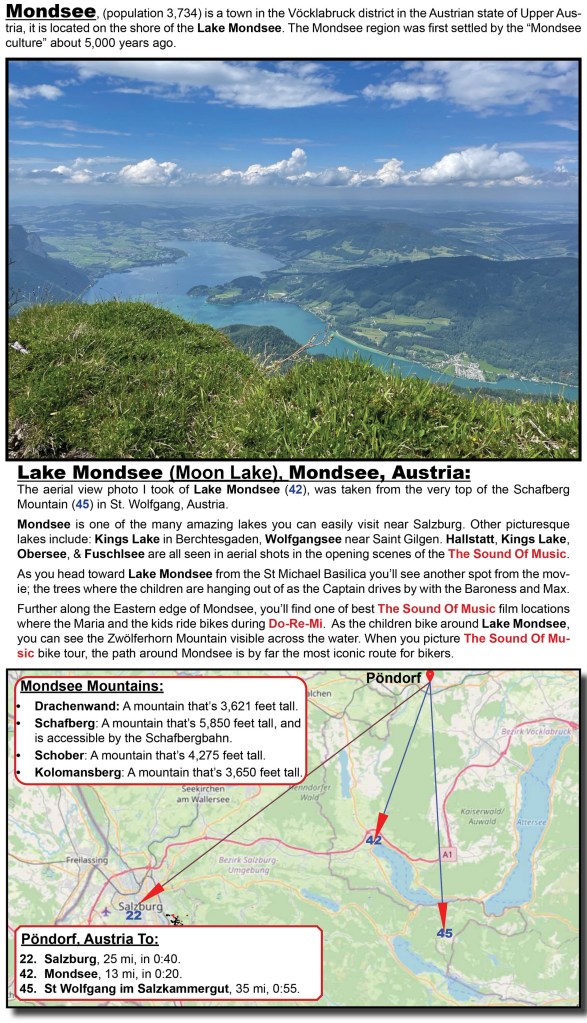
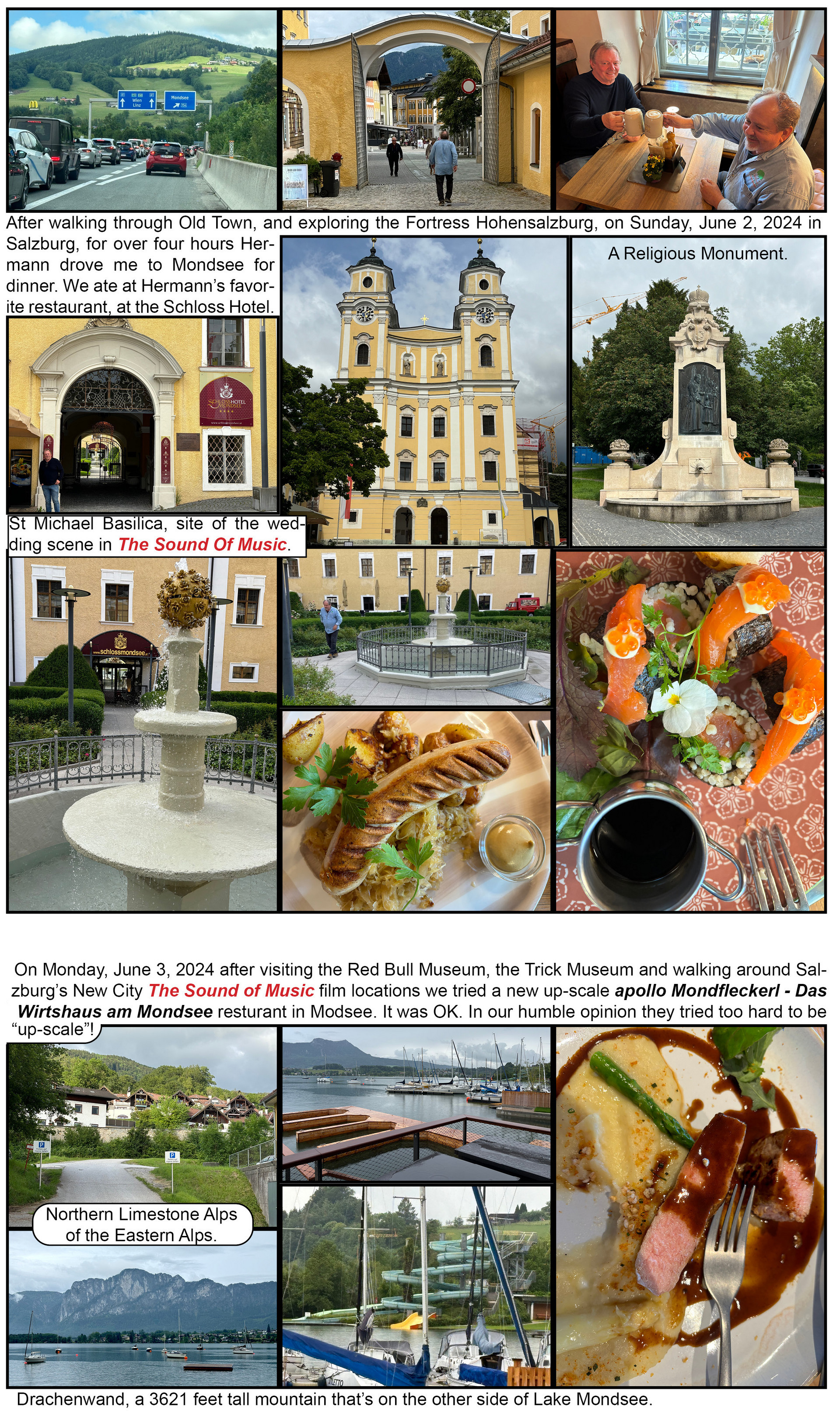
Mondsee (population 3,734) is a town in the Vöcklabruck district in the Austrian state of Upper Austria, located on the shore of the Lake Mondsee. The Mondsee region was first settled by the “Mondsee culture” about 5,000 years ago.
↑Click above to view Austrian cities Uncle Jack visited in 2024.↑
Copyright @ 2025 JACK L. WINEGAR All Rights Reserve.
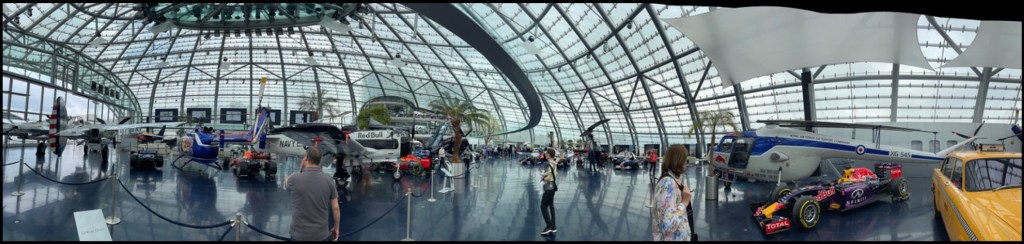
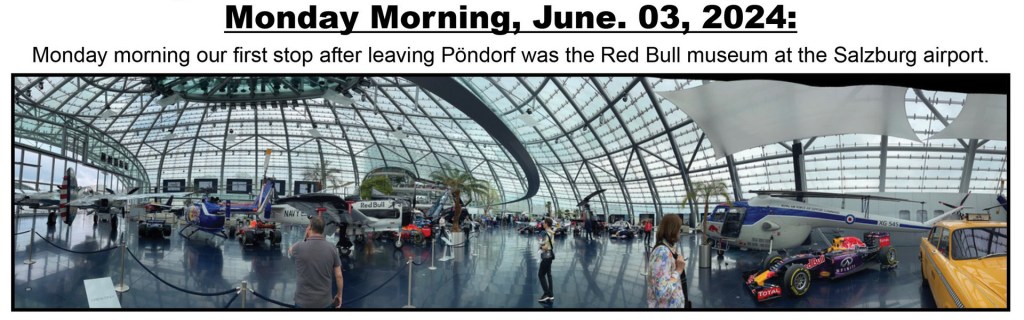
On Monday morning June 3, 2024, on our way to Salzburg, Austria’s New Town we stopped at this free museum.
Hangar-7 is an events venue, gallery and museum space adjacent to Salzburg Airport. Designed to bring together arts, aviation and the culinary arts, the venue hosts the Michelin-starred restaurant Ikarus, two bars and a lounge alongside a collection of historical Red Bull airplanes, helicopters, Formula One racing cars, and more in rotating exhibitions.
Hangar-7 was initially developed by Red Bull founder Dietrich Mateschitz who was looking for more space for the Flying Bulls, a private aircraft collection and performance aviation fleet associated with Red Bull.
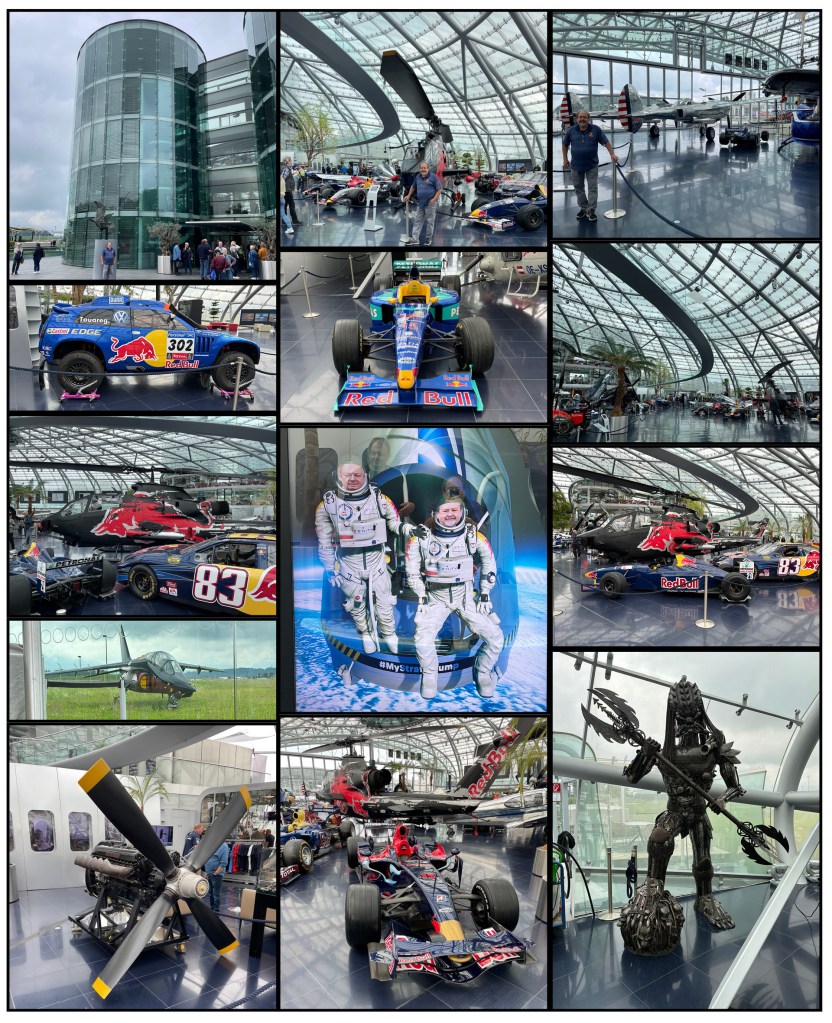
A quick little 48 second YouTube video of Uncle Jack and Hermann in Hanger-7.
↑Click above to view Austrian cities Uncle Jack visited in 2024.↑
Copyright @ 2025 JACK L. WINEGAR All Rights Reserve.
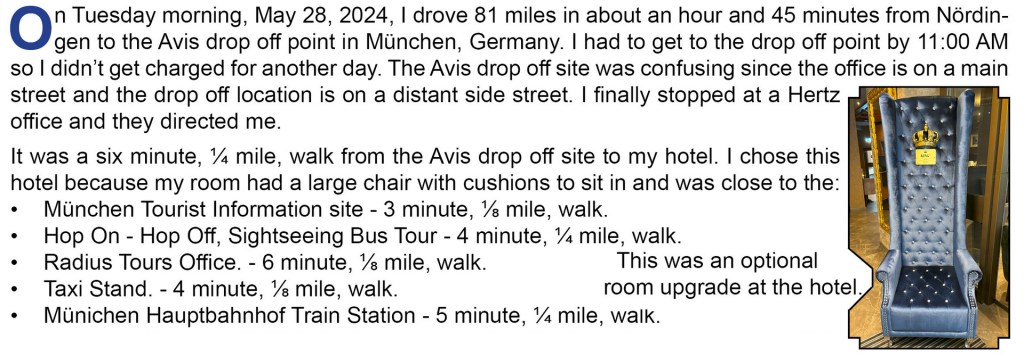
München (/ˈmjuːnɪk/ MEW-nik; German) (English: Munich). Population, 1,594,632. It is the third largest city in Germany and the largest city in the state in Bavaria. The city is first mentioned in 1158. It was heavily bombed, 71 times during World War II. München was liberated by US troops on April, 30, 1945. Old Town has been restored and the city boasts nearly 30,000 old buildings from before the war.
Royal Palaces, Jewels, and Grand Boulevards makes München a culture powerhouse.
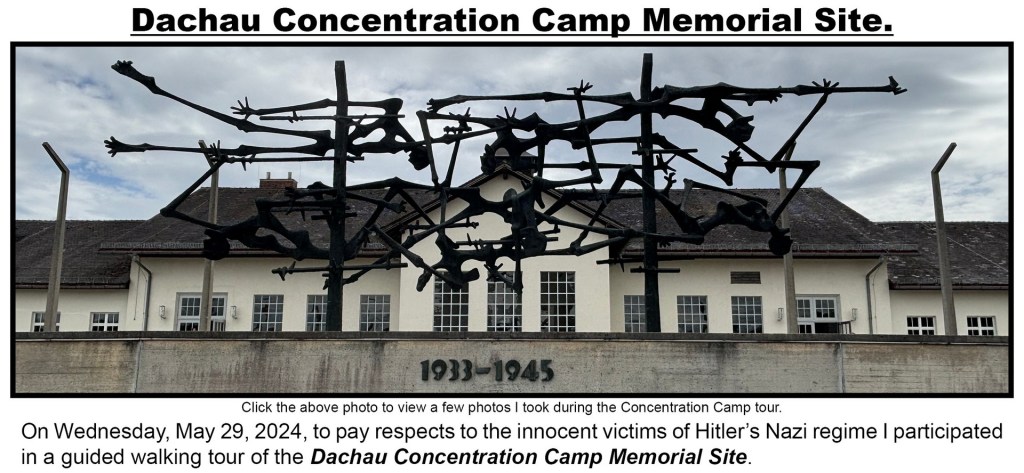
Meanwhile, the concentration camp memorial in nearby Dachau reminds us that a century ago, München provided a springboard for Nazism.
München’s Old Town center, has colorful pedestrian zones. I spent the time in a frosty beer hall (German: Biergarten), eating a big pretzels amidst an oompah band belching with Bavarian atmosphere.
The 1971 Willy Wonka film scene at Bill’s Candy Shop was filmed at Lilienstraße, München, plus, other scenes throughout München.
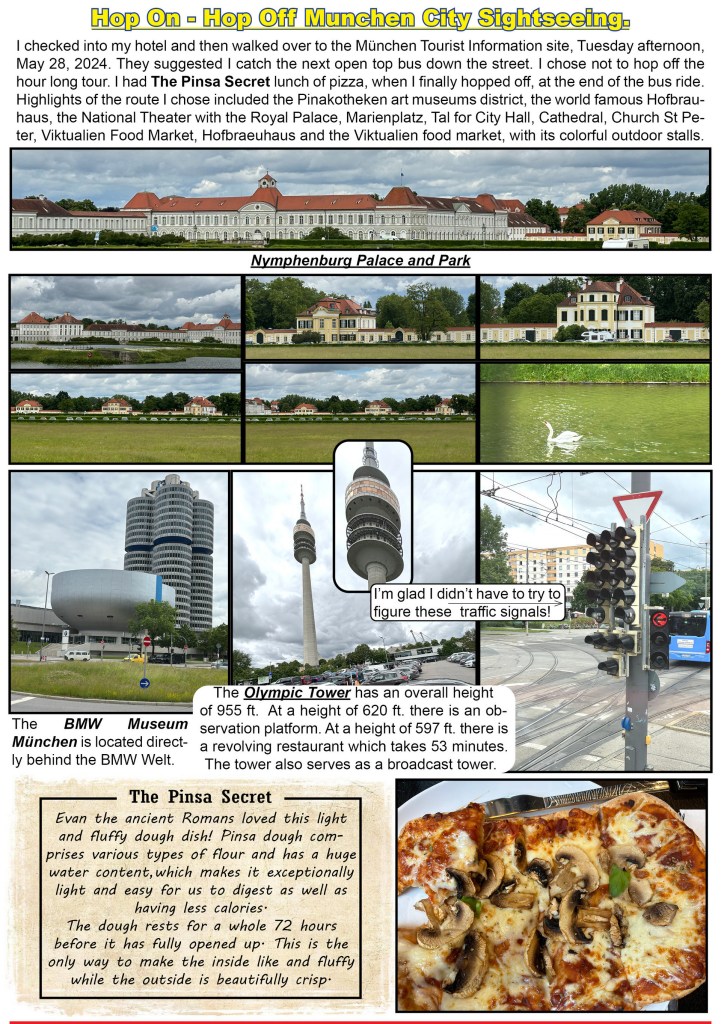
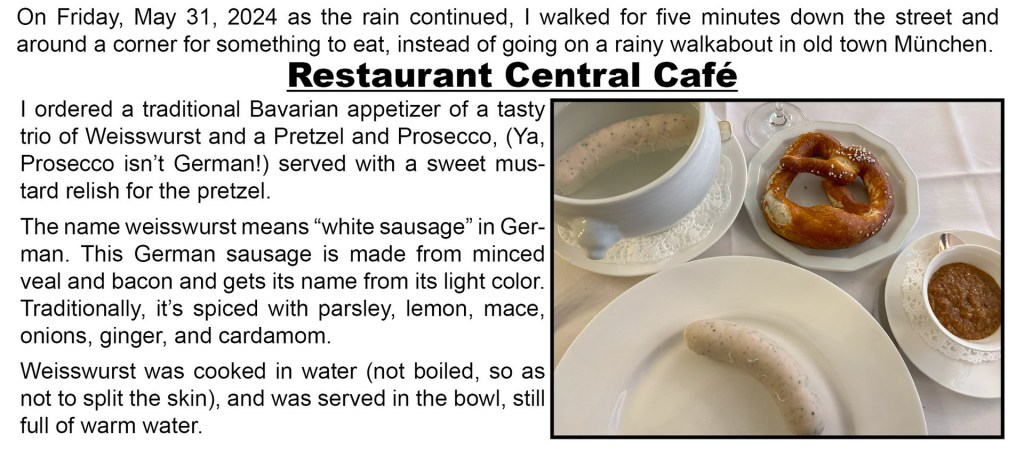
THOUGHTS ON TRADITIONAL GERMAN FOOD
German food is coherent and highly varied, which in a way summarizes the entire country.
Germans pride themselves on good, simple foods like bread, sausages, and fruit desserts. While German food is often overlooked in favor of its much more famous neighbor France, it’s important to recognize that Germany also has many outstanding dishes, many of which should be tasted and celebrated.
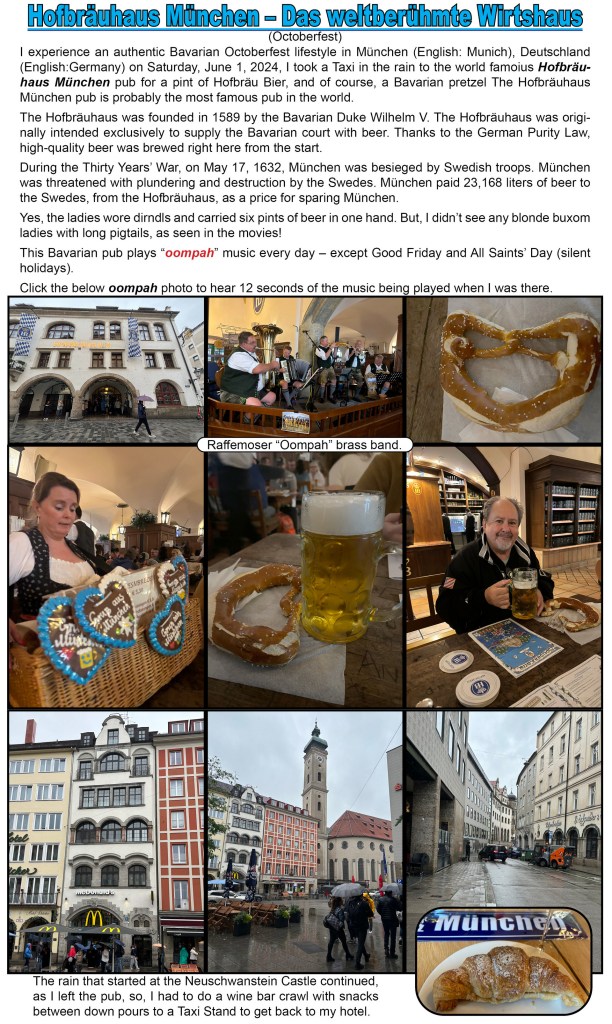
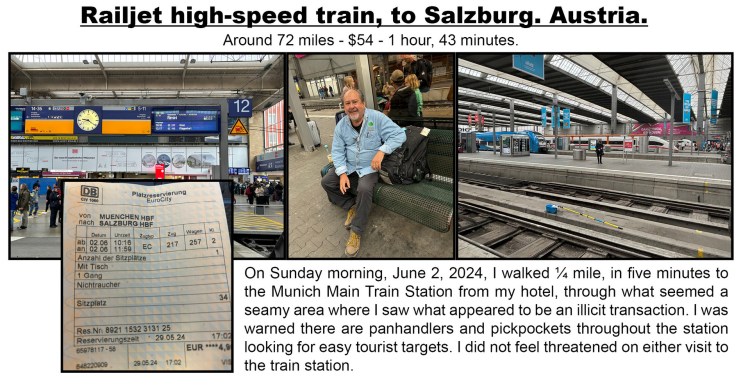
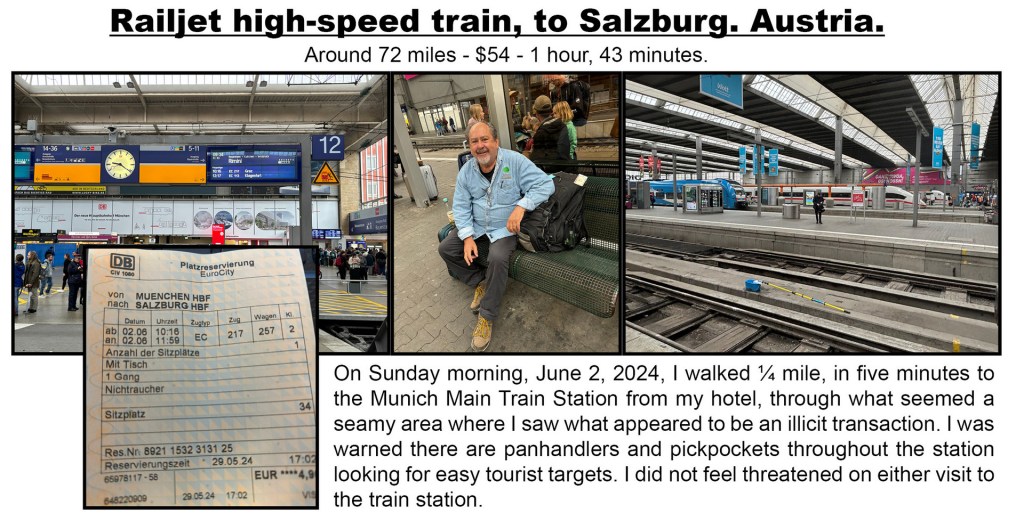
Summery of München, Bavarian, Germany visit.

Copyright @ 2024 JACK L. WINEGAR All Rights Reserve.
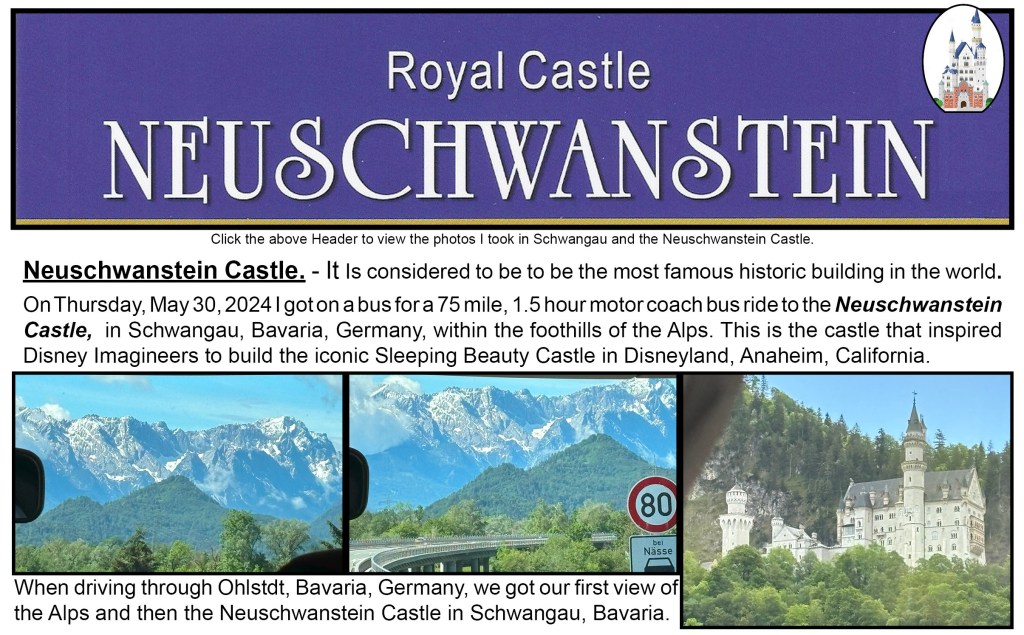
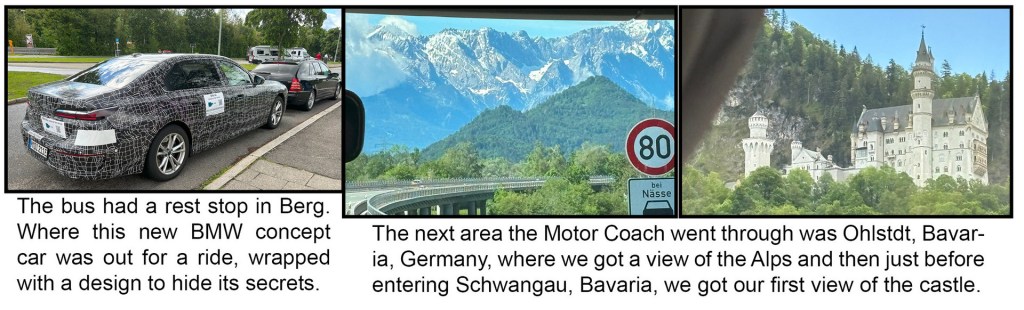
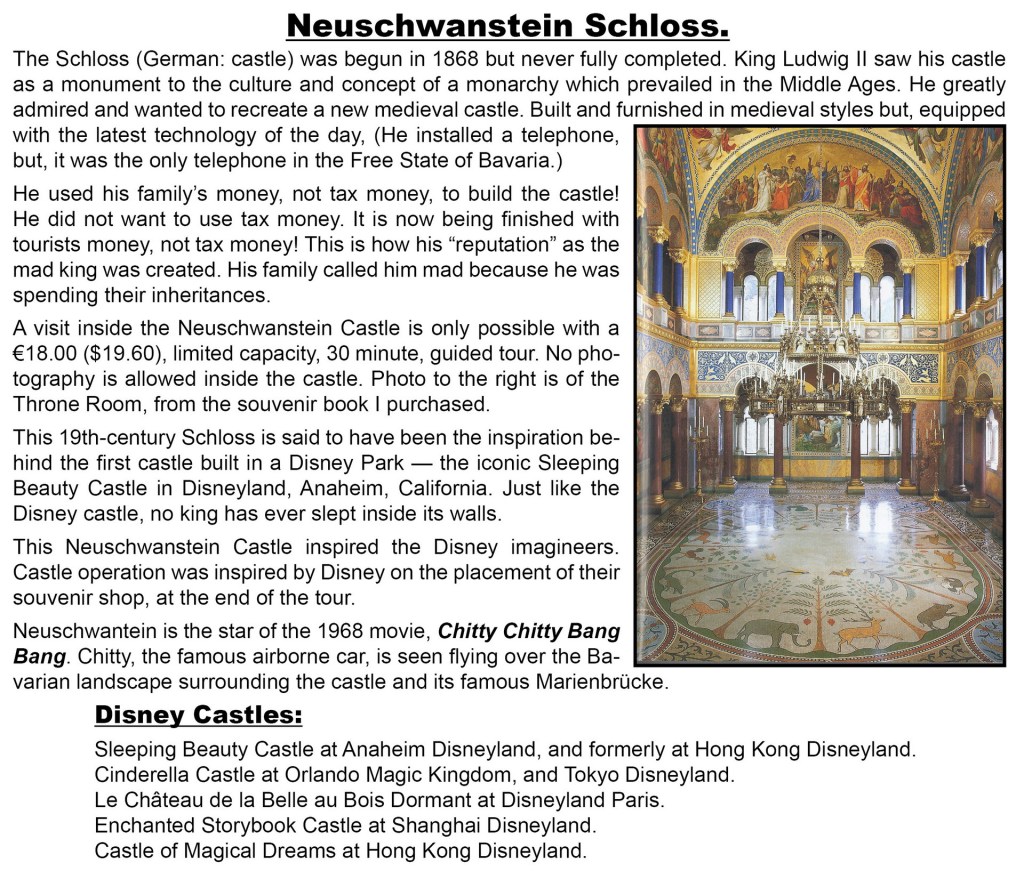
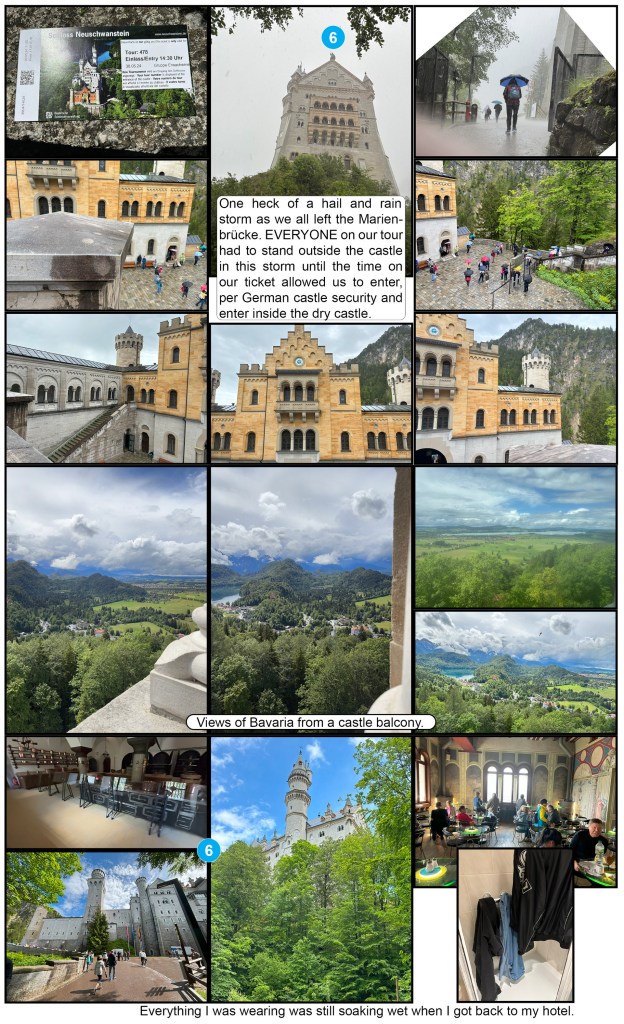
On Thursday, May 30, 2024, I walked from my hotel to the Radius Tours Office and got on a large motor coach bus for a 75 mile, 1.5 hour bus ride for a Neuschwanstein Castle Tour, in Schwangau, Bavaria, Germany, within the foothills of the Alps.
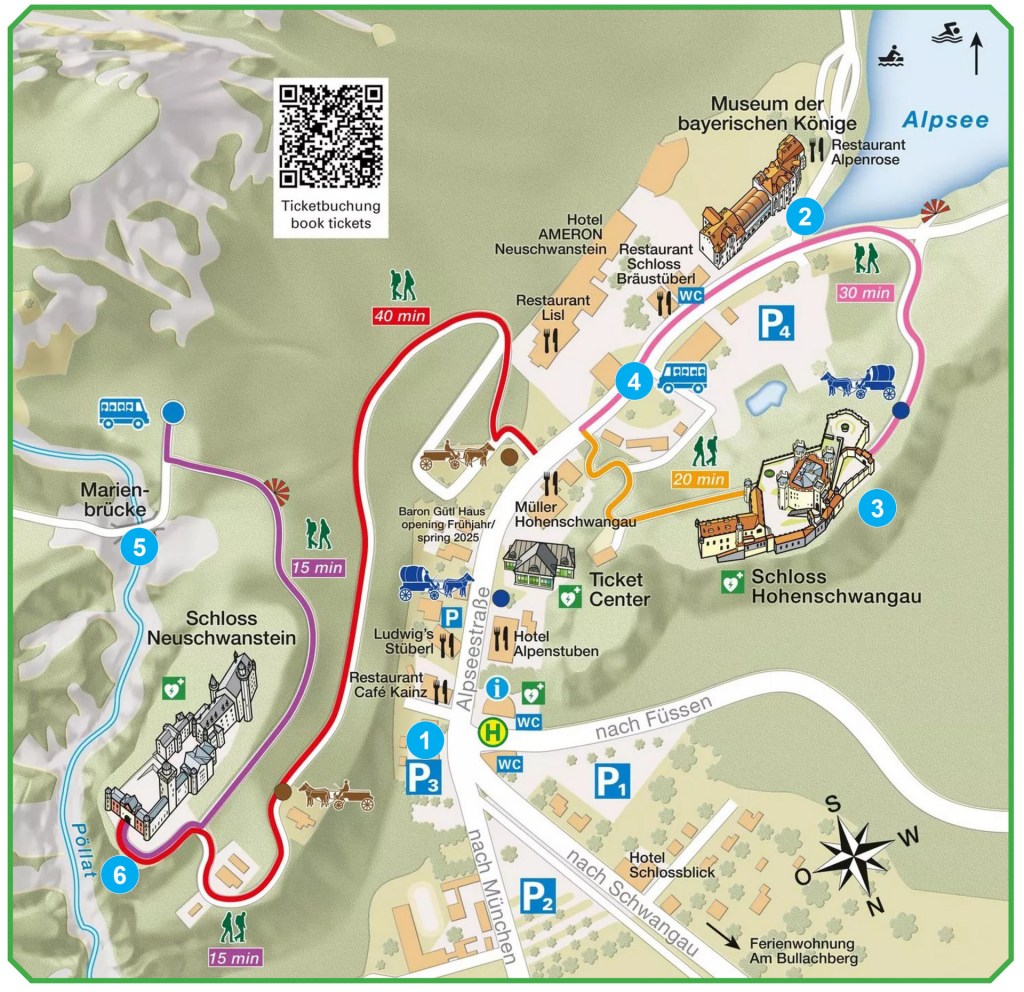
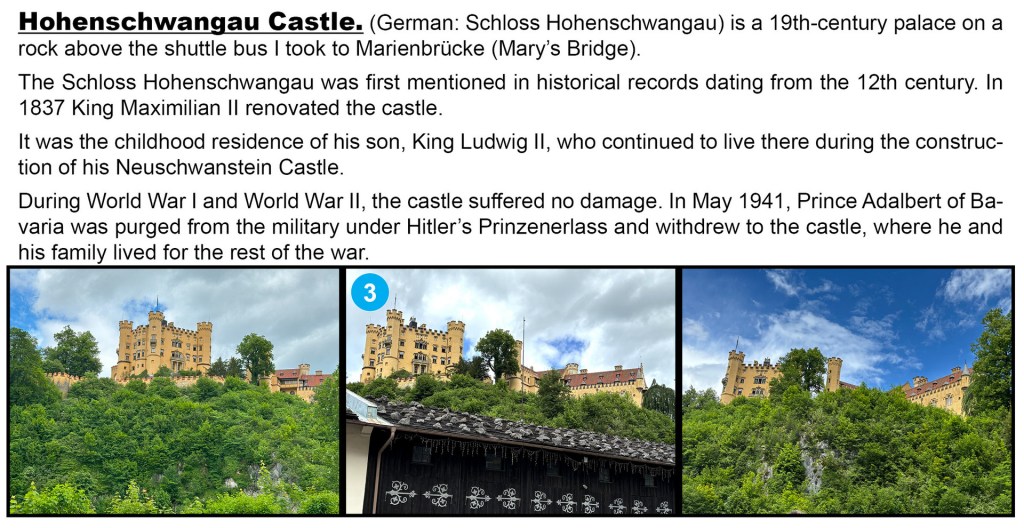
How to reach the Marienbrücke (Mary’s bridge).
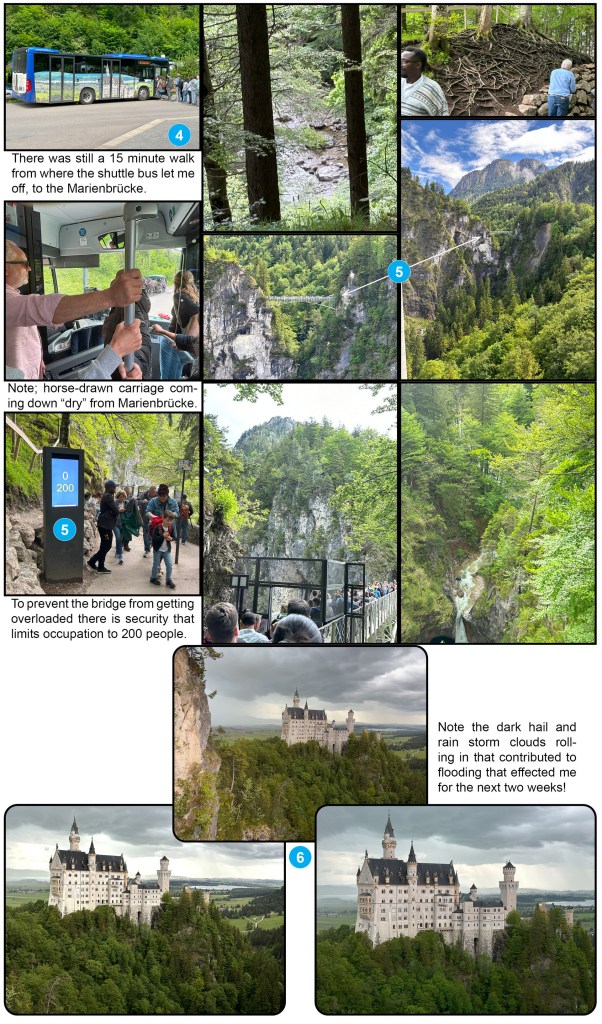
After our walking tour of Schwangau we were told to meet at the Neuschwanstein Castle at 2:30 PM. And, suggested we stop at the Marienbrücke for great photos of the Neuschwanstein Castle. We could either walk uphill on a steep incline for 45 minutes to the bridge, or take a horse-drawn carriage or a 15 minute Shuttle Bus for €5.00 ($5.45) per person, round trip from parking lot P4. Virtually all of us took the bus!
But, when retuning the very curvy road was too dangerous for the Shuttle Bus to drive on, from all the hail and rain! I had been told there was even a steeper shortcut down the hill to our motor coach bus, which I found and transited without falling!
Marienbrücke (Mary’s bridge), above the Pöllat Gorge.
Marienbrücke (English: Mary’s Bridge, aka Pöllat Bridge) is situated right behind and in clear line of sight of the Neuschwanstein Castle. The bridge was named after Queen Marie.
In 1845, King Maximilian II, ordered a wooden footbridge to be built across the Pöllat Gorge. This bridge was constructed using traditional timber construction and most likely turned out to be not very stable, since it was rebuilt after only a few years. In order to increase the bridge’s stability, a structure consisting of three layers of beams and lateral support beams was chosen. The resulting building, stretching to 115 feet in length, however, it did not offer an aesthetically pleasing sight of the Neuschwanstein Castle.
Precisely this was why King Ludwig II’s reason to have this footbridge replaced by a filigree iron structure in 1866. During the construction of Marienbrücke Bridge, a completely new method of construction was successfully tested: At a distant of 300 feet above the Pöllat cascade, the girders were erected by anchoring it in rocks on both sides by pre-constructing the individual support frames, without requiring further supportive braces.
In 1984, the bridge was restored with the girders being renewed again. The barristers, however, are still the original ones used in 1866.
In early August 2015, the bridge was temporarily closed for visitors, due to restoration work on the rock anchoring system. Damaged anchors were repaired, and the coatings of the iron structure and the wooden floorboards were also renewed.
From the beginning of 2021 to the middle of 2022, the Marienbrücke was closed again, because all rock anchors had to be replaced due to structural problems. “Rest assured, I felt this spindly bridge was safe to walk on, with occupation limits!“

Copyright @ 2024 JACK L. WINEGAR All Rights Reserve.

 Jack's Travel Blog