Optional blog title would be Deadwood, SD to Sturgis, SD to Vale, SD to Bowman, ND to Medora, ND.
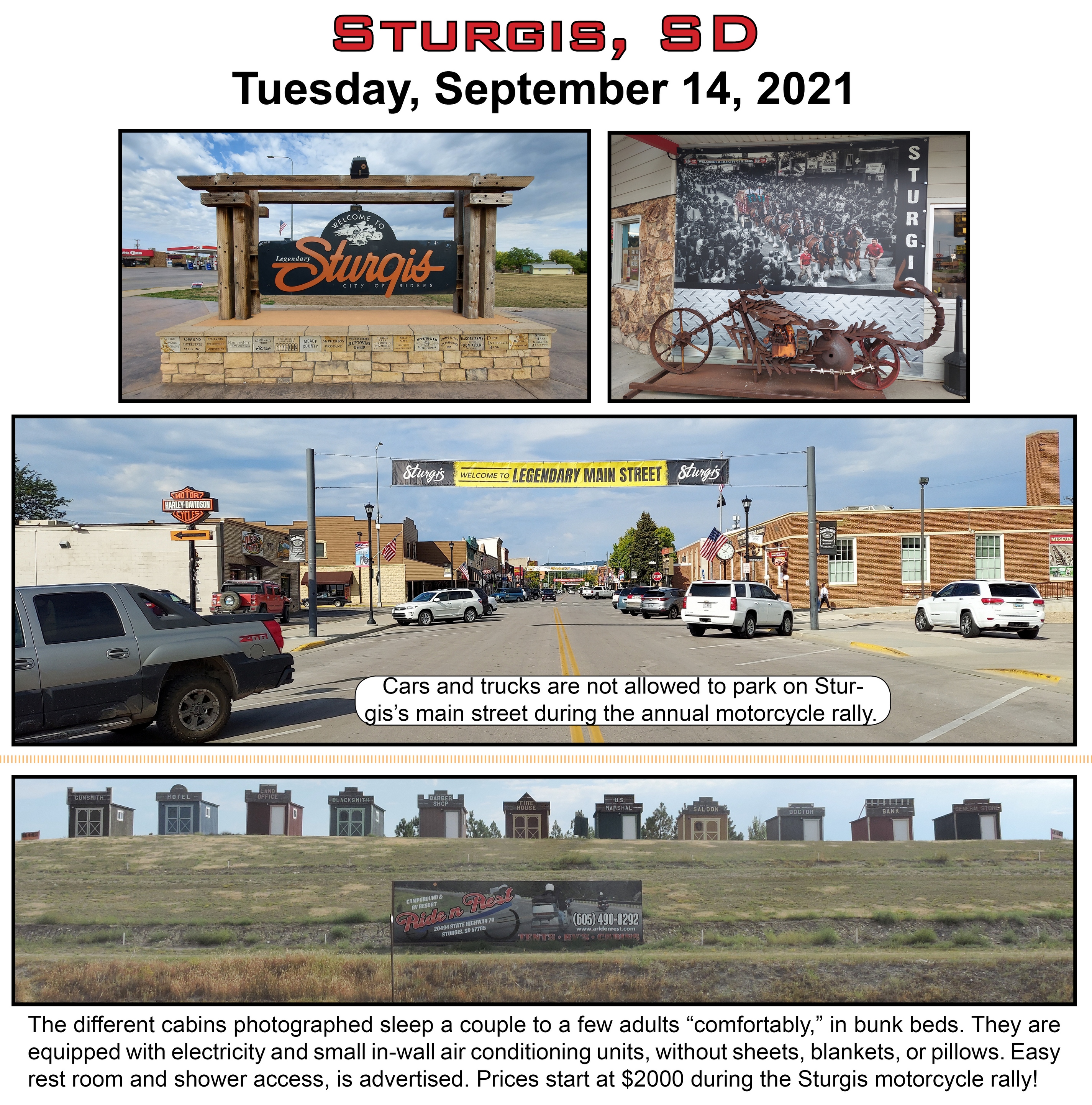
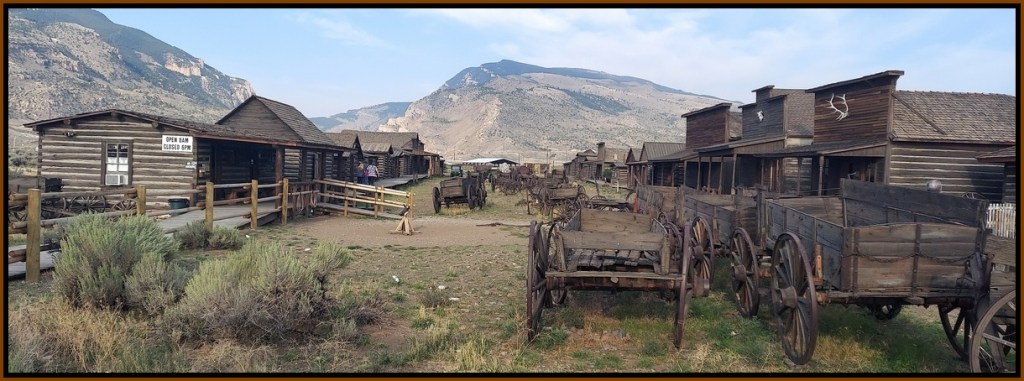
Sturgis, SD is located on the northeastern edge of the Black Hills National Forest and was named for Lieutenant Jack Sturgis, who died with George A. Custer at the Battle of the Little Bighorn. Sturgis, is know world wide for its motorcycle rally, but it’s history started in the old wild west in the 1870s!
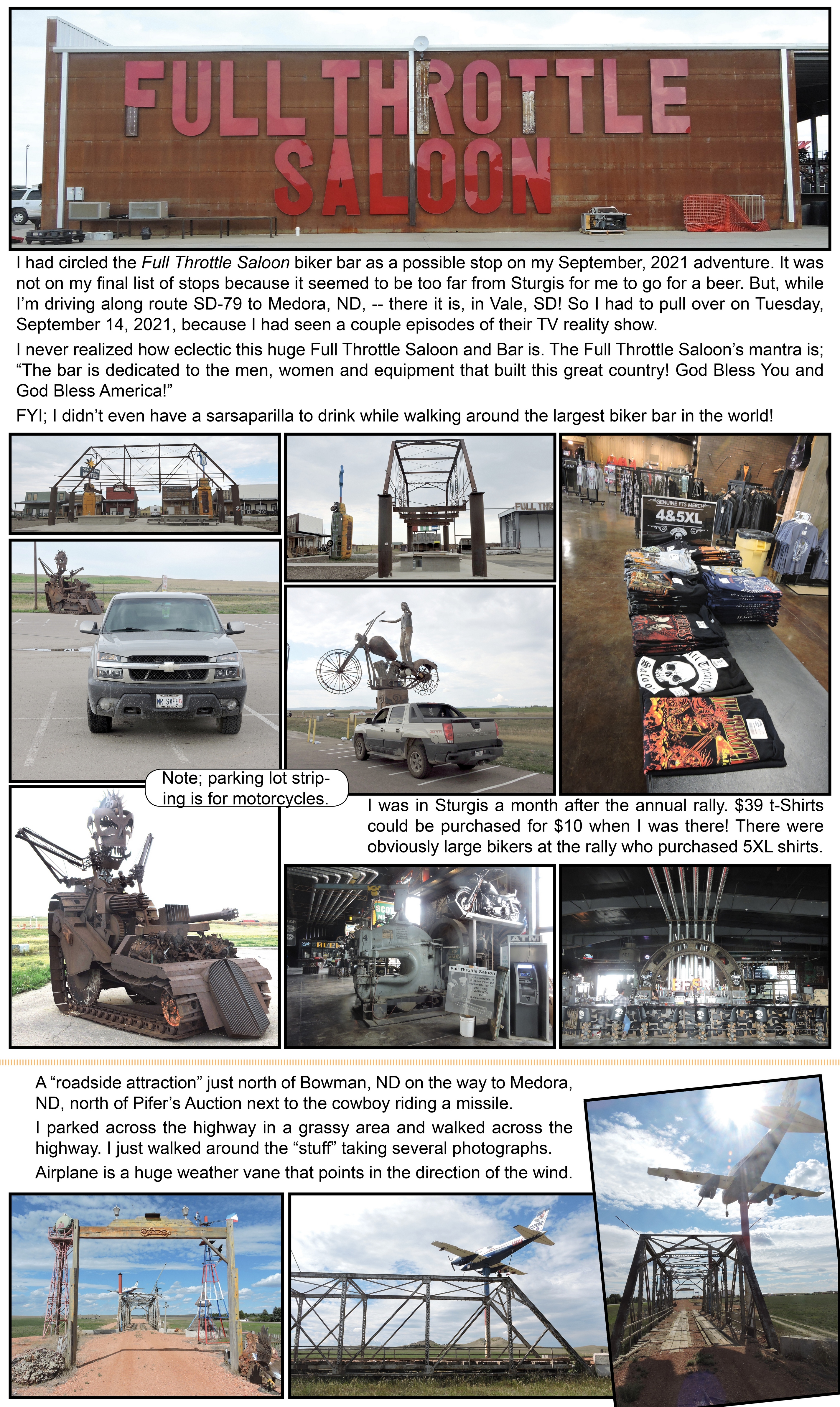
Sturgis was on my September, 2021 list of stops. While driving 218 miles from Deadwood, SD to Medora, ND, I also discovered a few other interesting sites to stop and photograph.
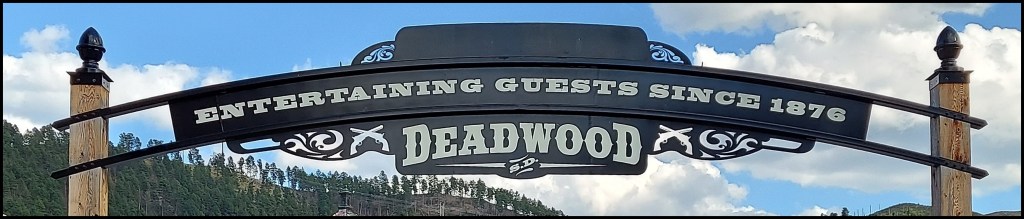
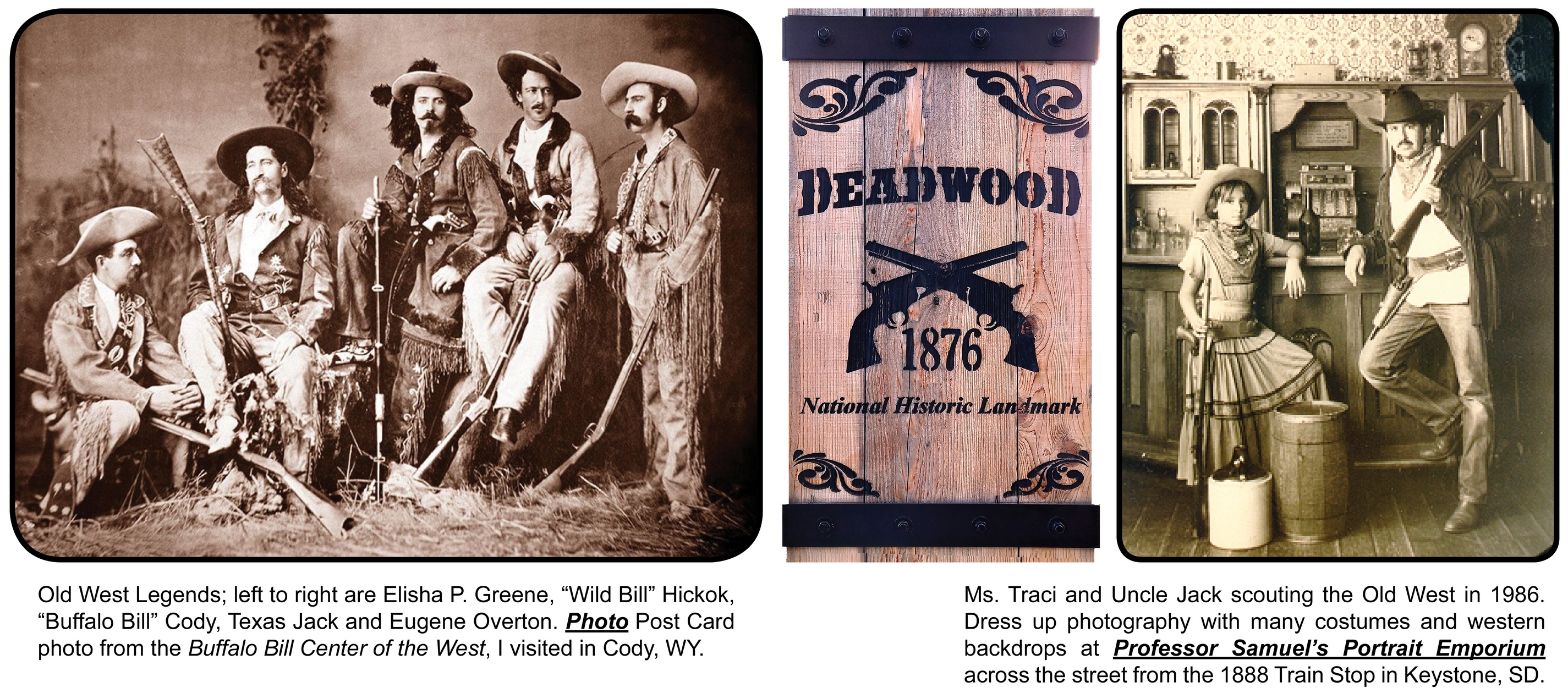
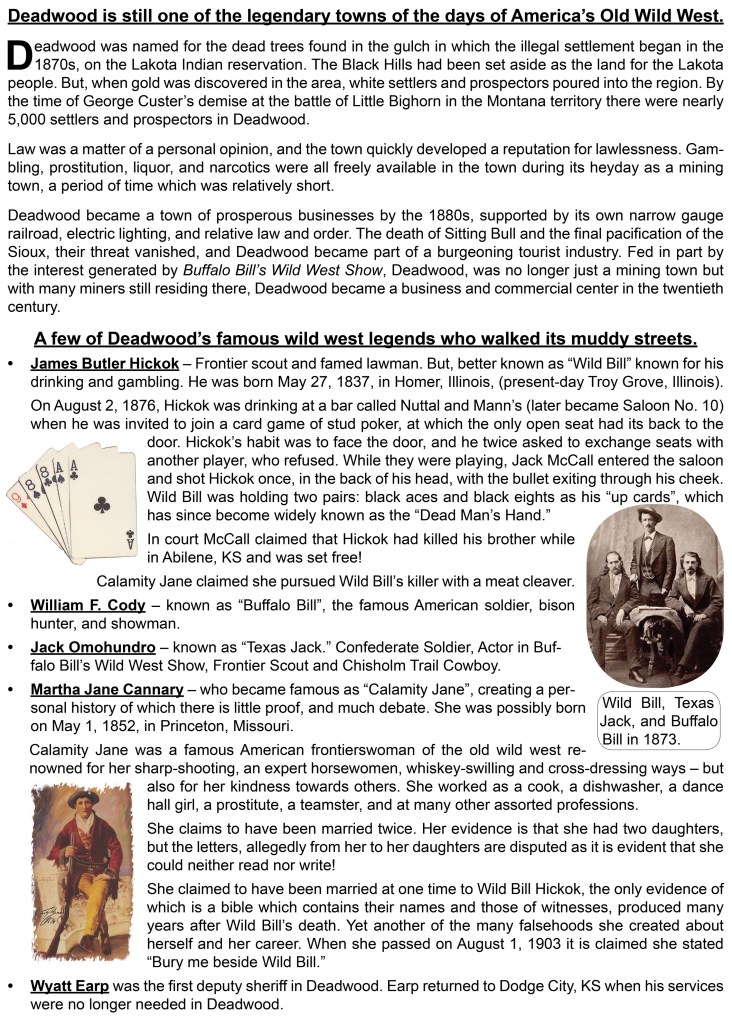
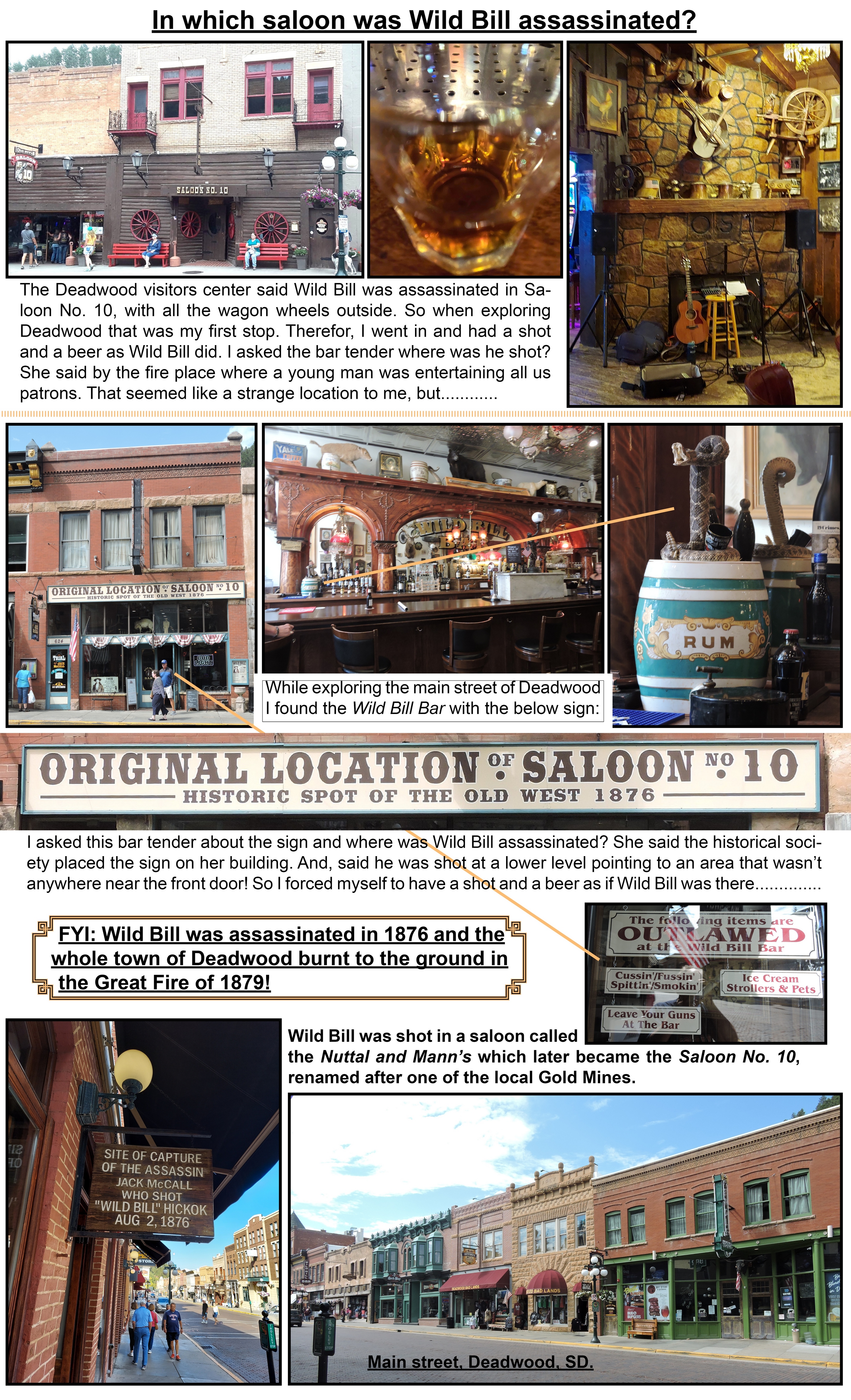
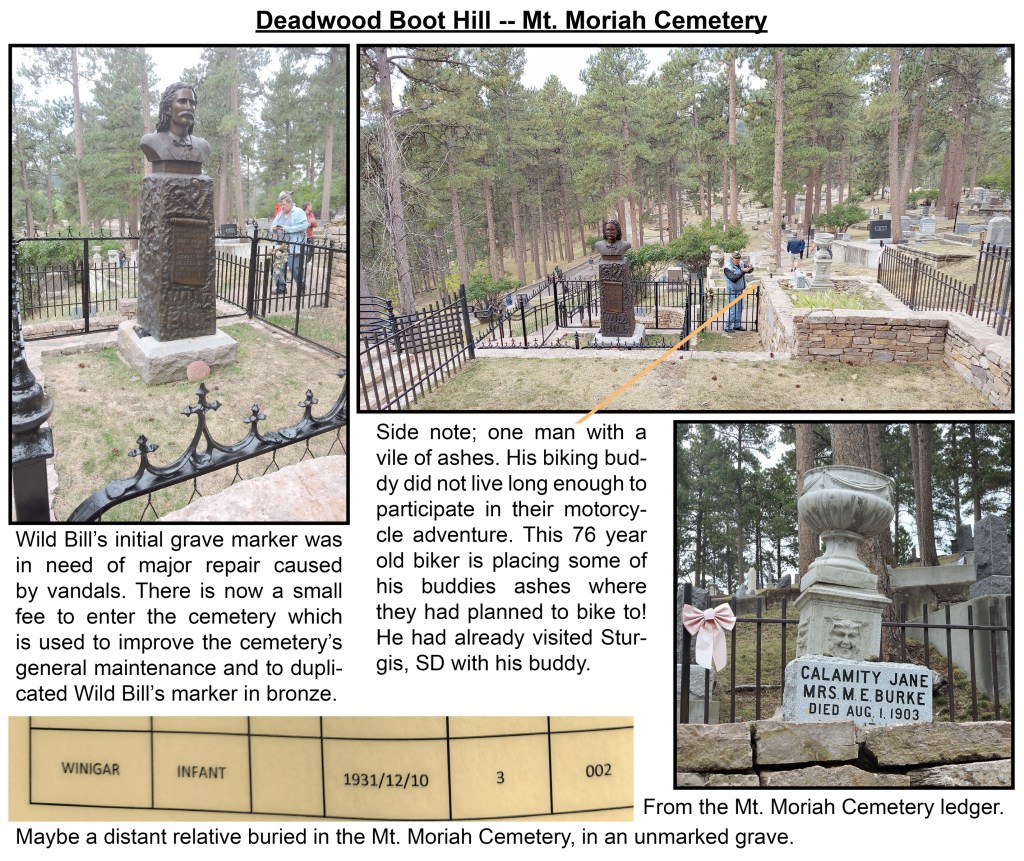
When selecting places I wanted to visit in September 2021, Deadwood was near the top of my list, because of the old wild west legends that once walked its streets. The “Legal” drinking business returned with the repeal of prohibition! In 1964 the city of Deadwood was designated a National Historic Landmark. Legal gambling, casinos and gaming halls returned in the 1980s. Deadwood retains its historic character while offering modern entertainment and services. The city which once contained nearly 10,000 residents. Today it is populated by less than 1,300, but still offers plenty of characters!
I stayed at the Cadillac Jack’s Gaming Resort, a nice place. I did not gamble but ate dinners within the establishment. It seemed to me that every other establishment in Deadwood has gambling and/or liquor. Even t-Shirt and souvenir shops, but all were PG rated!
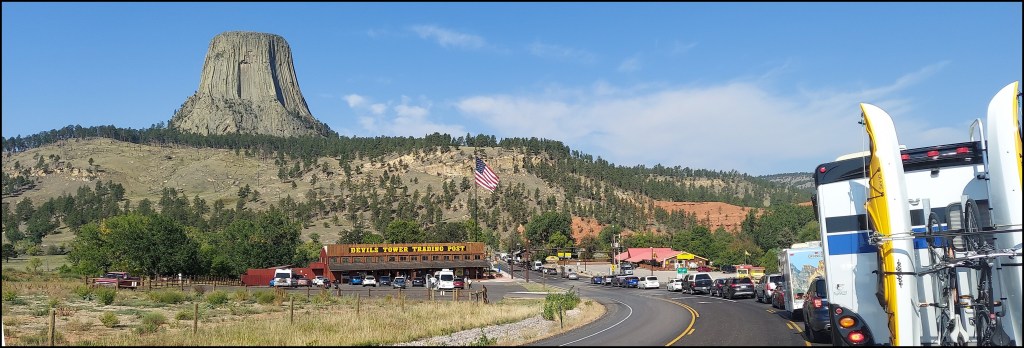
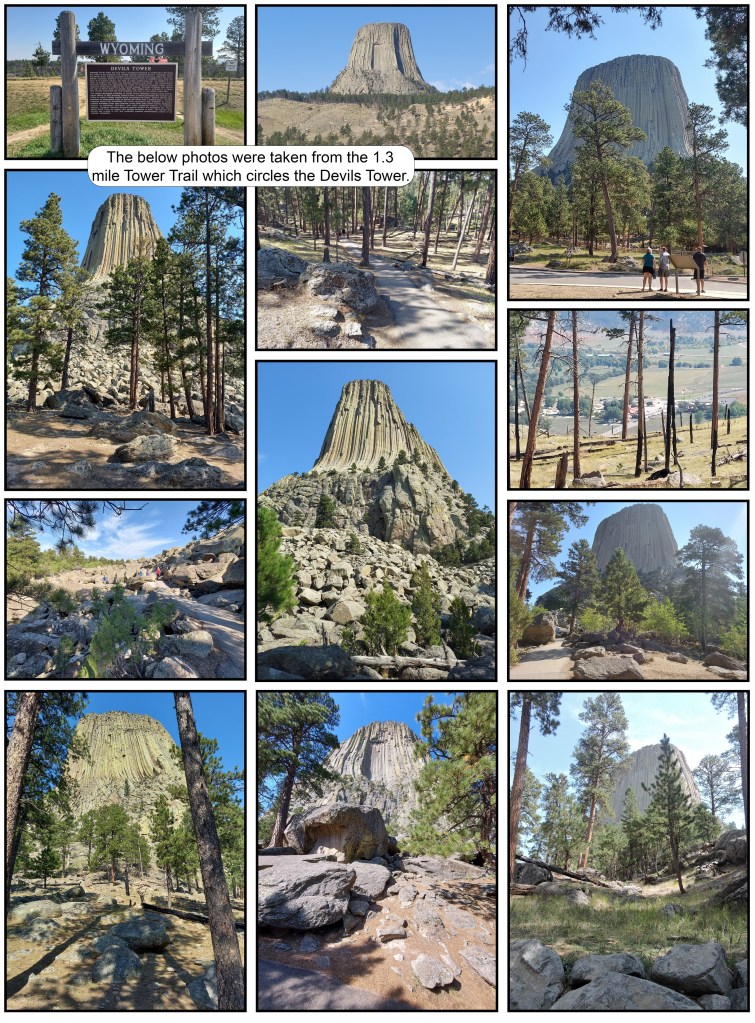
The Devils Tower is igneous rock in the Black Hills, near Sundance, SD, in northeastern Wyoming, above the Belle Fourche River. It rises 1,267 feet above the Belle Fourche River, standing 867 feet from summit to base.
A terrific traffic jam with a terrific view, Sunday, September 12, 2021 in Devils Tower, Montana.3.5 miles to the northwest can be seen a Missouri Butte, 260 feet taller than the Devils Tower.
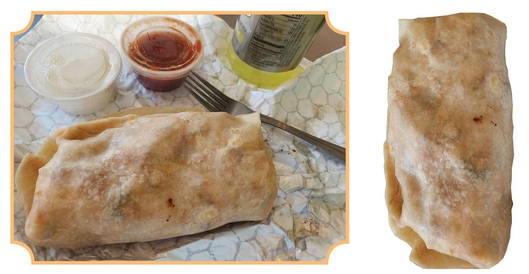
After visiting the Devils Tower, I always want to make my Burritos look like the Devils Tower!
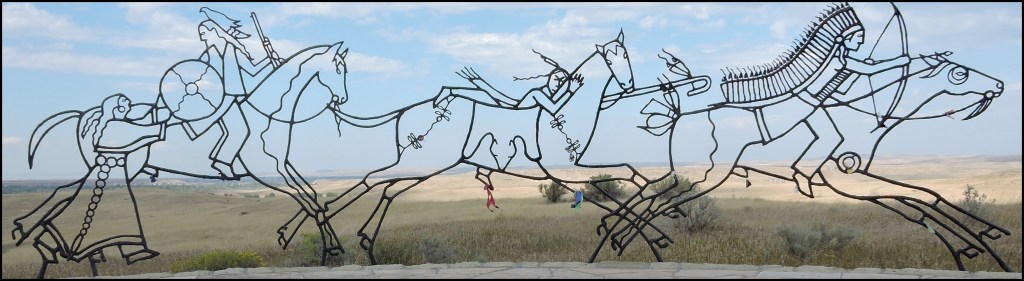
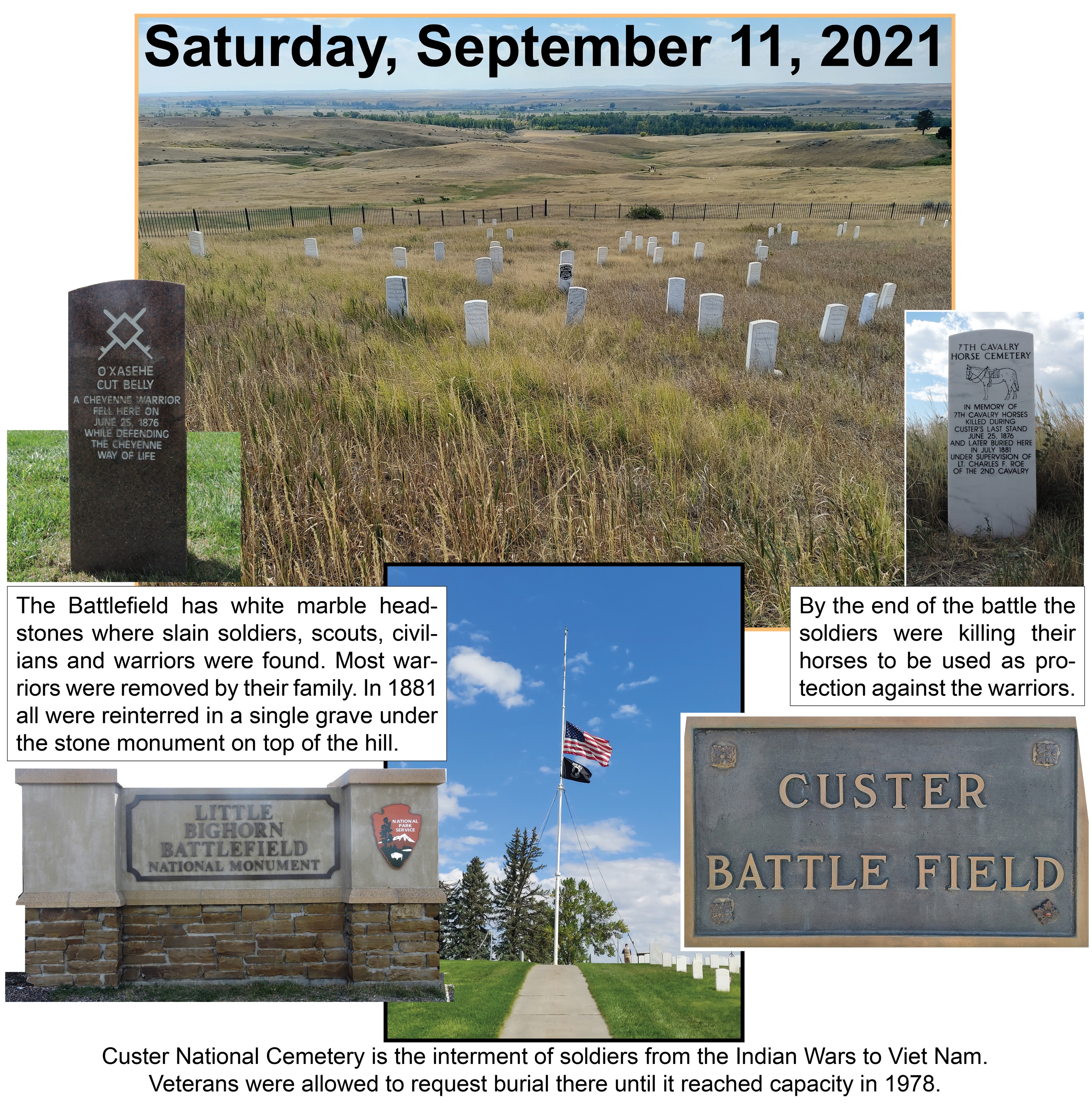
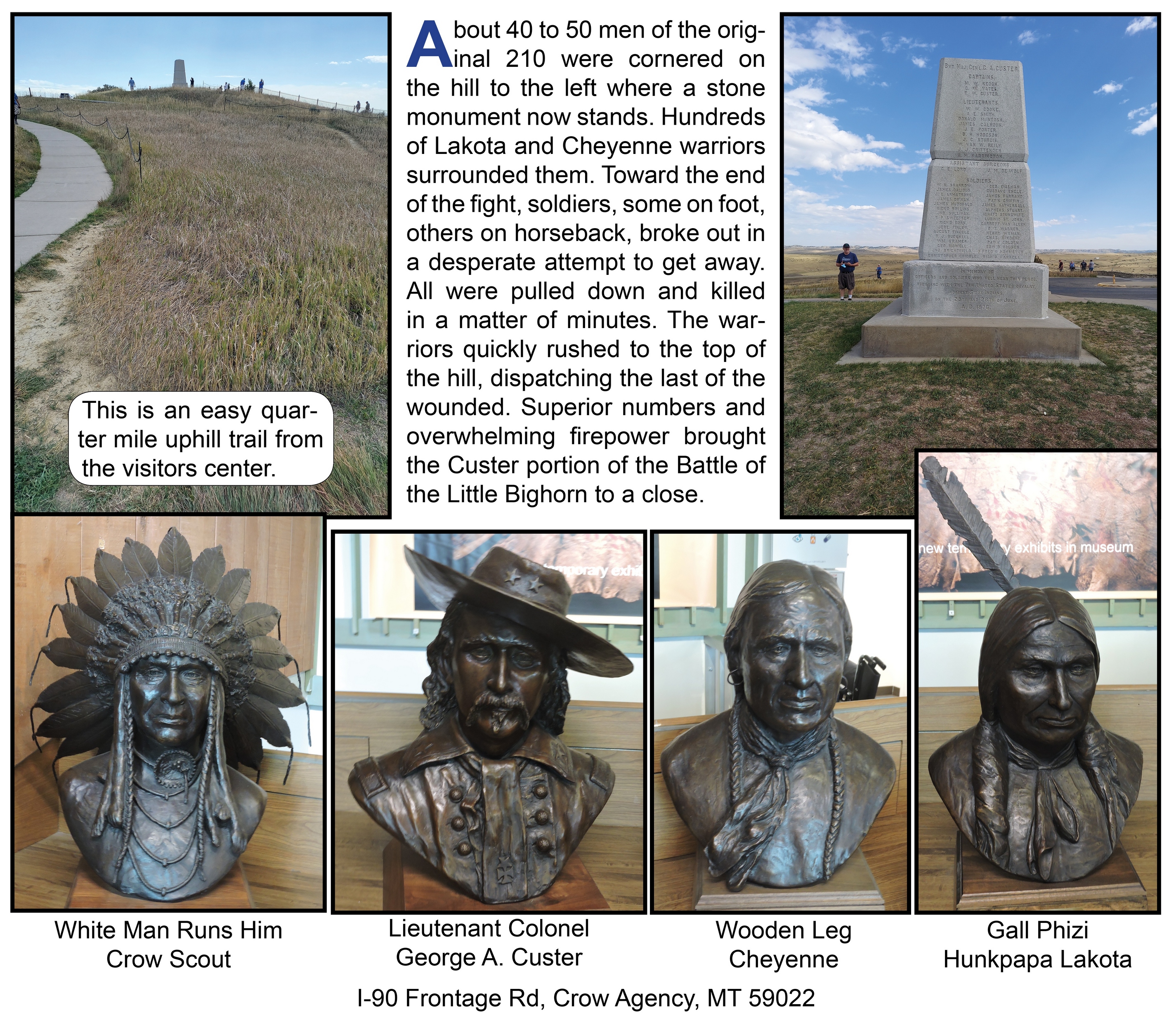
The Battle of the Little Bighorn was a clash of cultures. It was fought over two days along the ridges, steep bluffs, and ravines of the Little Bighorn River, in south-central Montana on June 25-26, 1876. The combatants were warriors of the Lakota Sioux, Northern Cheyenne, and Arapaho tribes, battling men of the 7th Regiment of the US Cavalry.
The Battle of the Little Bighorn has come to symbolize the clash of two vastly dissimilar cultures: the buffalo/horse culture of the northern plains tribes, and the highly industrial/agricultural based culture of the United States. This battle was not an isolated soldier versus warrior confrontation, but part of a much larger strategic campaign designed to force the capitulation of the non-reservation Lakota and Cheyenne.
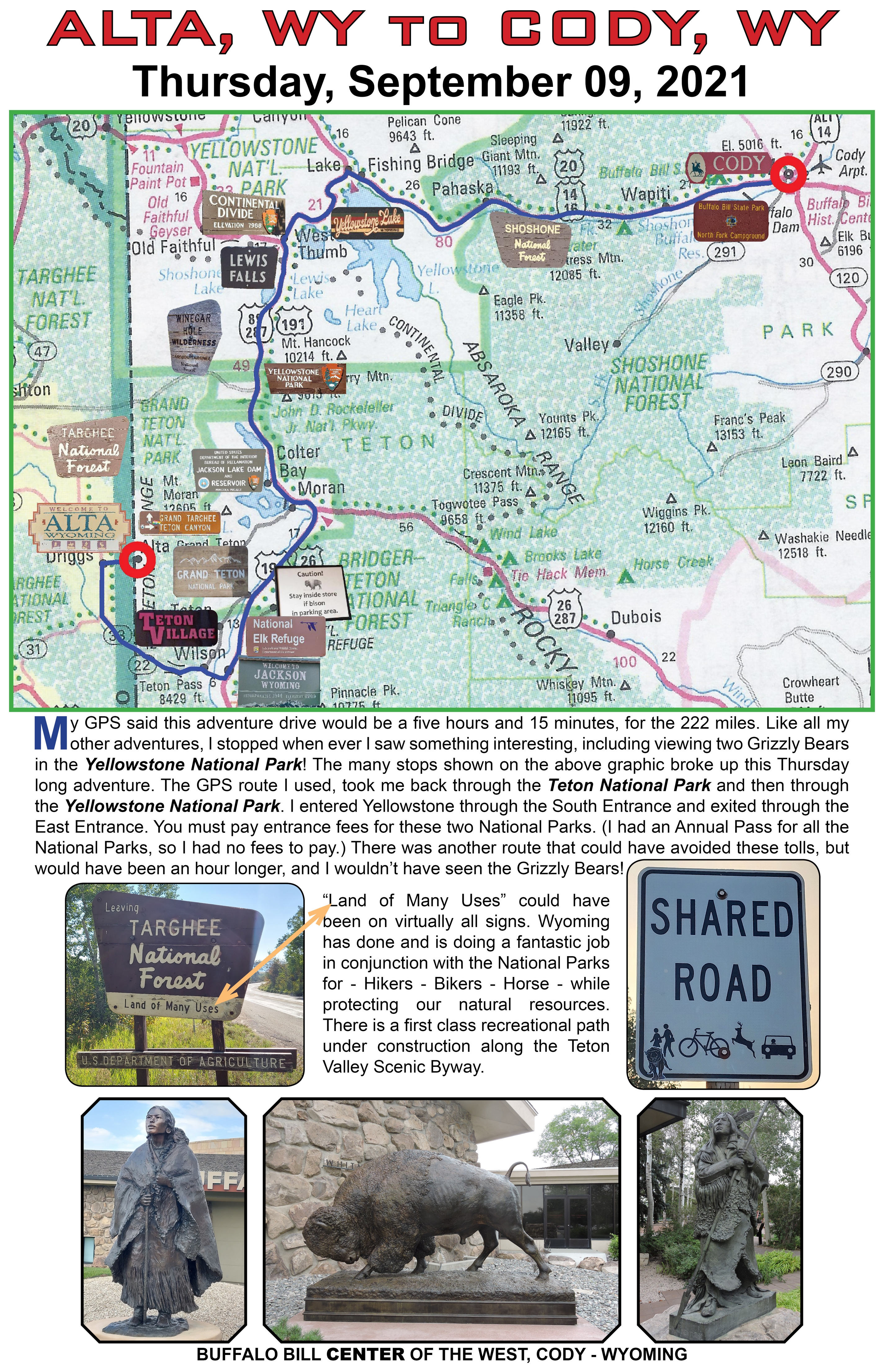
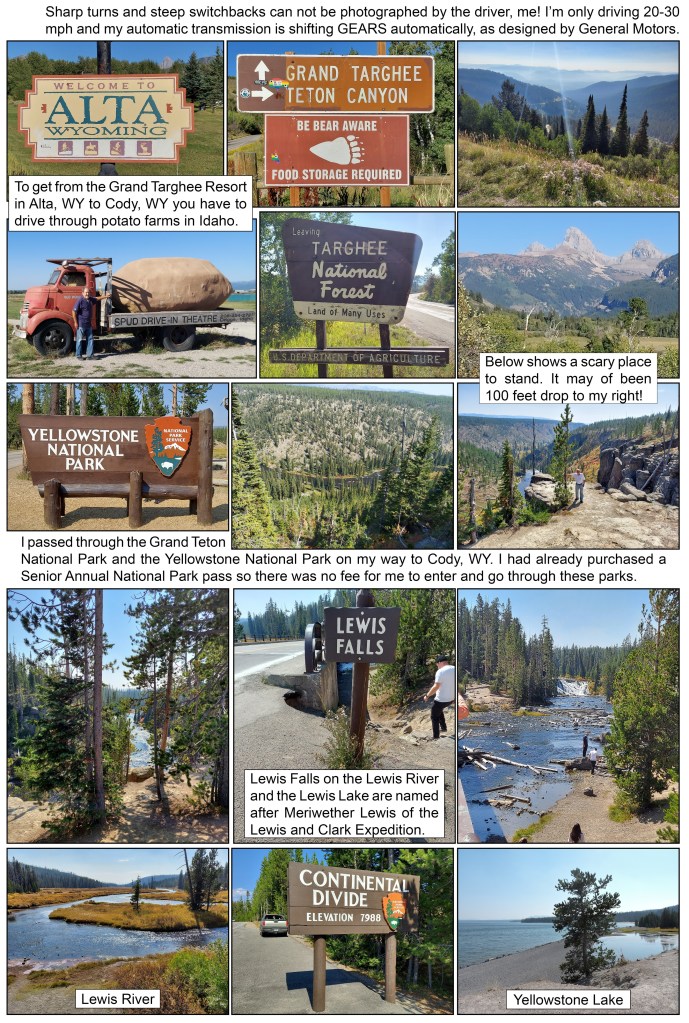
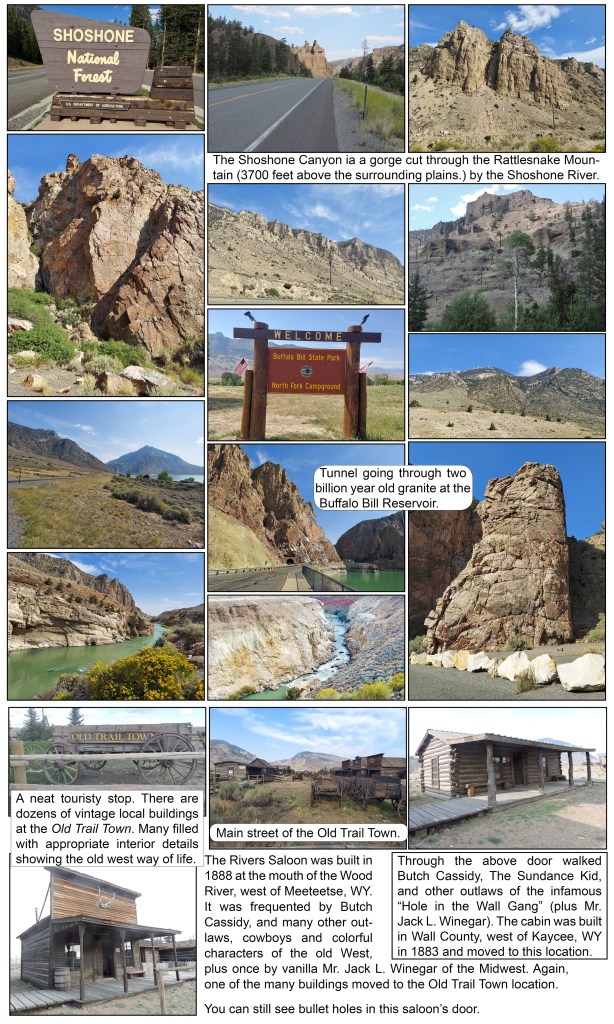
This was more than just a five and a half hour drive to my next September, 2021 stop. The drive took me through the US’s first national park and finally through a two billion year old mountain tunnel. With, several photo opportunities.
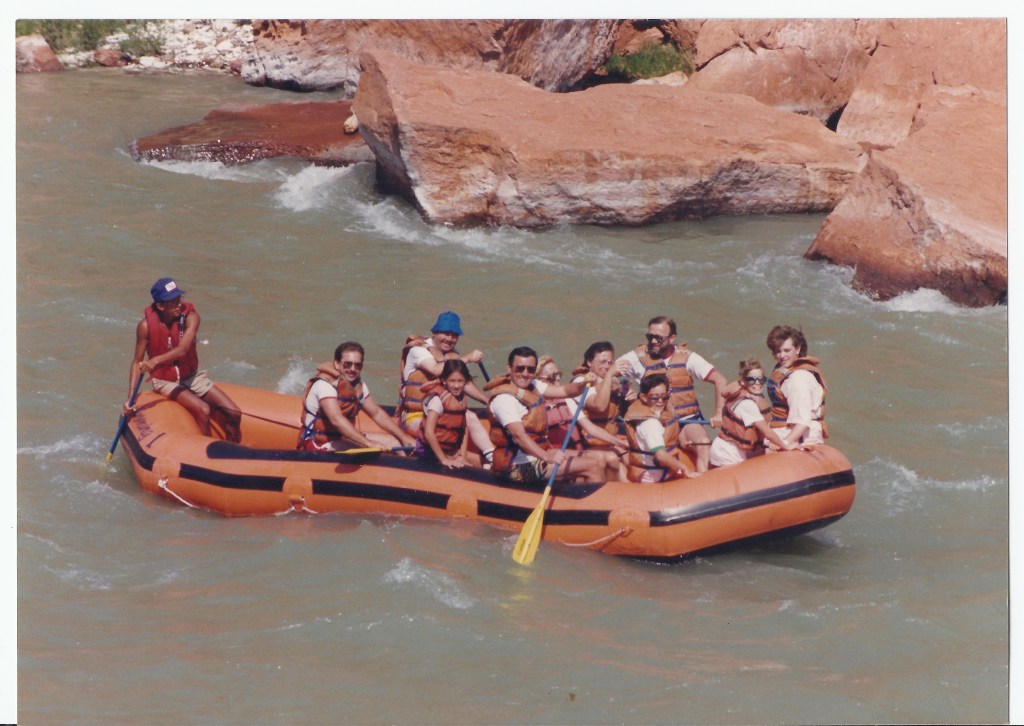
On Saturday, August 16, 1986 my daughter and I took a classic whitewater river adventure through the Red Rock Canyon down the Shohsone river with a Wyoming River Trips guide. The trip tracked John Colter, Jeremiah Johnson, as well as the native communities that called this corridor home. Trip highlights were the beauty of the red rock canyon, frequent rapids, and narrated history of early Cody pioneers and the plains Indian culture.
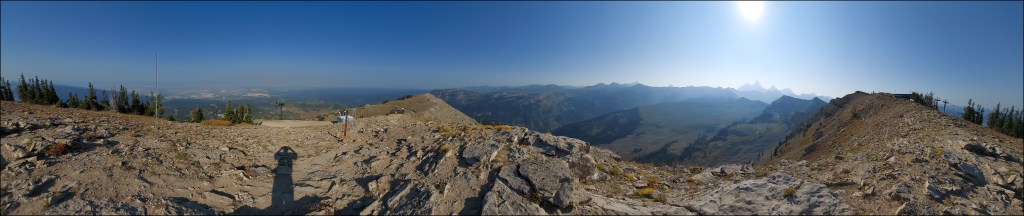
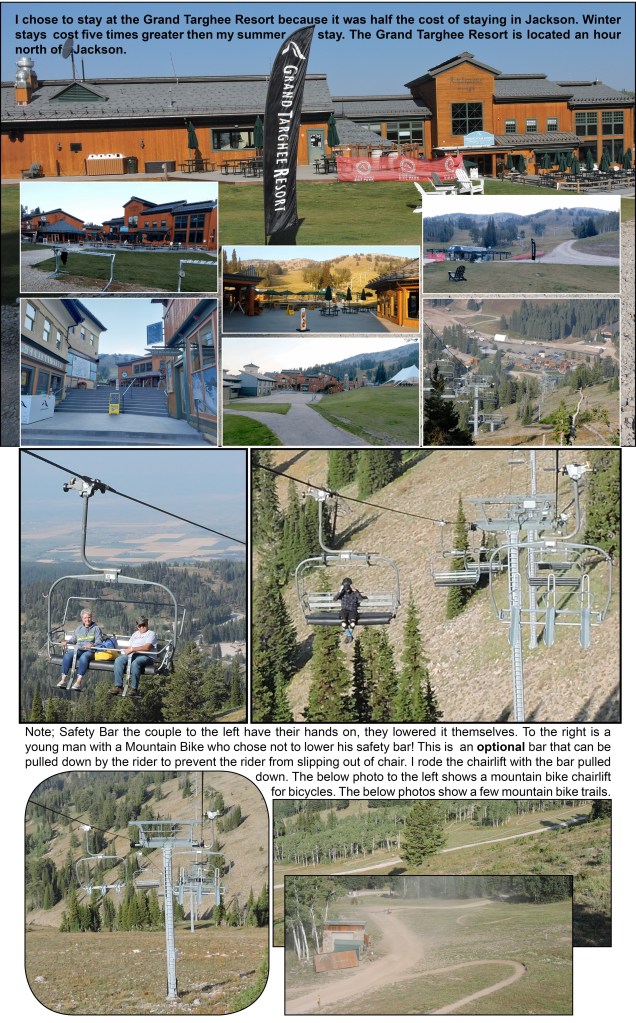
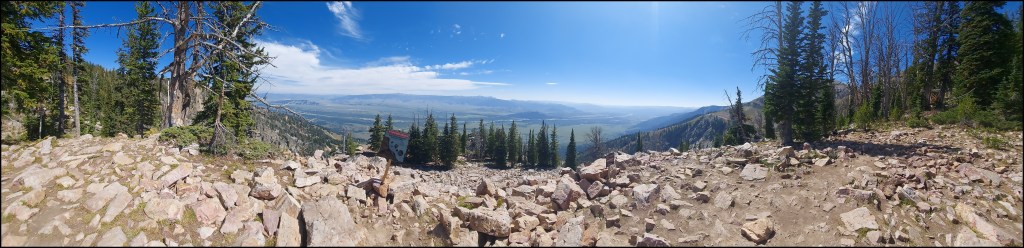
Grand Targhee Resort summit, Thursday morning, September 09, 2021.
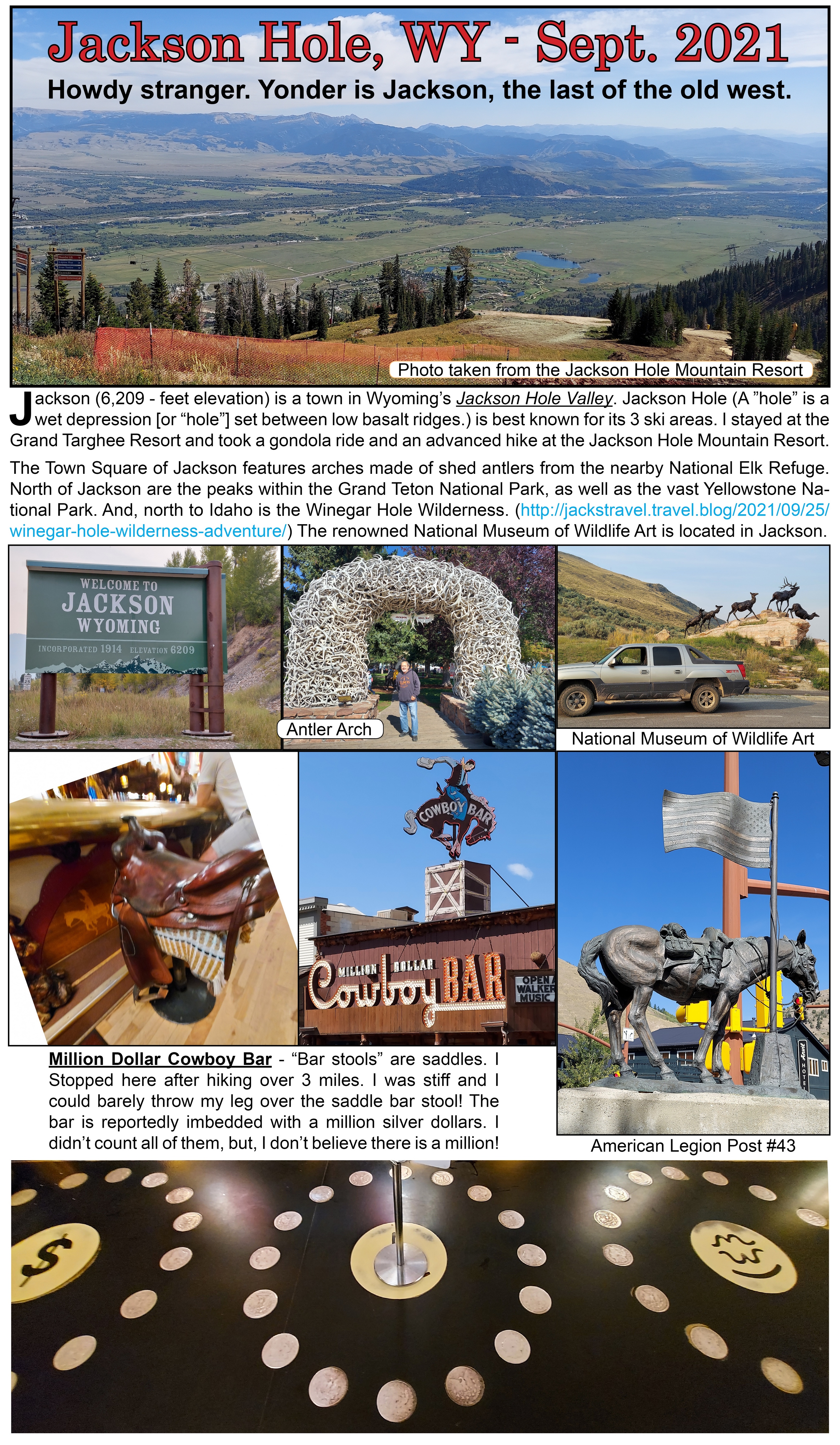
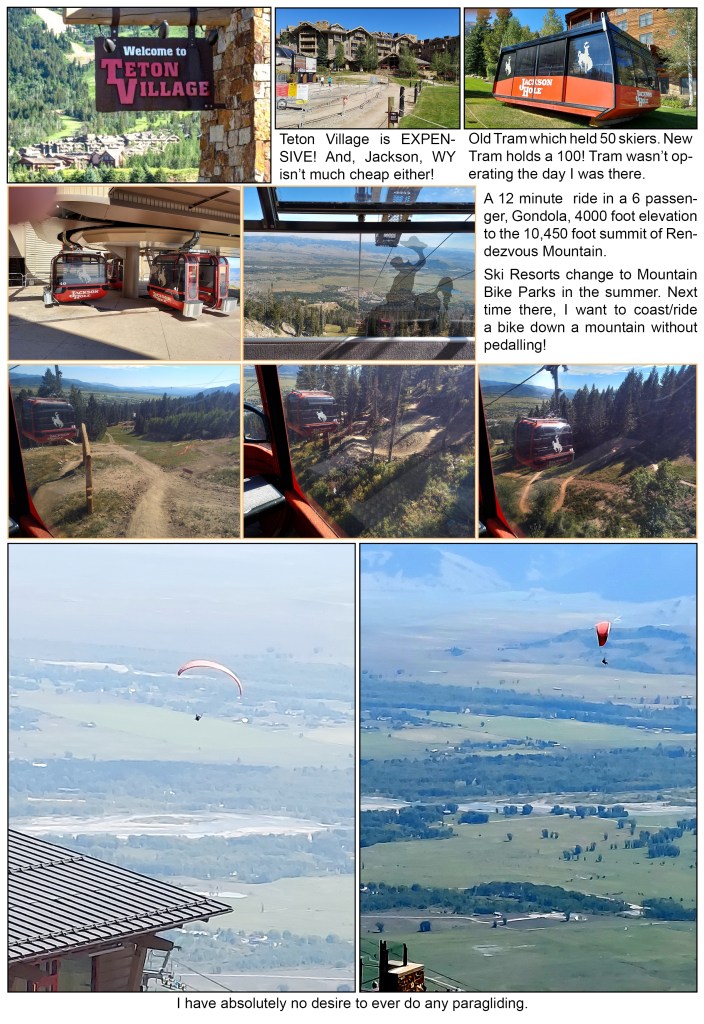
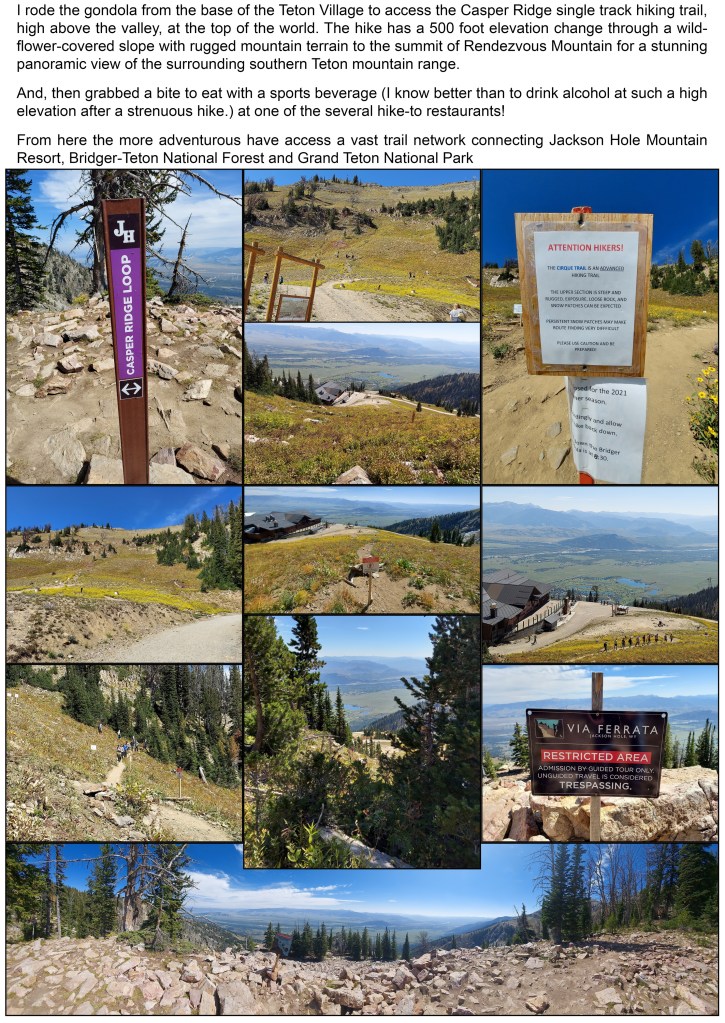
Jackson Hole, Wyoming is a place unlike any other. Truly an American original. Jackson Hole is widely known as one of the top ski destinations in the world. I was there in the summer when the ski resorts are changed to Mountain Bike Parks. And, where I took a couple high elevation exhilarating hikes.
Wyoming is a “Land of Many Uses.” Wyoming has done and is doing a fantastic job in conjunction with the National Parks for – Hikers – Bikers – Horse owners – while protecting our natural resources. There is a first class recreational path under construction along the Teton Valley Scenic Byway.
Summit Rendezvous Mountain, Jackson Hole Resort, Saturday, September 04, 2021.
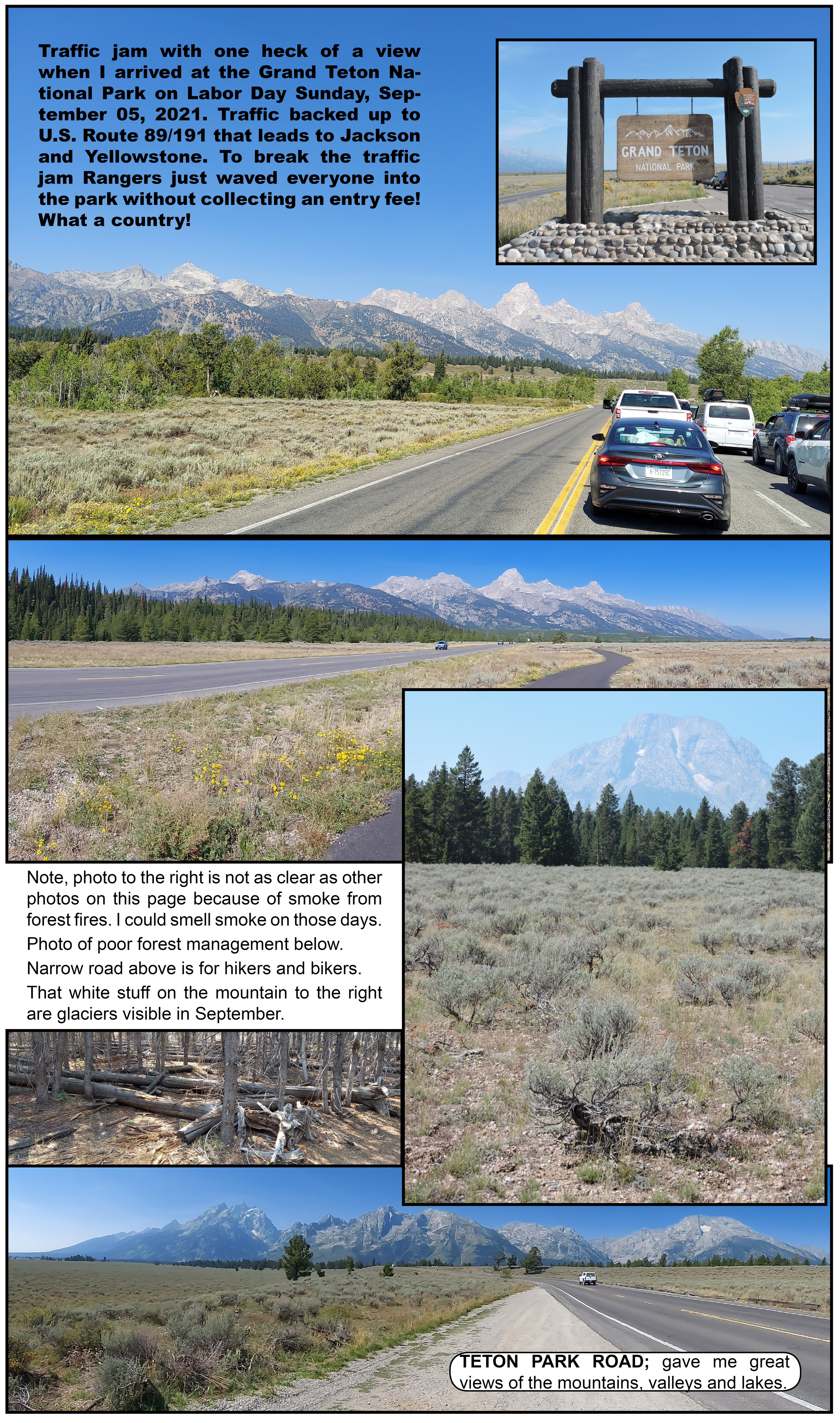
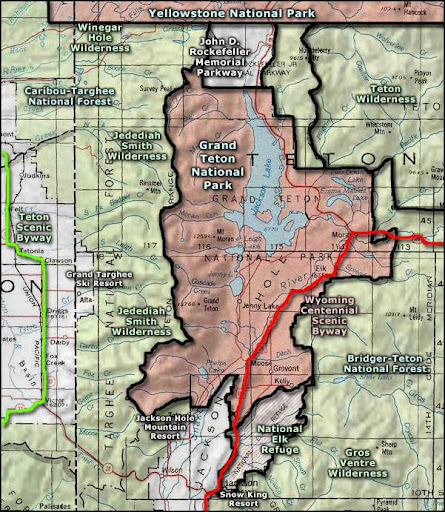
Grand Teton National Park is located in the northwestern Wyoming. It encompasses the Teton mountain range, which includes the 13,770-feet Grand Teton peak, and the valley known as Jackson Hole. The park is linked to nearby Yellowstone National Park.
I only had a limited time for my September, 2021 adventure with the choice of either the Glacier National Park or the Grand Teton National Park. I chose the GTNP due to the ease of viewing Glaciers. I would have liked to hike to a glacier, but that was just not practical for me!
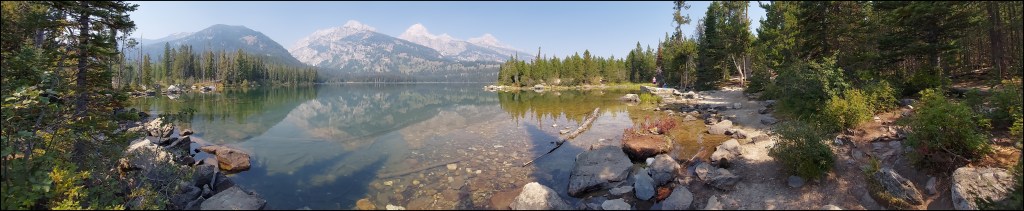
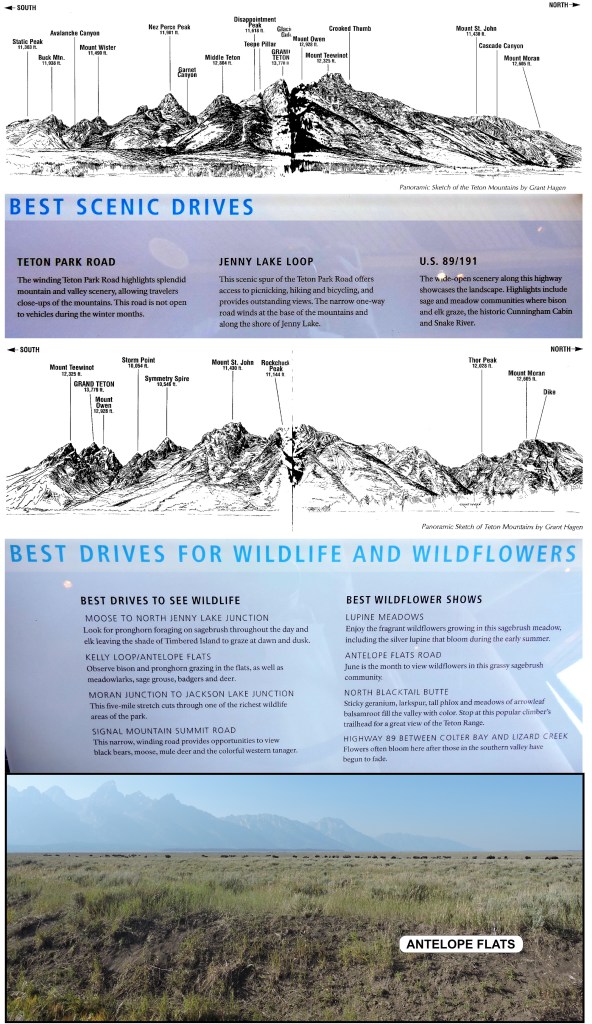
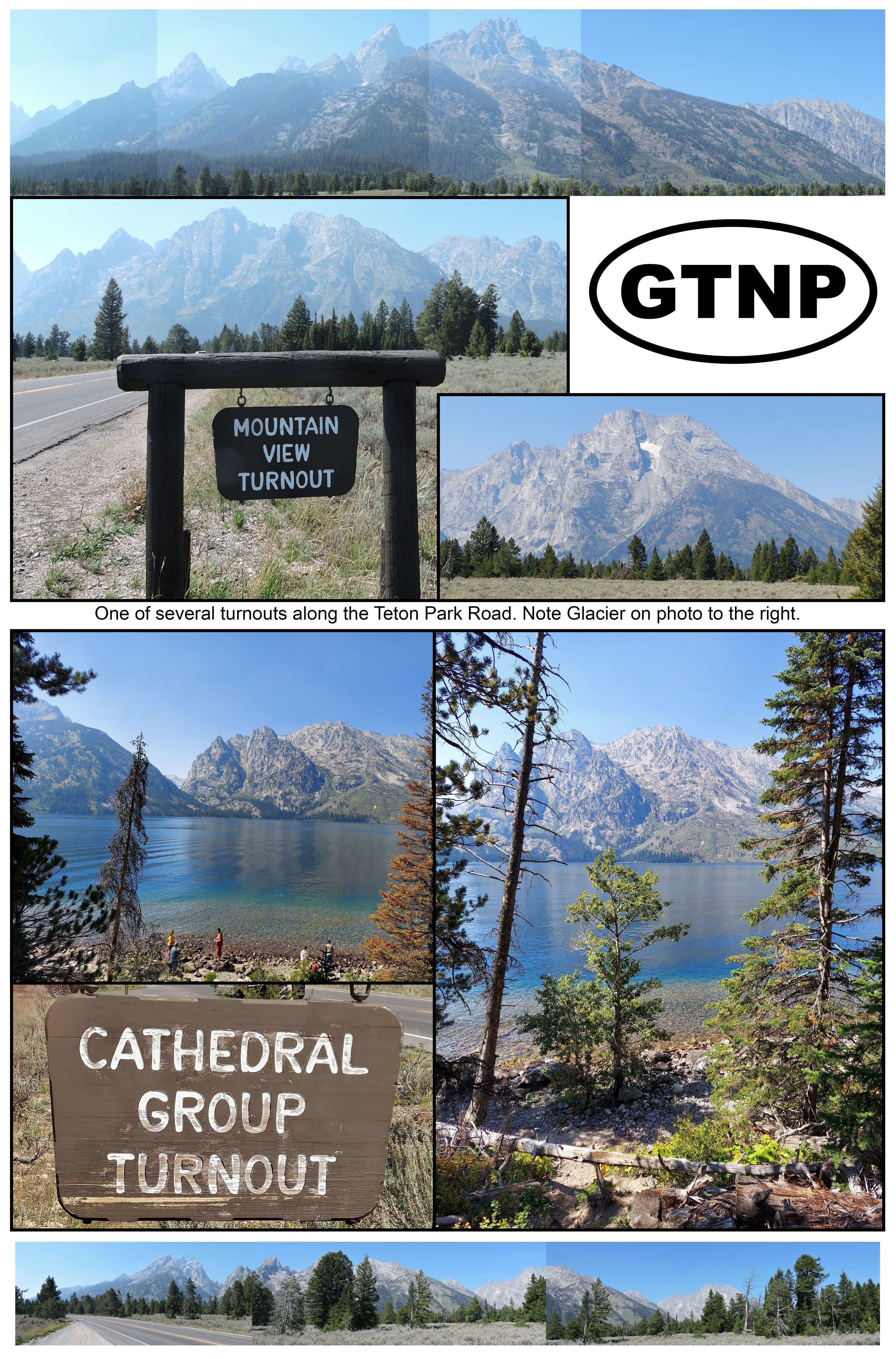
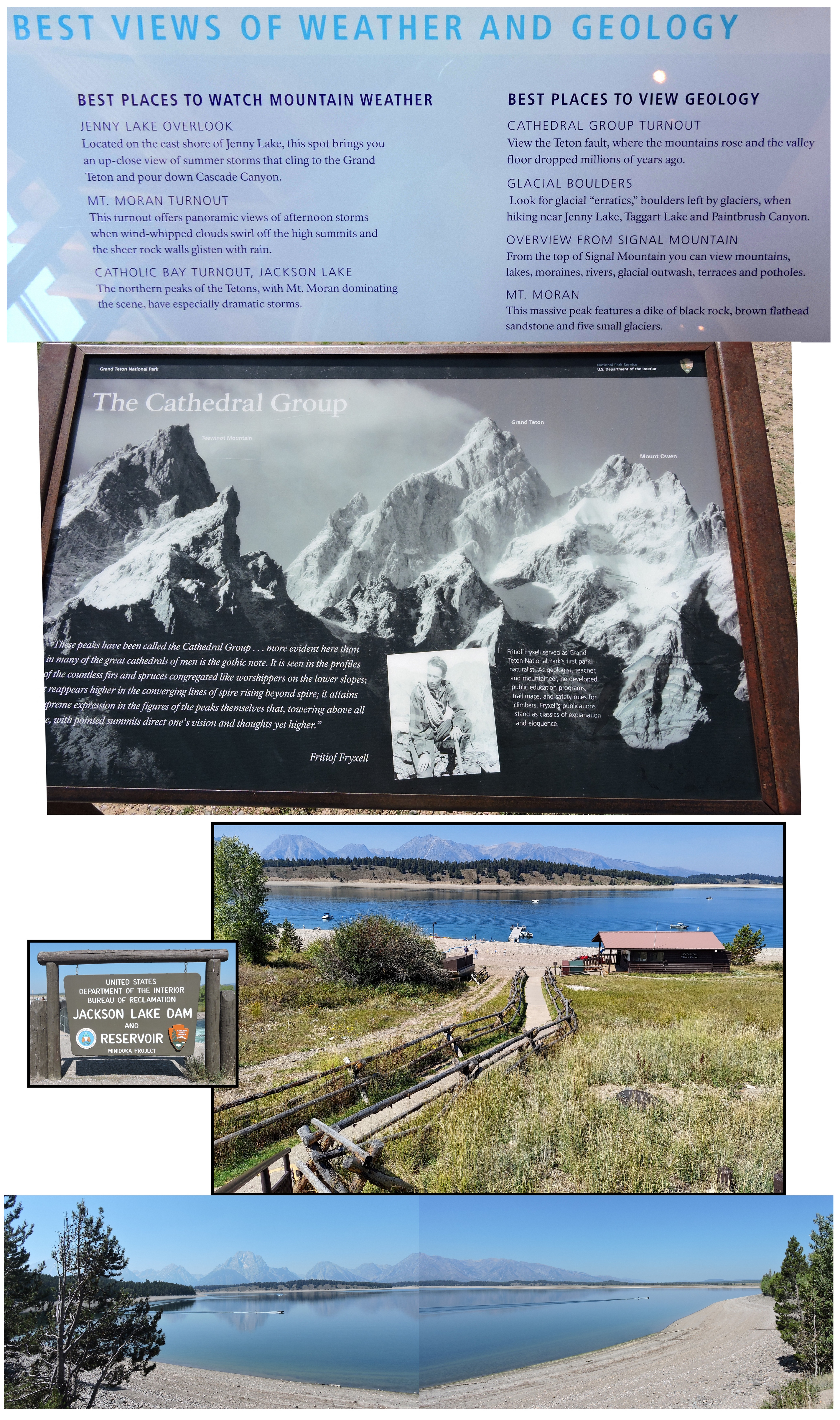
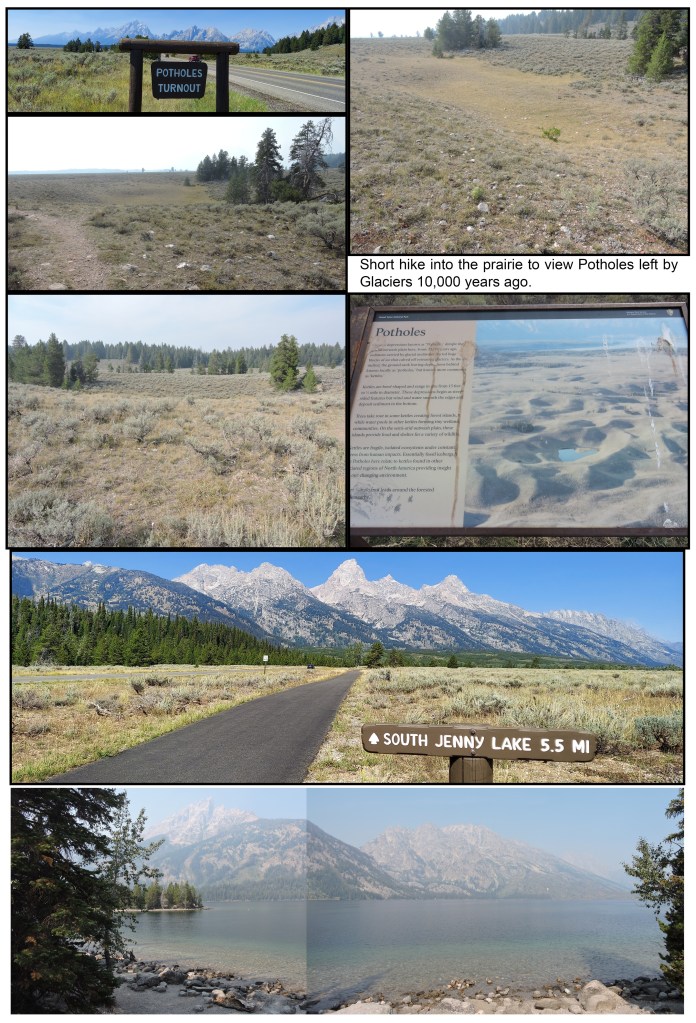
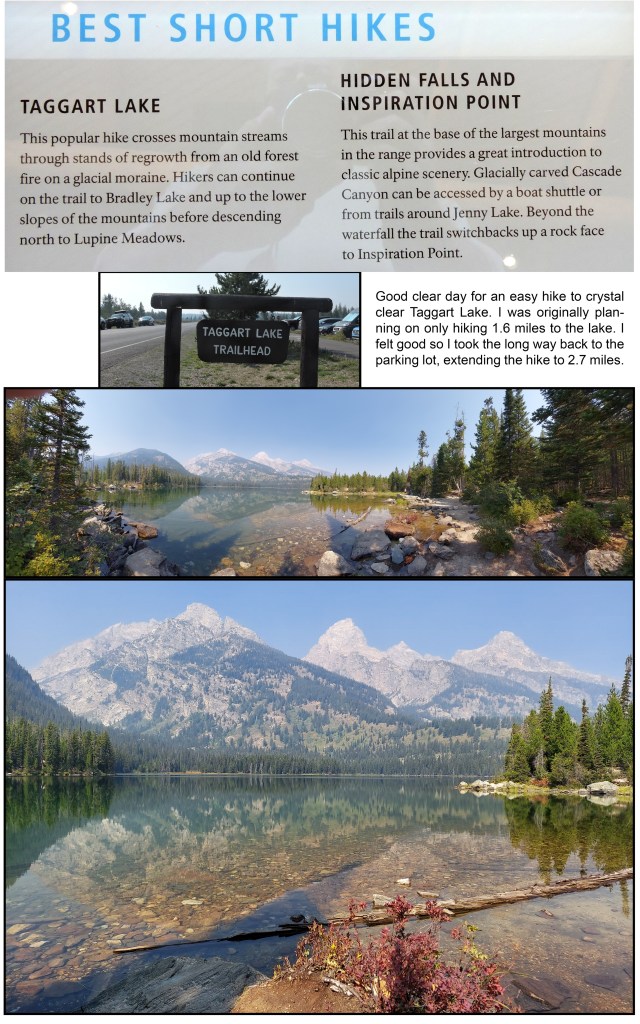
I viewed a couple scenic lakes that can only be seen after a short hike. If you don’t do any hiking you must take one of the very scenic drives in and outside of the park. There are many marked Turnouts with very descriptive signs describing the area or view. OR, you can pay a tour guide 100s of dollars to drive you to these turnouts and read the signs to you!
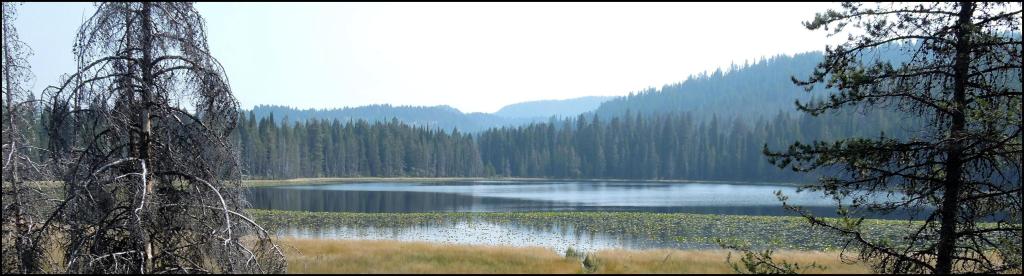
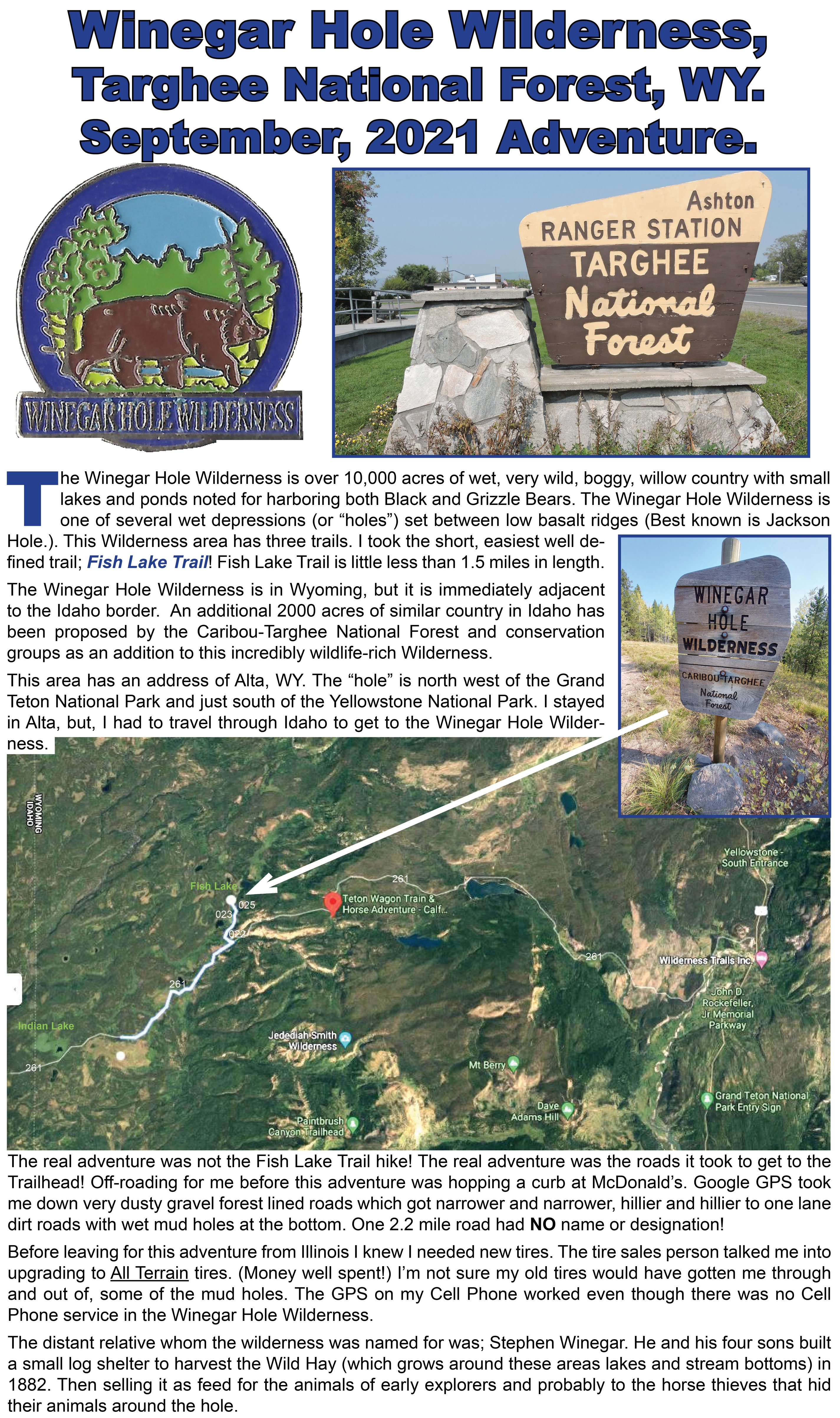
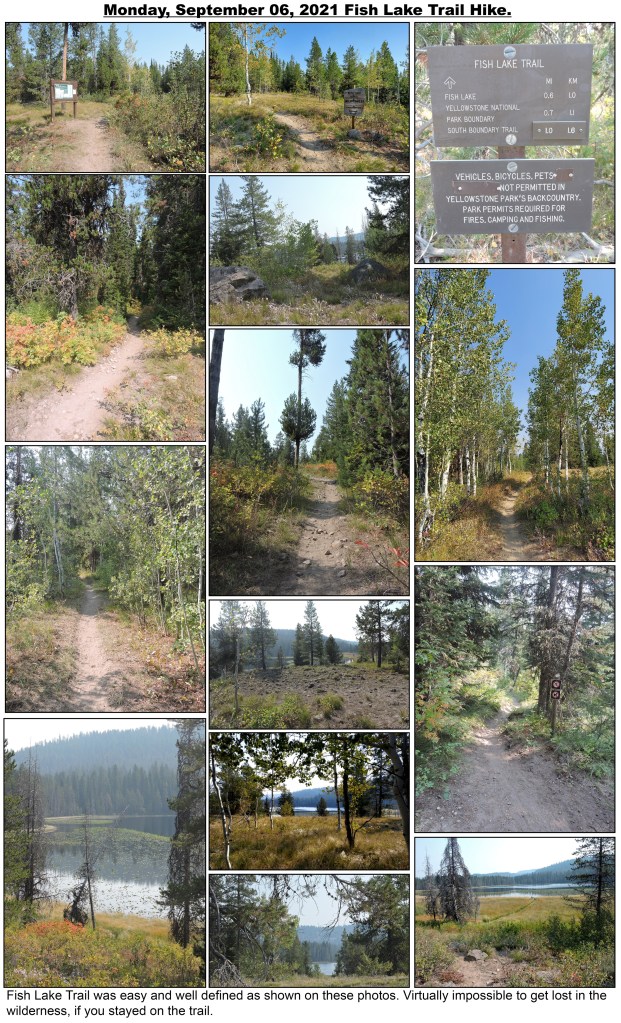
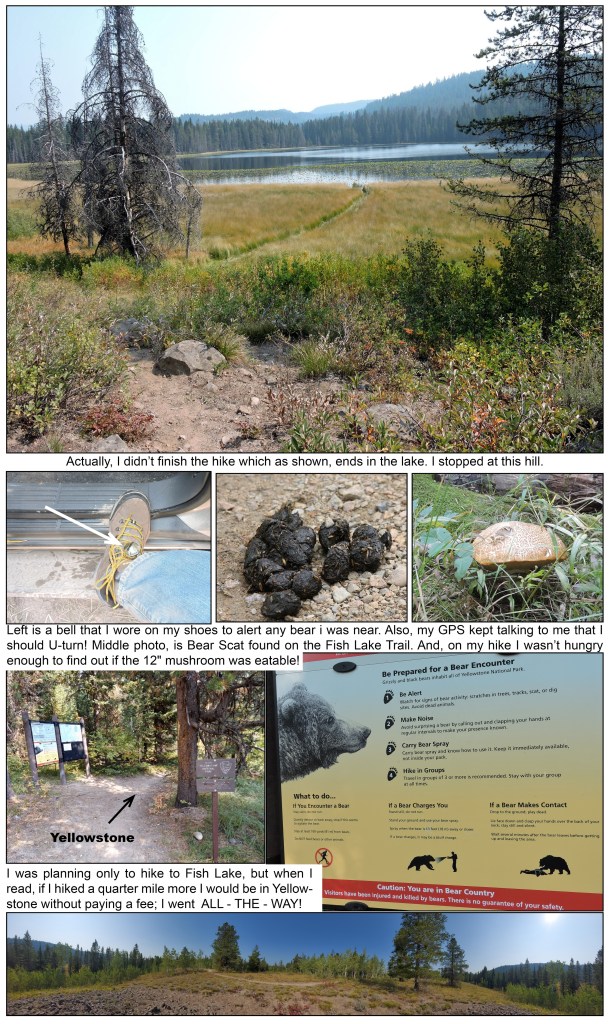
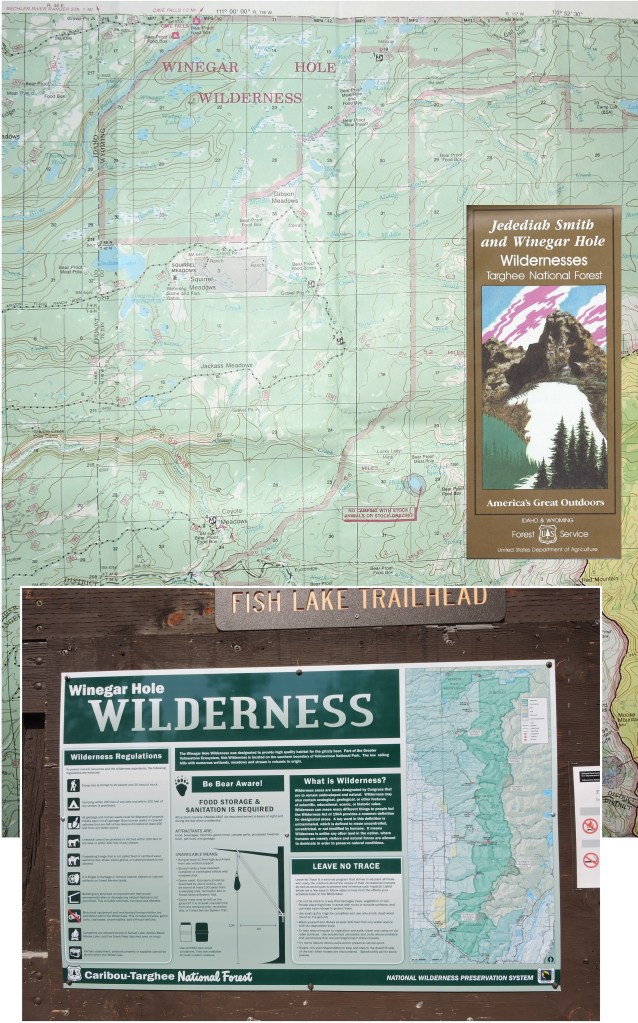
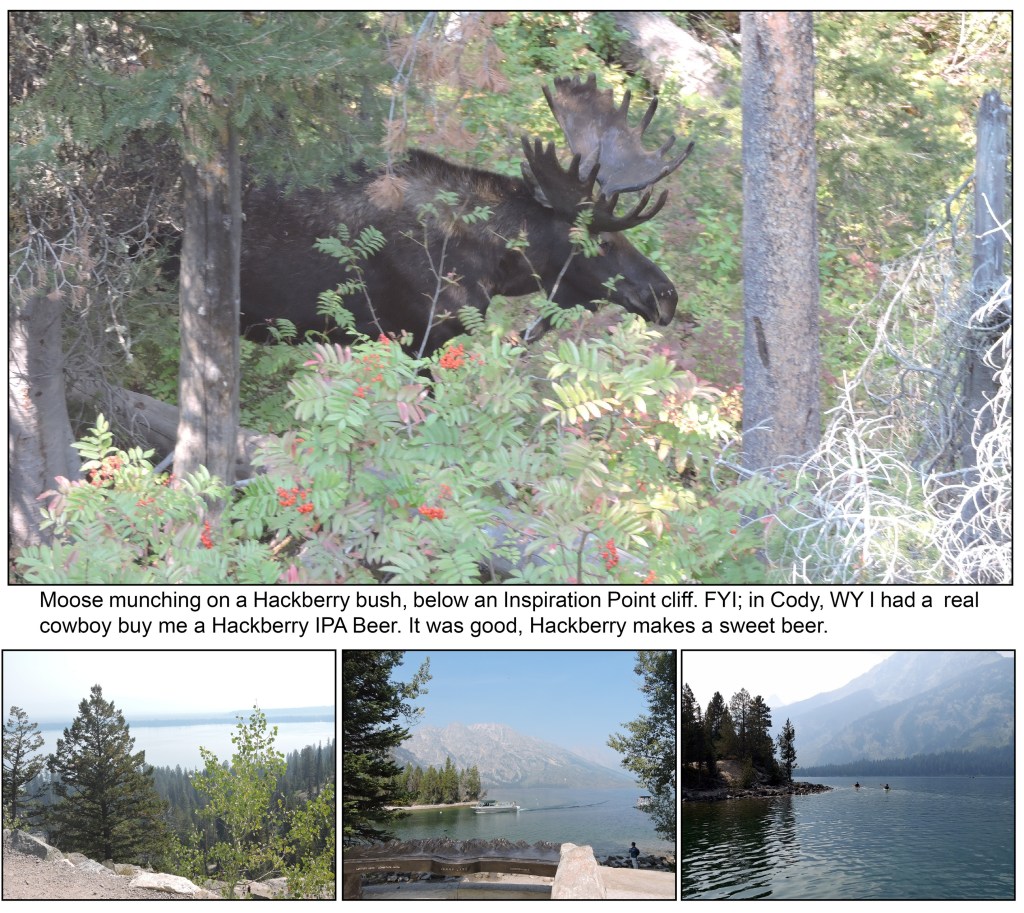
The Winegar Hole Wilderness was designated specifically to provide high quality habitat for the Grizzly Bear. All of the Wilderness is a prime Grizzly and Black Bear habitat. There are also numerous Moose and Elk. Great Mosquito habitat too! All of this wilderness is located in Wyoming and is managed by the Caribou-Targhee National Forest Service. It is part of the Greater Yellowstone Ecosystem, this Wilderness is located on the southern boundary of Yellowstone National Park in western Wyoming. The low rolling hills with numerous wetlands, meadows and streams. The area is managed as a trail less area to provide maximum security for the grizzly bear except for one short trail, which I took that provided me access to the Yellowstone National Park.
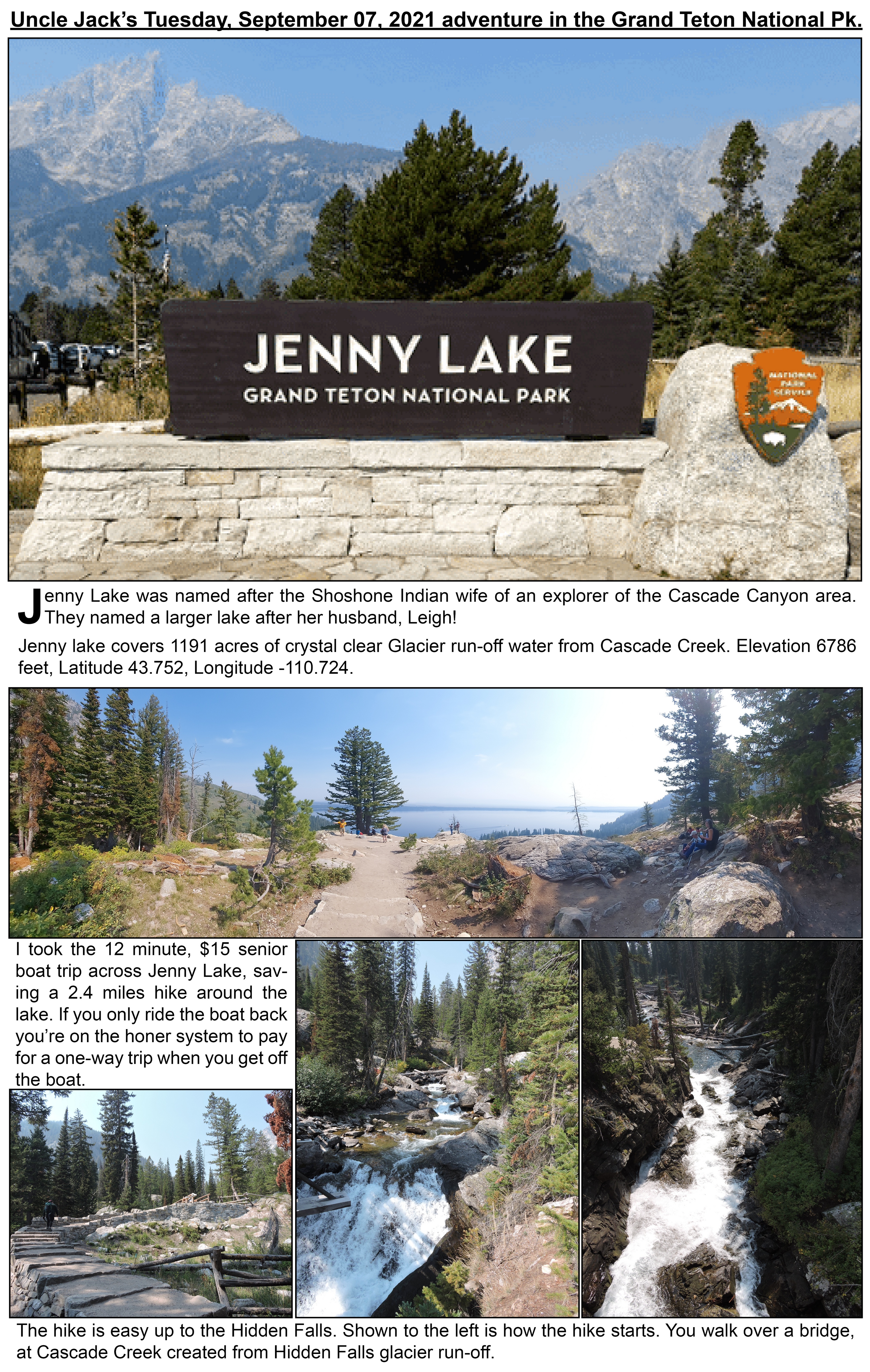
Jenny Lake was named after the Shoshone Indian wife of Beaver Dick Leigh, whom helped in the exploration of the Cascade Canyon area. They named a larger lake after her husband, Leigh! The lake was formed by a glacier thousands of years ago. The lake is encircled by conifer forests that thrive on the hospitable soil of glacial deposits.
Jenny lake covers 1191 acres of crystal clear Glacier run-off water from Cascade Creek. Elevation 6786 feet, Latitude 43.752, Longitude -110.724.
The Grand Teton National Park parking lot for the Hidden Falls Trailhead is located about 7 miles form the US-121 highway.
On Tuesday, September 07, 2021 I took the 12 minute, $15 senior, boat trip across Jenny Lake, saving a 2.4 miles hike around the lake. (If you only ride the boat back you’re on the honer system to pay for a one-way trip when you get off the boat.)
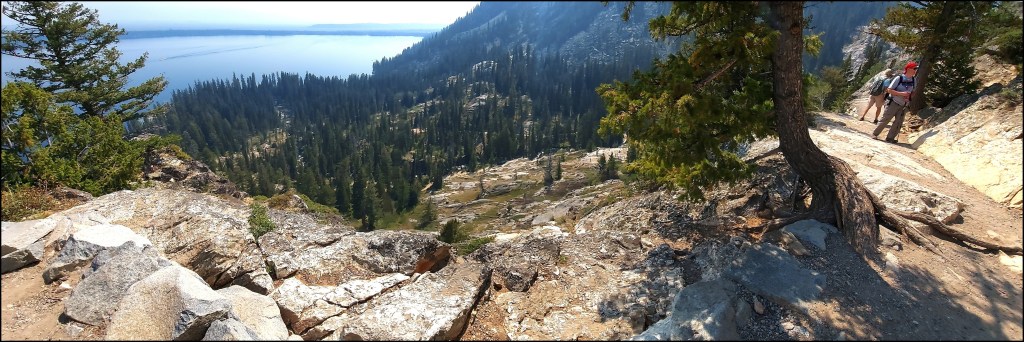
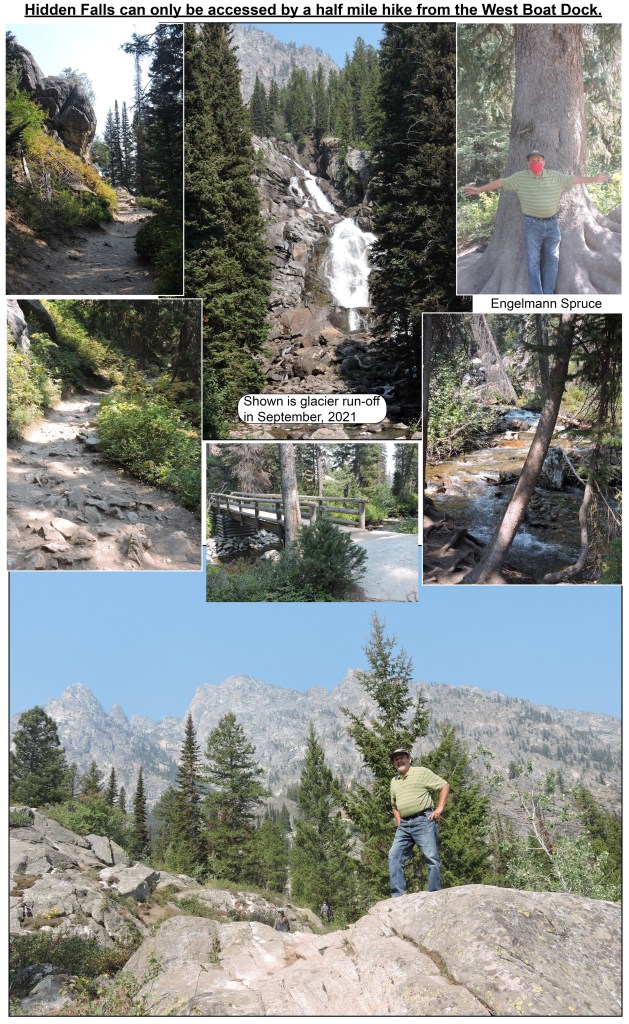
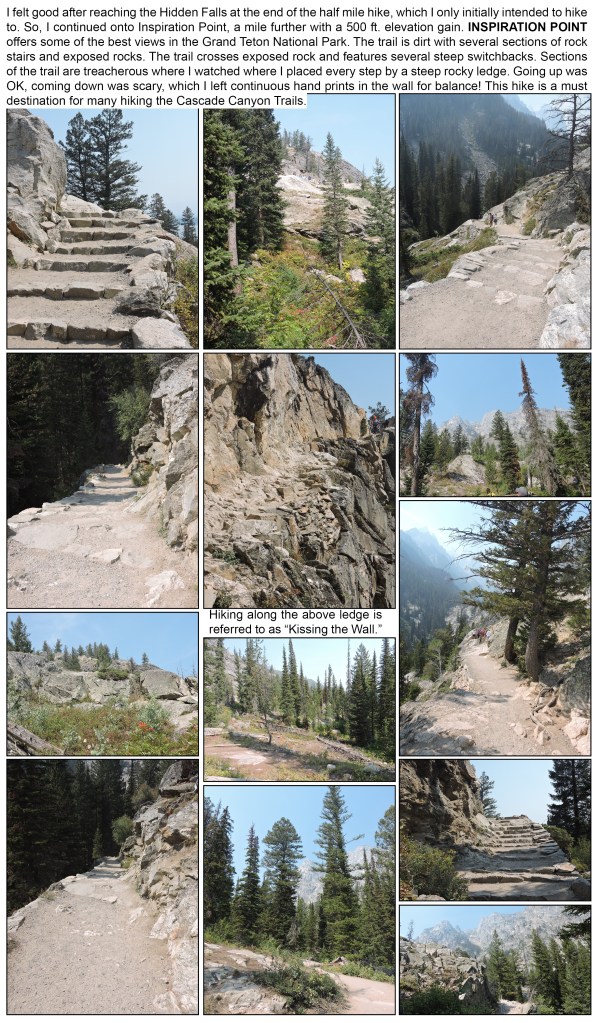
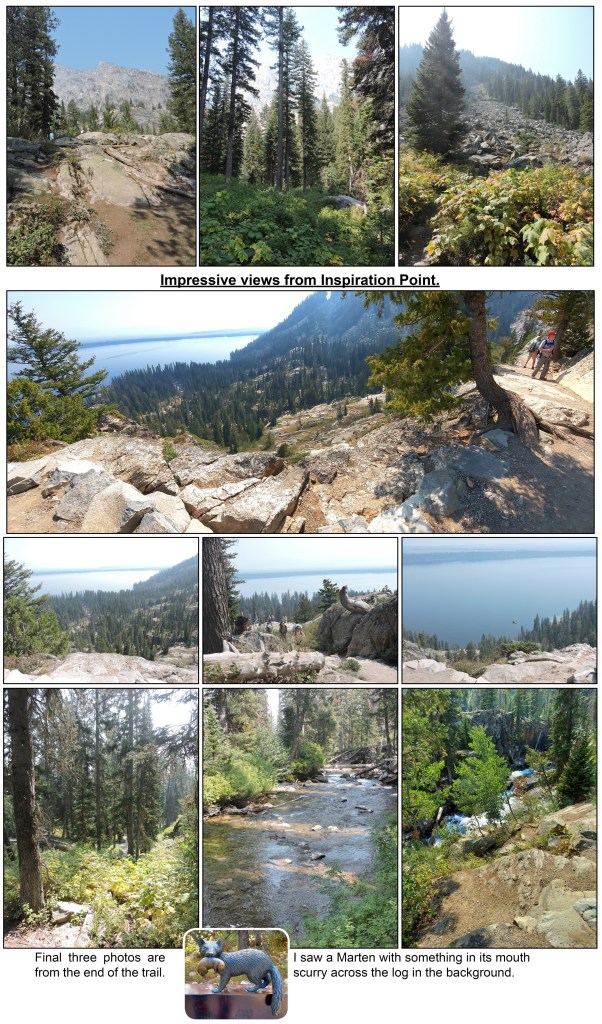
The start of the hike is easy. You start by crossing a bridge overt Cascade Creek created from Hidden Falls glacier run-off. For the first half mile you hike through a spruce/fir forest with large glacially deposited boulders up to Hidden Falls. I felt good after reaching the Hidden Falls. (I had only initially intended to hike to the Water Fall.) So, I continued onto Inspiration Point, a mile further with a 500 ft. elevation gain. INSPIRATION POINT offers some of the best views in the Grand Teton National Park. The trail is dirt with several sections of rock stairs and exposed rocks. The trail crosses exposed rock and features several steep switchbacks. Sections of the trail are treacherous, I watched where I placed every step by steep rocky 40 to 50 foot ledges. I felt very secure footing in my $45 Kole’s hiking boots. (Teton Village sells hiking boots for $360!) Going up was OK, coming down was scary, which I left continuous hand prints on the wall for balance!
This hike is a must destination for many hiking the Cascade Canyon Trails.
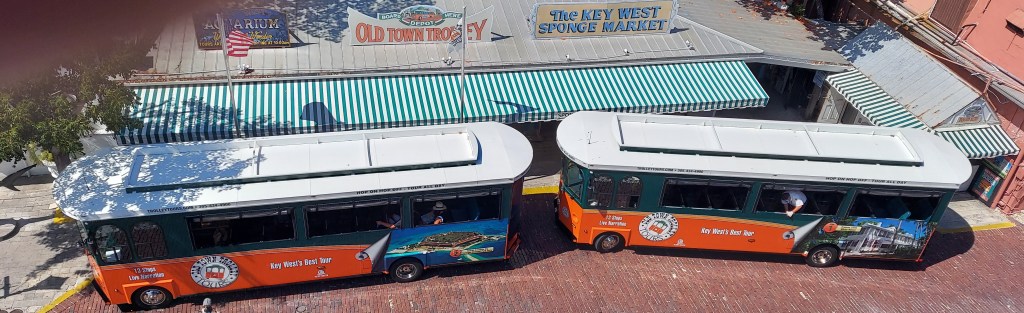
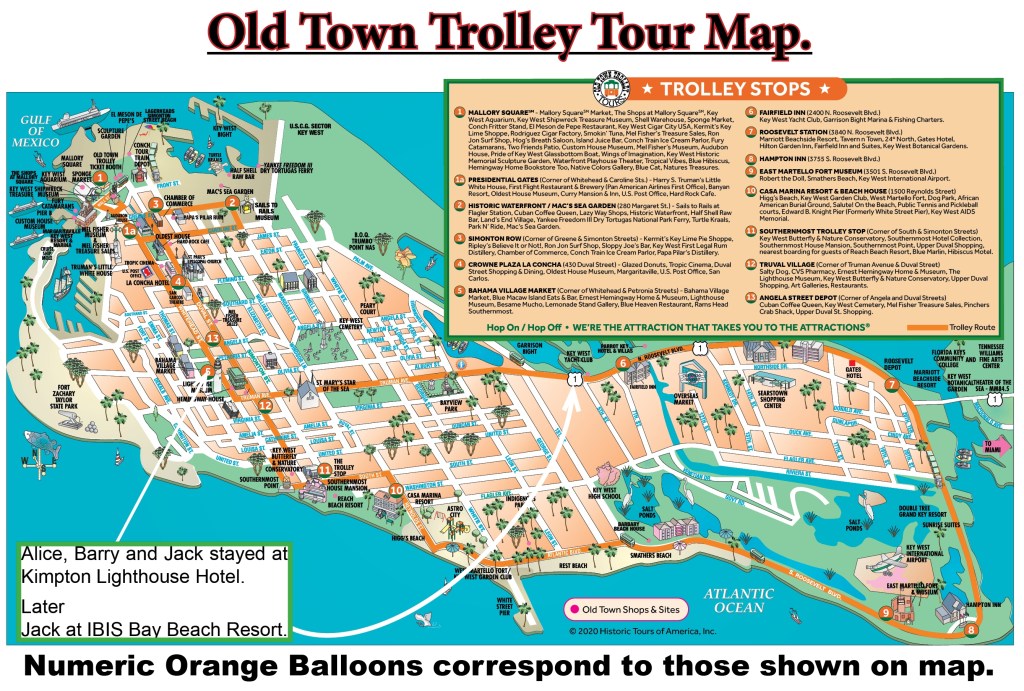
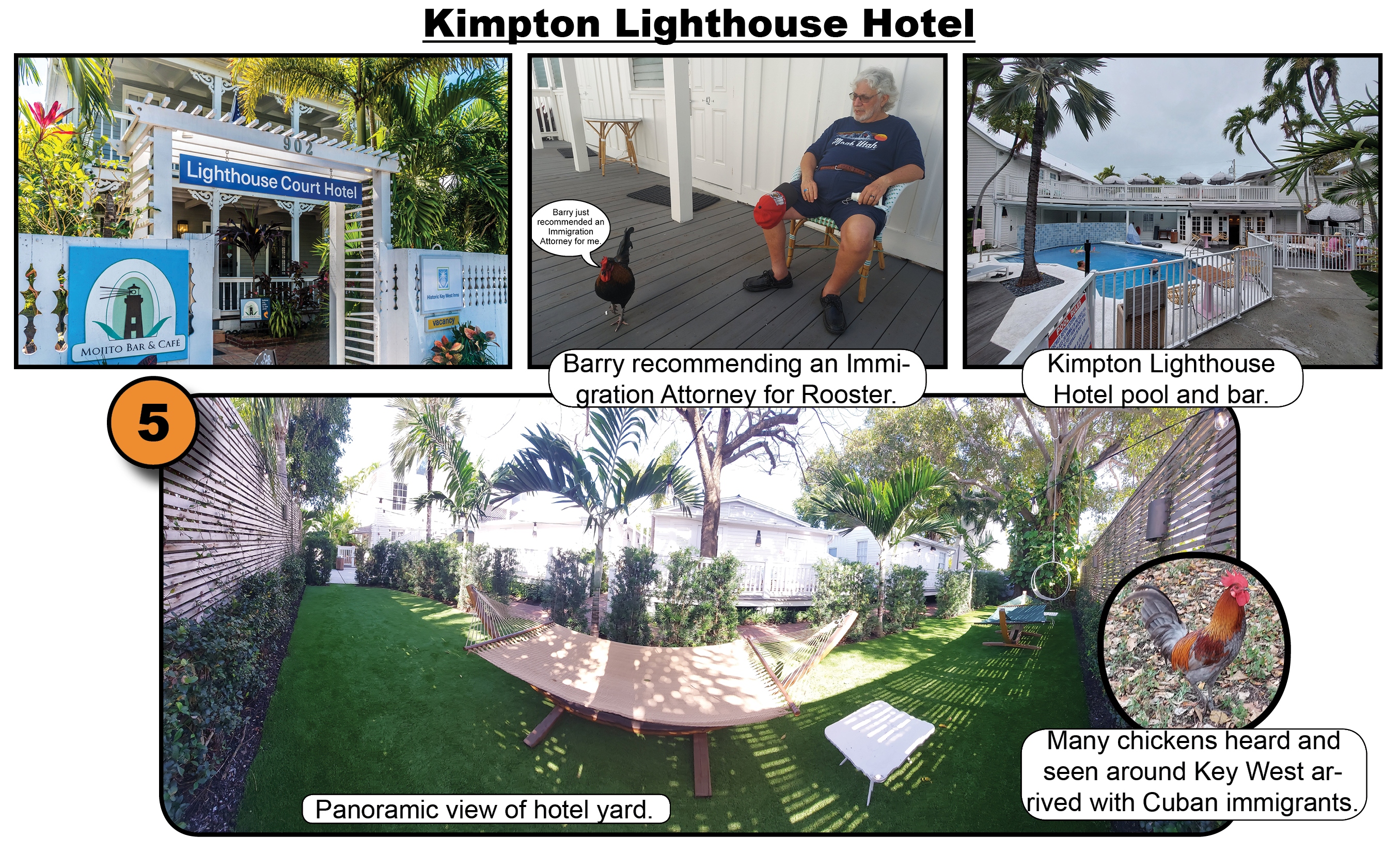
Alice, Barry’s and Jack’s On-Off Old Key West Trolley Tour started on Thursday, February 18, 2021 at the Kimpton Lighthouse Hotel where we were staying.
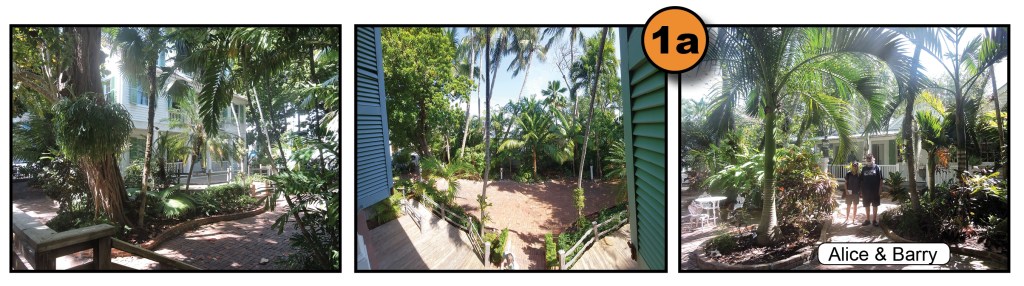
The hotel is a block away from a Trolley Stop #5 and right across the street from the Earnest Hemingway Home and Museum, and a block from Duval Street. This location was excellent. The hotel was adequate with a small pool, free dry breakfast and a bar. My room did not have a table and chair to use my PC. The pool side tables and chairs being used by others to work with their PC’s, didn’t allow for social distancing. As a Resort it lacked amenities. Key West has always needed housing for many military personal, this hotel seems to have been renovated and repurposed these building into a nice hotel. I walked and explored Key West during the day and only used my room to sleep in. All things considered, it was a great choice place to stay.
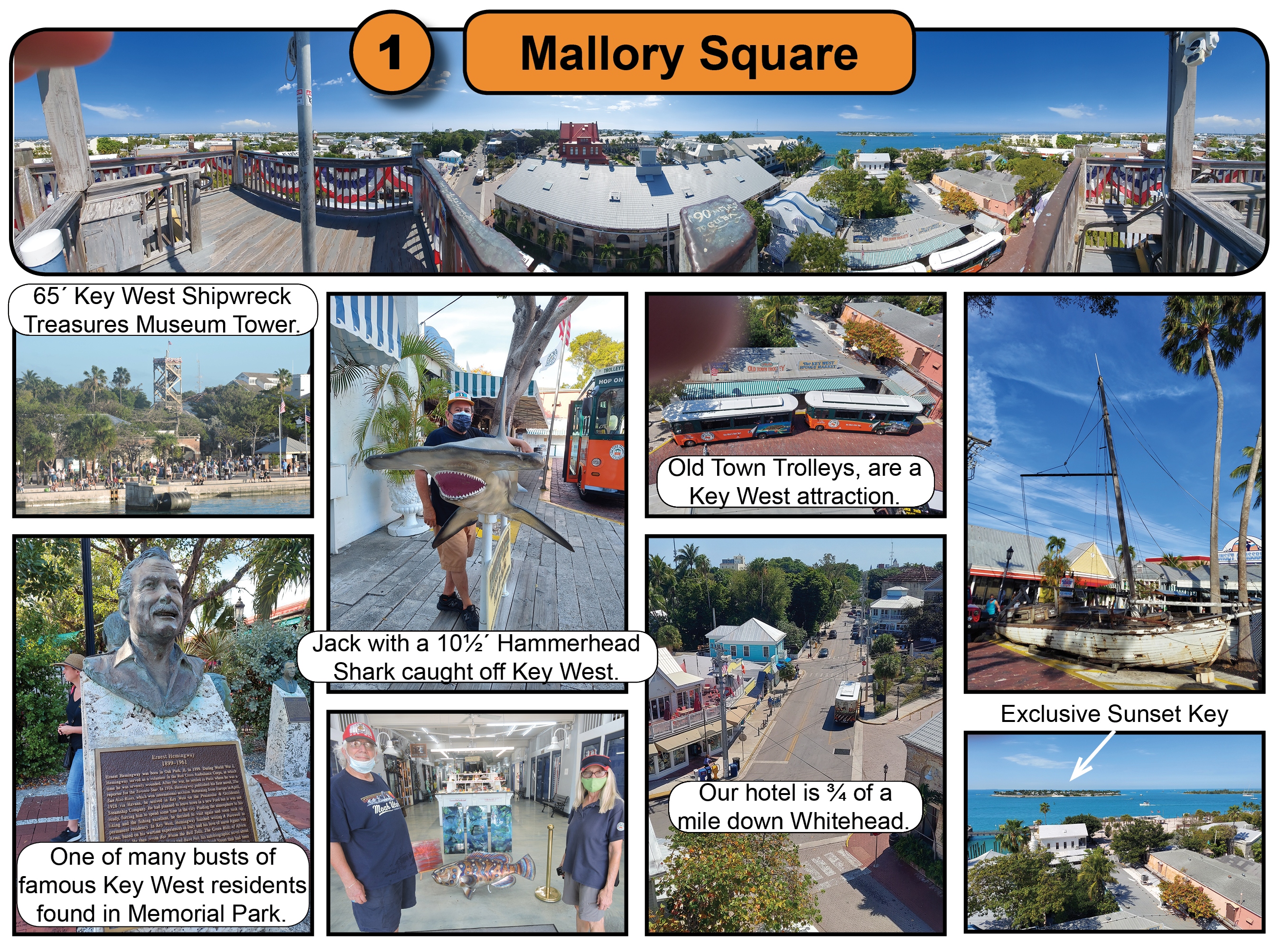
Mallory Square – Is a waterfront square with restaurants and shops, known for its nightly festivals. It is the “center” of Key West activities. The Shops at Mallory Square feature some of the island’s most interesting shops, boutiques, art galleries, exhibits and places to eat. This has Key West’s only escalator.
“Aerial” panoramic photos were taken from atop the 65´ high Shipwreck Treasure Museum Tower, after I climbed the 88 steps. Photo of tower was taken from the Key West Express Catamaran as I was leaving Key West.
Shipwreck Treasure Museum – It combines actors, films and actual artifacts to tell the story of 400 years of shipwreck salvage in the Florida Keys. The museum itself is a re-creation of a 19th-century warehouse built by wrecker tycoon Asa Tift. Many of the artifacts on display are from the 1985 rediscovery of the wrecked vessel Isaac Allerton, which sank in 1856 on the Florida Keys reef and turned out to be one the richest shipwrecks in Key West’s history, having resulted in the Federal Wrecking Court’s largest monetary award for the salvage of a single vessel. Also included are relics from Spanish galleons, including a silver bar salvaged from the Nuestra Senora de las Maravillas that guests are encouraged to try to lift.
Audubon House & Gardens – We learned that John James Audubon never lived in this house! But, the house contains 28 first-edition works of the famous ornithologist. He visited the Florida Keys and Dry Tortugas in 1832. He left Key West having sighted and drawn 18 new birds for his “Birds of America” folio. It is believed that many of those drawings were conceived in these gardens in which Captain John Huling Geiger, who was Key West’s first harbor pilot, eventually built this house.
The Audubon house has many antique furnishings dating to the first half of the 19th century, many were purchased from estate sales and auctions in Europe. A replica cook house in the gardens provides further insight into life in mid-19th century Key West.
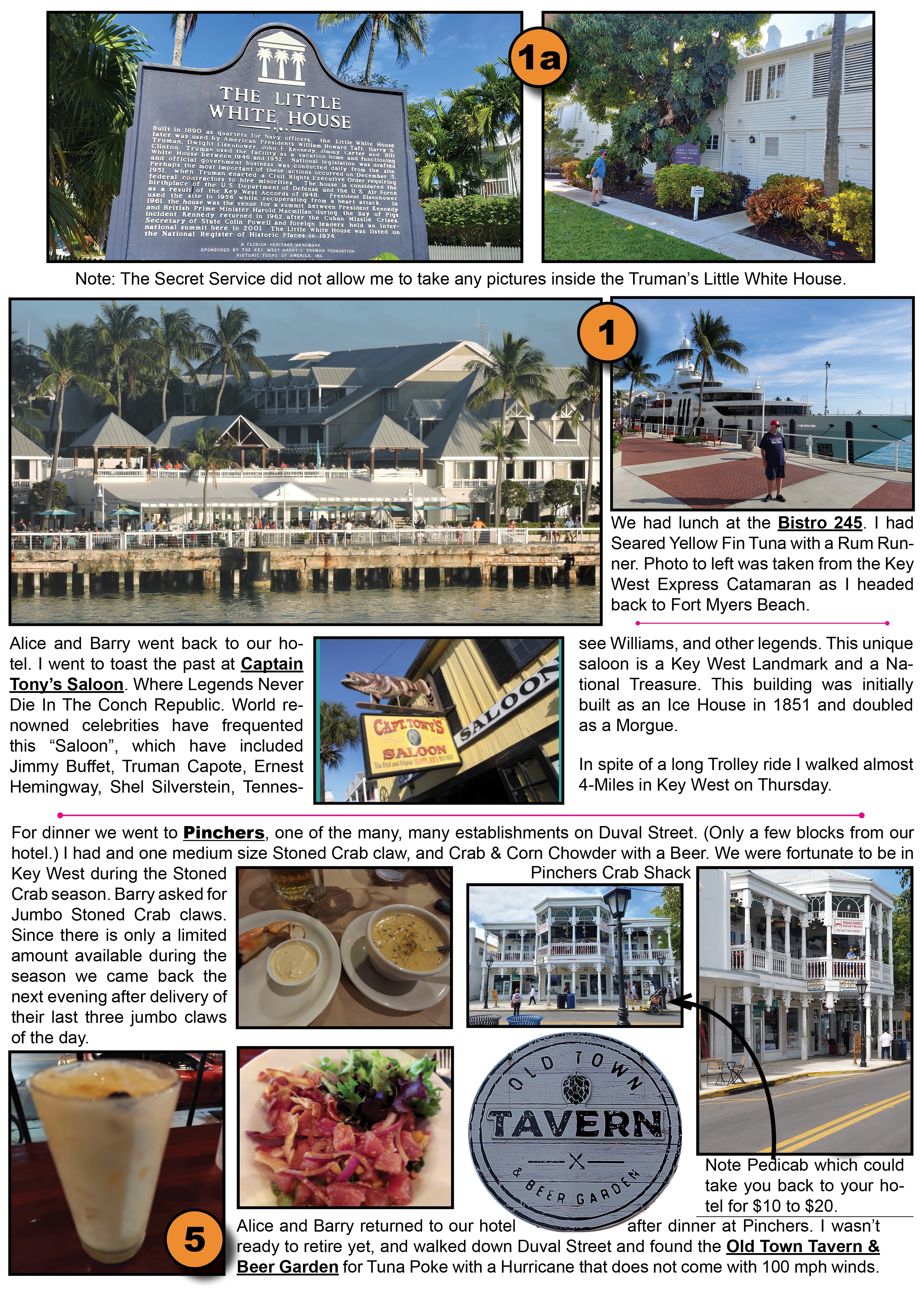
The Harry S. Truman Little White House was the winter White House for the 33rd President, Harry S Truman. It was initially the headquarters of the Key West Naval Station when on the Key West waterfront. Harry Truman spent 175 days in the Little White House during his presidency. After he left office he visited the house many times.
While I was walking through the house on our tour I got goose pimples learning: Presidents William Taft, General Dwight D. Eisenhower, British Prime Minister Harold Macmillan, President John F. Kennedy, President Jimmy Carter, Secretary of State Colin Powell, President Bill Clinton and then Senator Hillary Clinton, plus many more dignitaries, had walked exactly where I was walking! During World War I, Thomas Edison resided in this house.
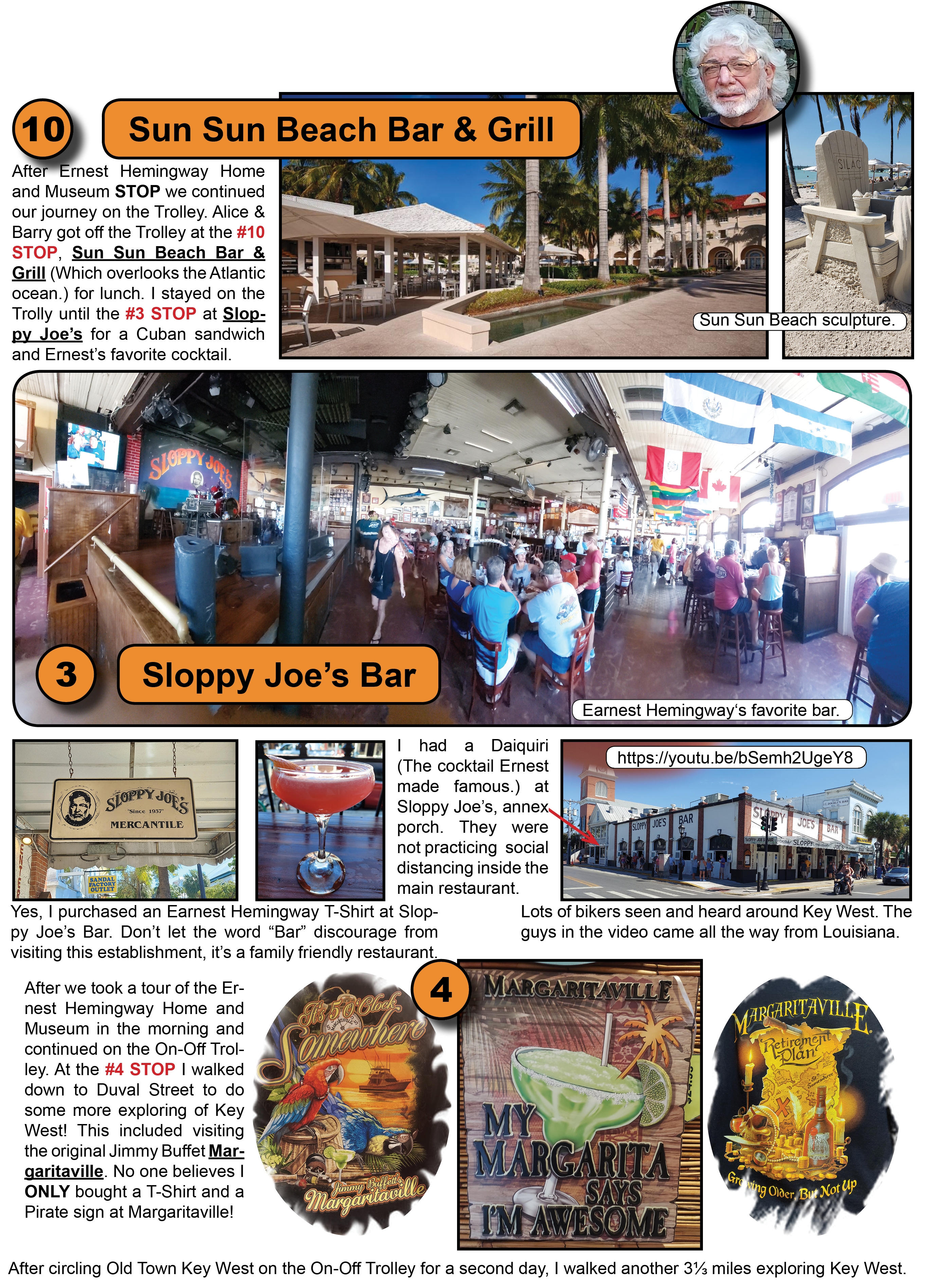
During Truman’s visits, cabinet members and foreign officials were regular visitors for fishing trips and to play penny anti poker with Truman. Bill Clinton snuck out of the house and went to Sloppy Joe’s for a few drinks with other patrons at the bar!
Old Town Key West, cont. Friday, February 19.
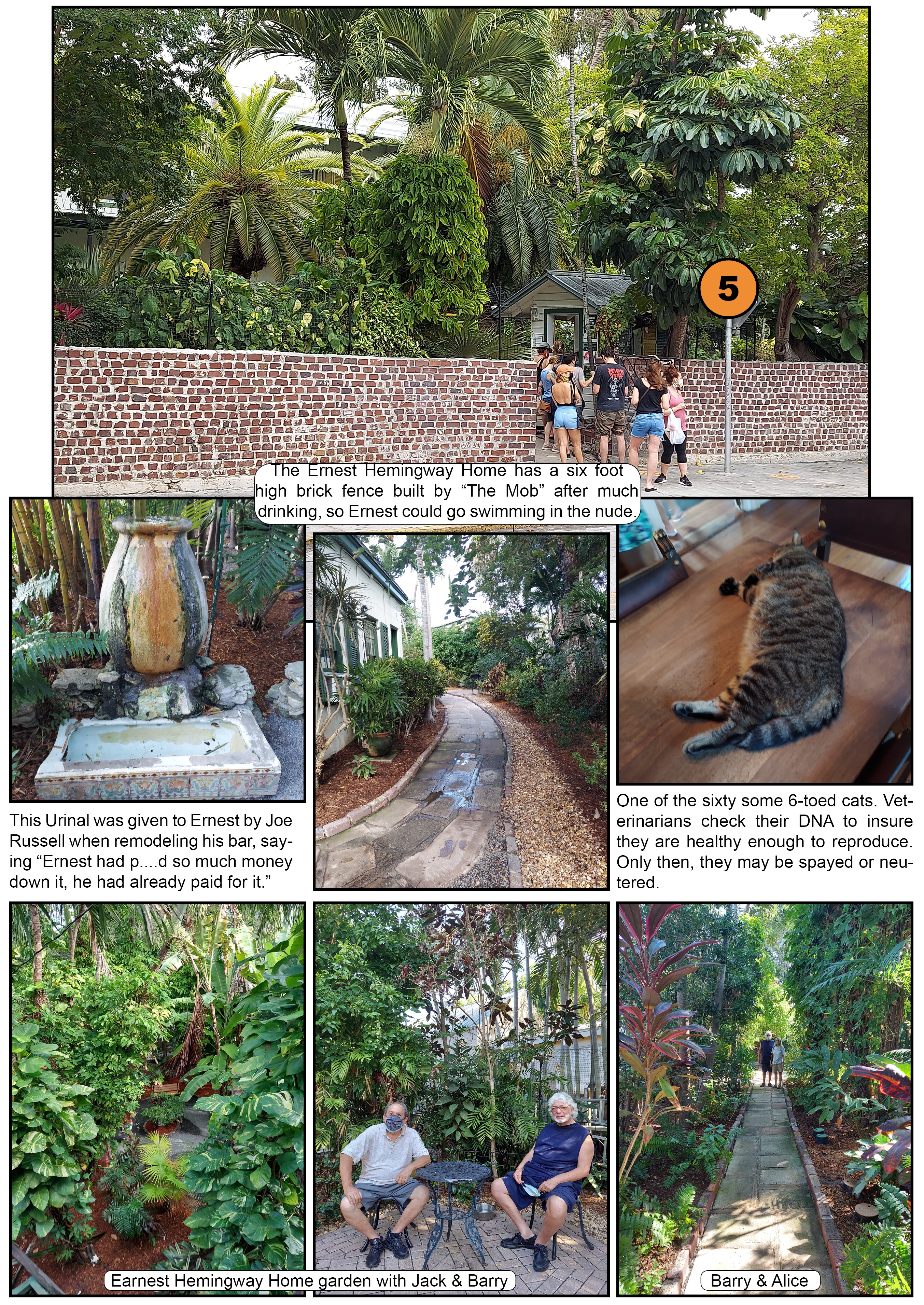
Ernest Hemingway Home and Museum – After breakfast at the Moondog on Friday, February 19, 2021 we continued our tour of Old Town Key West by walking across the street to where Hemingway lived and wrote for a decade. (Hemmingway’s home is across the street from our hotel and a block away from Trolley STOP #5).) I had purchased reservation tickets Thursday on-line for reduced costs. We saw the sixty some 6-toed cats running around the house and the lush 1½ acre garden.
In 1938 he built the first in-ground swimming pool in Key West. It was the only swimming pool (cost $20,000 in 1938) within 100 miles. The site where the pool is located was formerly the setting of Hemingway’s famous boxing ring, where he would spar with local amateur boxers. Construction of the pool necessitated relocation of the boxing ring a few blocks away on a site now occupied by the Blue Heaven Restaurant & Bar in the historic Bahama Village area.
During his time at the home, Hemingway wrote some of his best received works, including the non-fiction work Green Hills of Africa, short stories “The Snows of Kilimanjaro” and “The Short Happy Life of Francis Macomber”, and the novels To Have And Have Not and Islands in the Stream (posthumously published in 1970).
Ernest’s friends Charles Thompson, Joe Russell (also known as Sloppy Joe), and Capt. Eddie “Bra” Saunders, together with his old Paris friends became known in Key West as “The Mob.” The Mob would go fishing in the Dry Tortugas, Bimini, and Cuba for days and weeks at a time in pursuit of Giant Tuna and Marlin on Hemingway’s 38 foot boat Pilar. Everyone in The Mob had a nickname, and Hemingway was often referred to by his friends and family during this time as “Papa”—it was a moniker that eventually stuck with him throughout his life.





 Jack's Travel Blog