On Thursday, May 16, 2024, I flew into Lepzig, Germany on Turkish Airlines. Then I rented a car and drove to Halle (Saale).
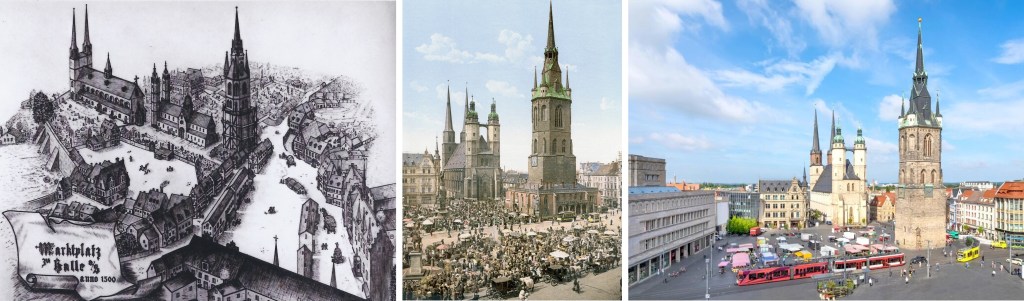
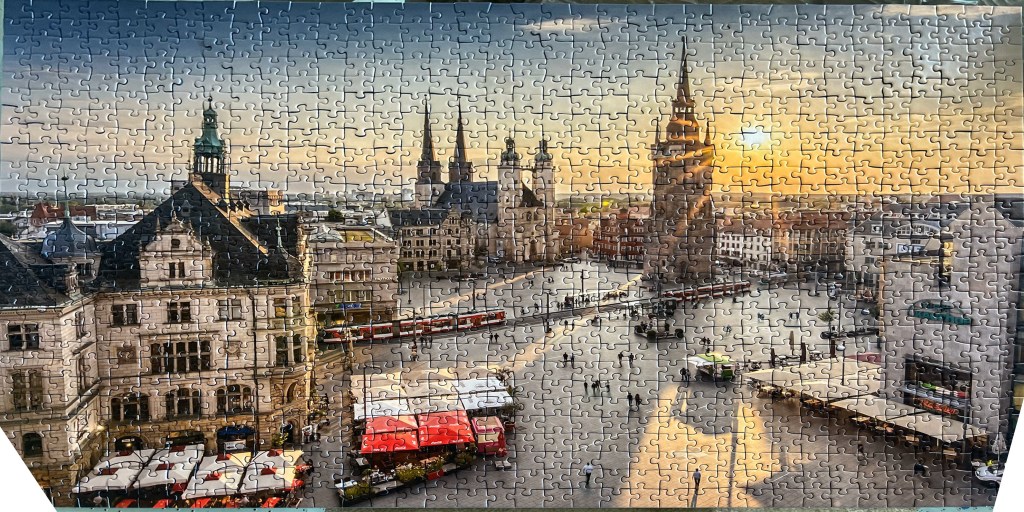
Halle has a historic and largely intact city centre Markplatz. There were only two World War II bombing raids carried out against this town, both in March 1945. Restoration work lasted from 1946 to 1948.
Halle (Saale) was part of East Germany, officially known as the German Democratic Republic, from October 1949 until its reunification with West Germany in 1990.
This is the town where cousin Jerry Lohöefener and our ancestors walked and shopped. This is the reason for Halle being on my list of medieval towns to visit. I can now say Uncle Jack has walked in the same area as my maternal Great-Great-Grandmother, Katharine Marie L. Lohöefener (born in Halle (Saale) in 1850). And, cousin Jerry and are other ancestors have walked and shopped!

Plus my ancestors; George Frideric Handel, was born in Halle (Saale) on February 24, 1685. And, Wilhelm Friedemann Bach (1710–1784). The composer eldest son of Johann Sebastian Bach, lived there during part of his career.
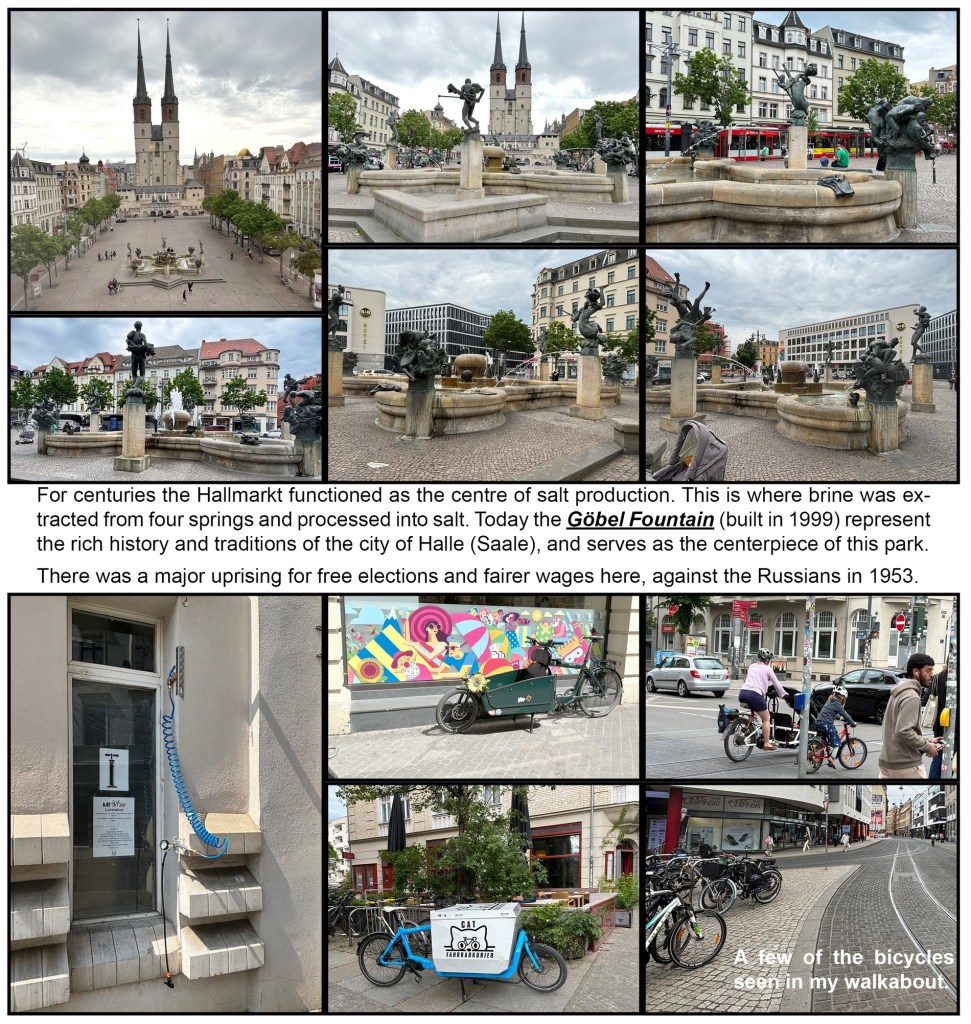
Halle’s early history is connected with the harvesting of salt from brine springs. The name of the river Saale has the Germanic root for word salt. Salt-harvesting has taken place in Halle since at least the Bronze Age (2300–600 BC). The earliest documented mention of Halle dates from AD 806.
The Halle (Saale) population in 1800 was 15,159, 52,639 by 1871 and 239,257 in 2019.
Halle (Saale) was an important location for Martin Luther’s Reformation in the 16th century. The Church of St. Mary, has a copy of the death mask of Martin Luther, in a crypt.
The sovereign of the city of Halle (Saale), wanted a representative church in a central location corresponded to his ideas to push back the increasing influences of the Reformation, because such a new building would enable far more magnificent masses and services to be celebrated under the sole patronage of the Catholic Church. It was decided to tear down the two existing parish churches except for the two pairs of towers. The four towers were connected to a single nave in the same place. At the same time as the two market parish churches were merged, it was decided to close the two cemeteries surrounding the churches. A new burial site was chosen. The Composanto Cemetery is located outside the town, it is considered the most beautiful cemetery in Germany. A a masterpiece of the Renaissance.
When I learned about this cemetery it was too late for me to visit and look for ancestors graves.
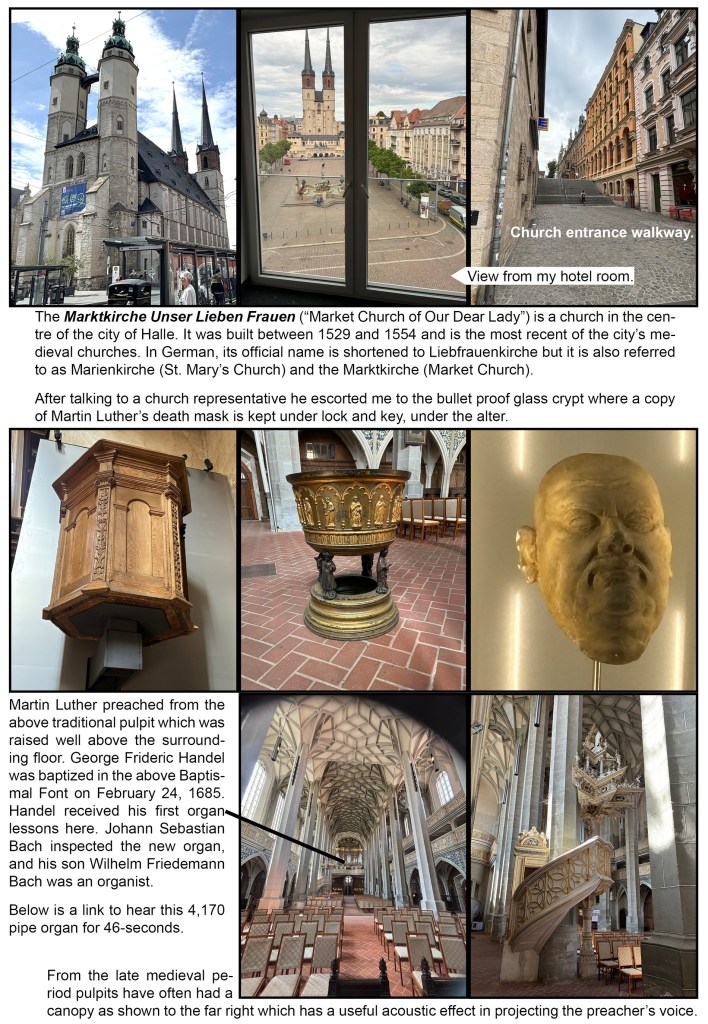
In 1713, Johann Sebastian Bach played an Organ here. The front of the great organ is in the western gallery, from 1716. The current organ work was installed in 1984. It is composed of 4,170 vocal pipes, the largest of whose measures five meters and the smallest pipe onlya tiny 6 millimeters. Below is a 46-second video of a student learning how to play this organ!
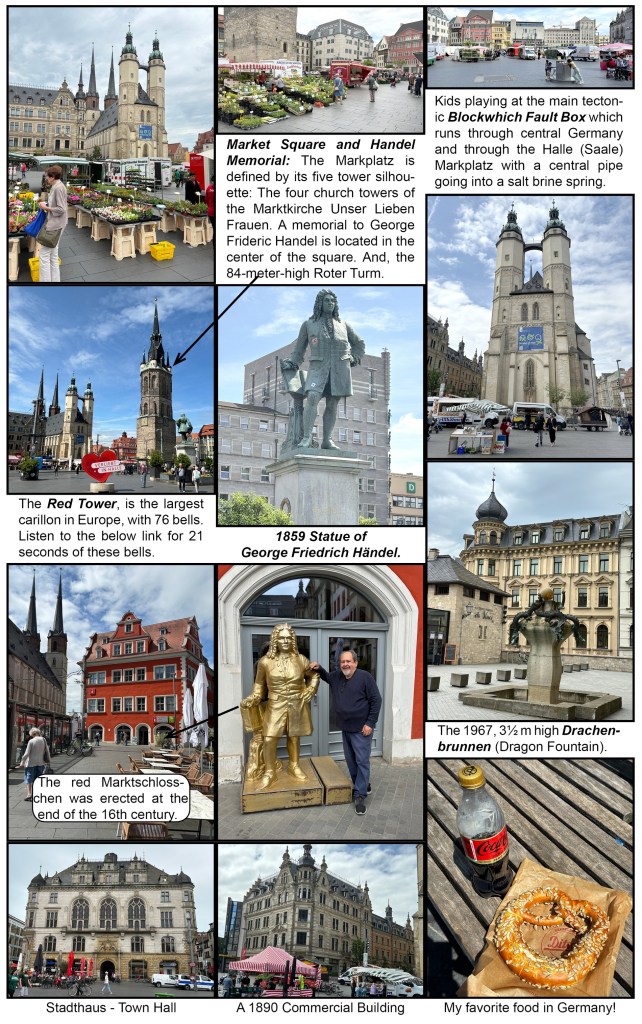
The Red Tower is part of the landmark of the city of Halle (Saale), together with the four towers of the Market Church. Halle (Saale) is often referred to as the City of Five Towers because of the striking silhouette of these two buildings. The tower burned in 1945 due to artillery fire during World War II and lost its characteristic spire. It has since been restored. Below is a link to 21-seconds of the Red Tower bells.
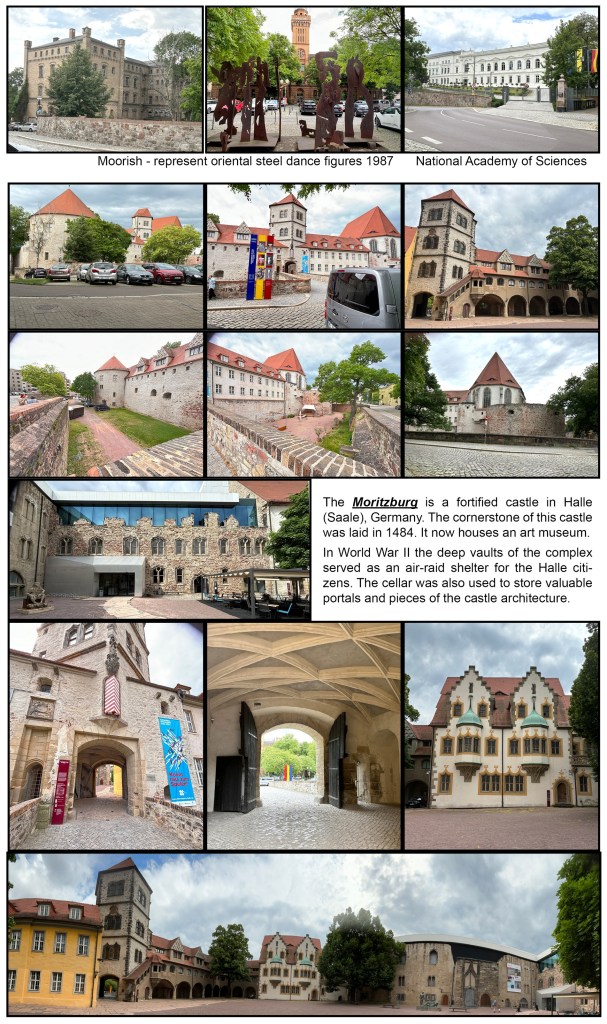
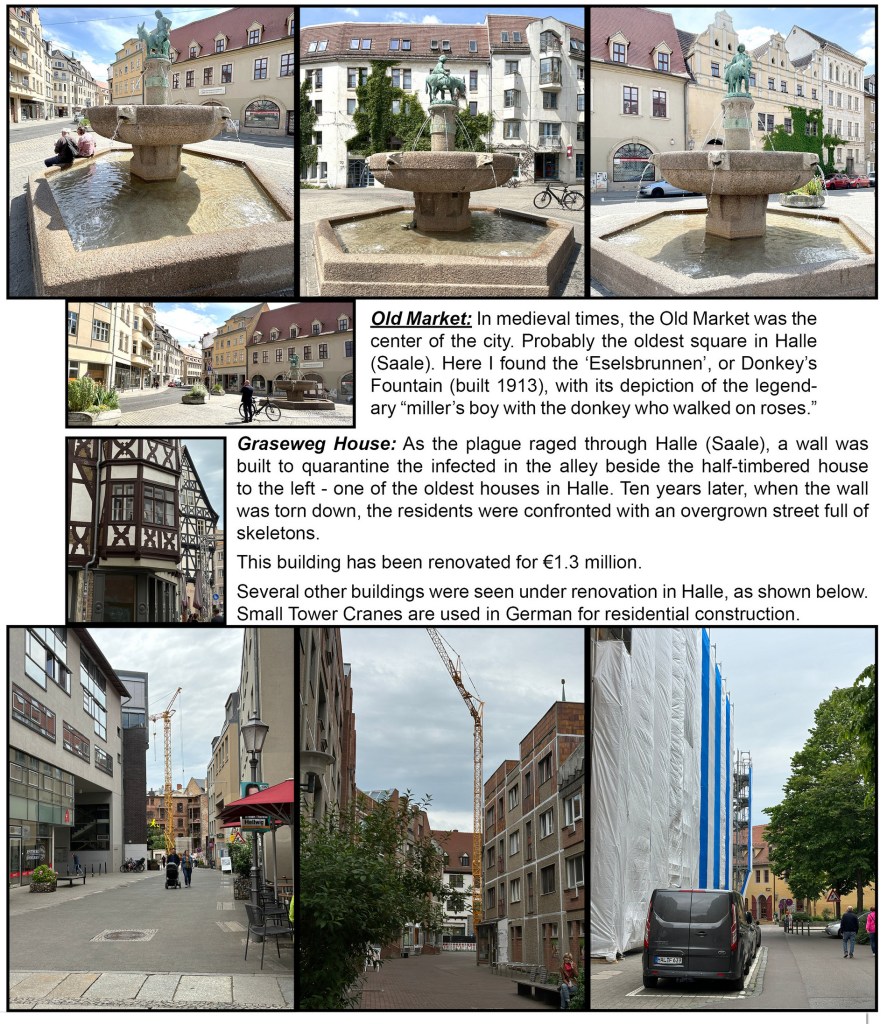
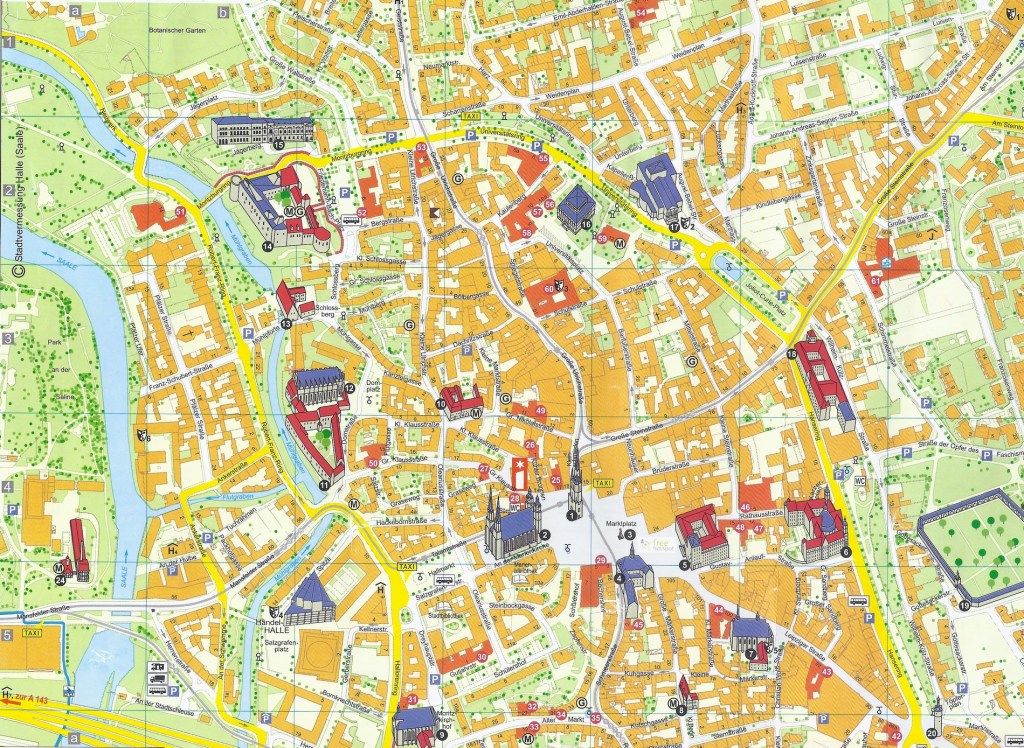
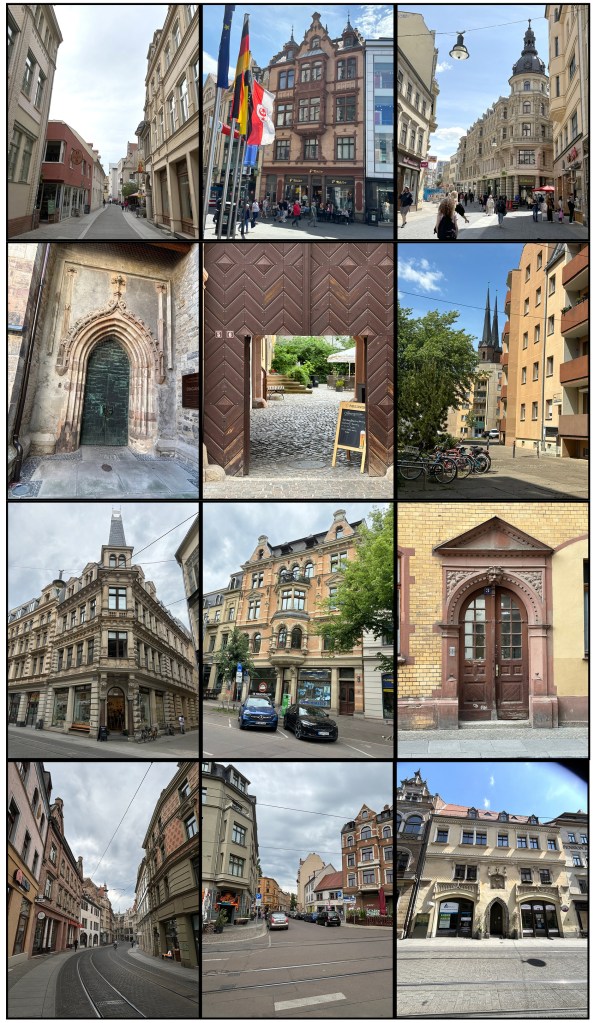
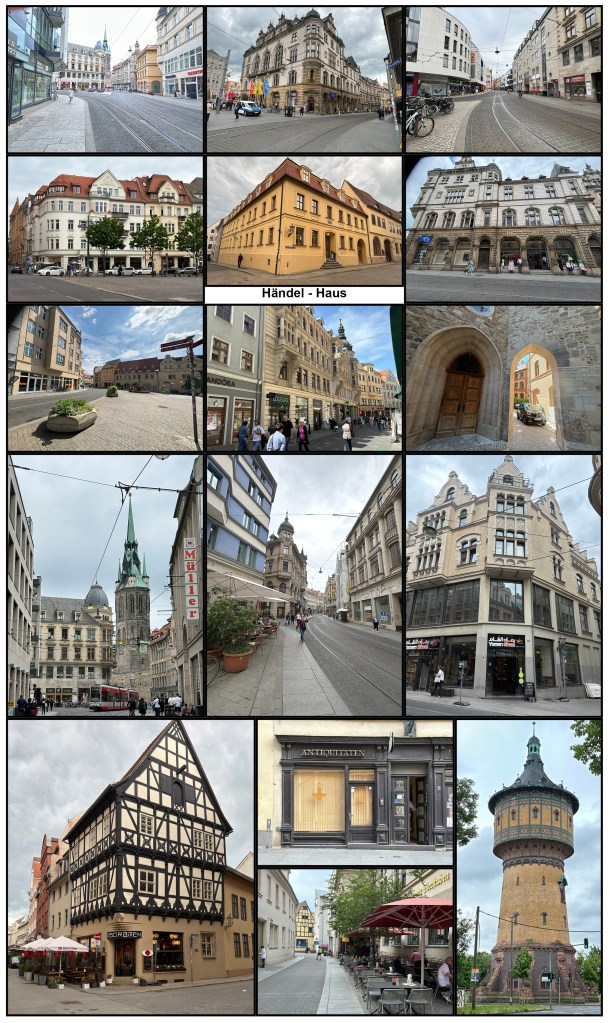
I walked about 3½ miles around Halle on a self-guided walking tour, on Friday. I don’t believe I could ever have gotten lost back to the city center Markplatz. All had to do was look for one of the five towers.
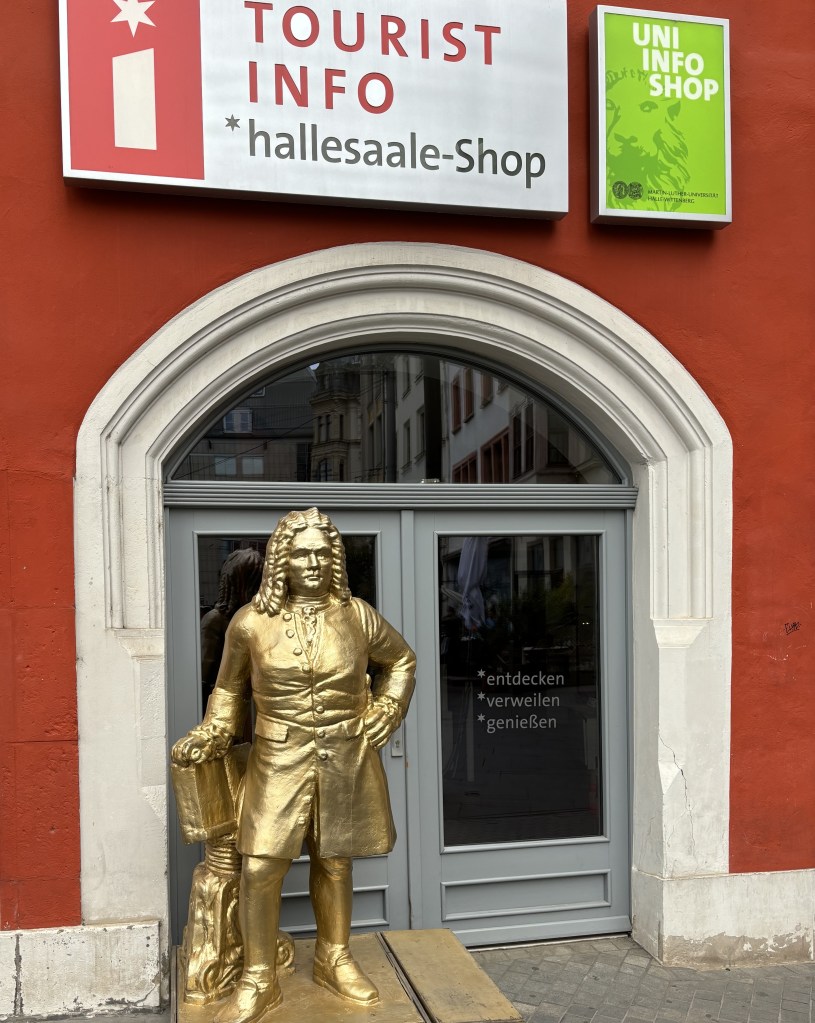
The Tourist Info Shop had very helpful attendants who spoke excellent English.
Since 1891 Halle (Saale) has up to twelve (12), 750 Volt DC Electric Tram/Trolley lines up to 88 km (54 miles) long on a 1 m (3 ft, 3⅜ in) gauge track. Below is a 36-ssecond video of a couple of these Trams.

Copyright © 2024 JACK L. WINEGAR All Rights Reserve.
 Jack's Travel Blog