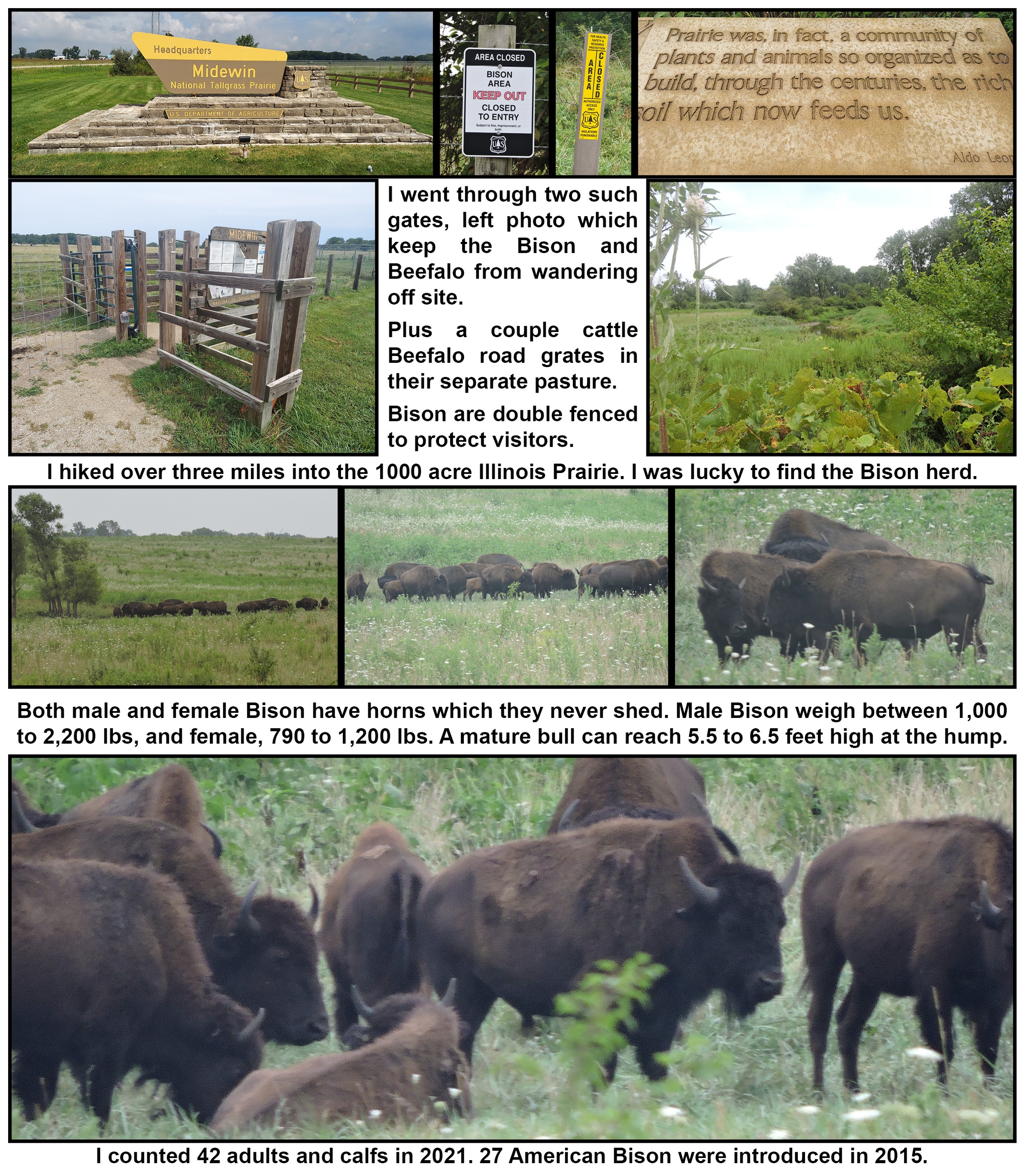
The Midewin (pronounced mid-DAY-win) National Tallgrass Prairie, is a tallgrass prairie reserve operated by the U. S. Forest Service. I visited the prairie to purchase an annual National Park Pass.
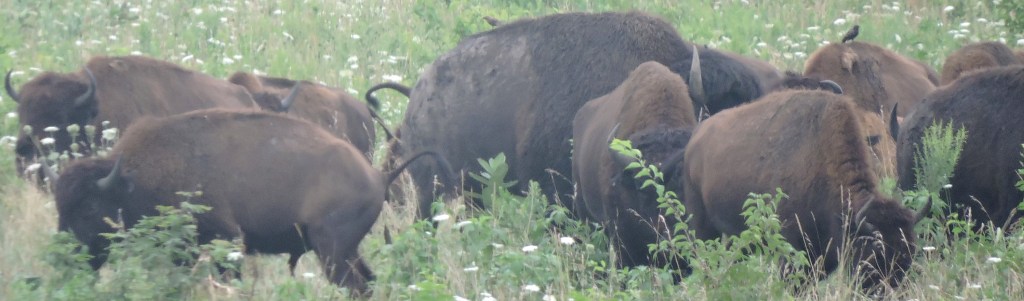
It is the first national tallgrass prairie ever designated in the U.S. and the largest conservation site in the Chicago Wilderness region. (An hour SW of Chicago, formerly the site of the Joliet Army Ammunition Factory.) Since 2015, it has hosted a conservation herd of American Bison to study their interaction with prairie restoration and conservation.
Better Together
Bison and prairie are inseparable. Their history and relationship goes back at least 11.000 years. Just as the prairie nourishes the Bison, and the Bison sustain the prairie.
Better Blooms
Bison only eat grass, leaving space for prairie flowers and other leafy plants to grow and flourish. In this way, their grazing benefits birds, small mammals, and other grazers that consume the leaves and seeds of non-grazers.
Better Mixture
Bison graze some areas heavily while leaving others almost untouched. The resulting mixture of tall and short grasses makes the prairie suitable for animals that require differing plant heights for their life processes.
Better Soil
Even Bison’s waste sustains the prairie. Urine and solid waste restore nutrients to the soil wherever Bison Graze.
Better Burns
Bison’s patchwork grazing ensures fire never fully consumes the prairie. Lightly grazed areas burn easily, rejuvenating the soil and clearing away old plant growth. Meanwhile, fire skips heavily grazed areas where there isn’t enough grass to carry the fire.
After fire, Bison reverse their grazing patterns. They prefer the tender young grasses in recently burned areas which were once lightly grazed.
Click to view the 2021 National Parks Uncle Jack visited.
Copyright © 2023 JACK L. WINEGAR All Rights Reserve.
 Jack's Travel Blog